
Composite bonding · Resin veneers · Melbourne
Composite bonding & resin veneers in Melbourne
Composite bonding can repair chips, close suitable gaps or refine tooth shape. Dr Joseph Paino helps you compare a small repair, edge bonding and resin veneers.
Composite bonding uses tooth-coloured resin to repair or reshape selected areas of a tooth. Resin veneers use the same material across more of the visible front surface. We compare suitable options according to your teeth, bite and goals.
At Enhance Dental, the starting point is a conversation—not a set number of veneers. We explain the possibilities, the limitations and the care involved before you choose.
Considering ceramic instead? Learn About Porcelain Veneers.
Visit us at Level 2, Suite 219, 566 St Kilda Road, Melbourne. Treatment is tailored following an assessment.

An existing Enhance Dental case
Resin veneers before and after
This patient had resin veneers on eight upper front teeth, following teeth whitening. The two treatments were planned together to improve the overall colour and shape of the smile. Both photographs are shown below. Select either image to view it larger.
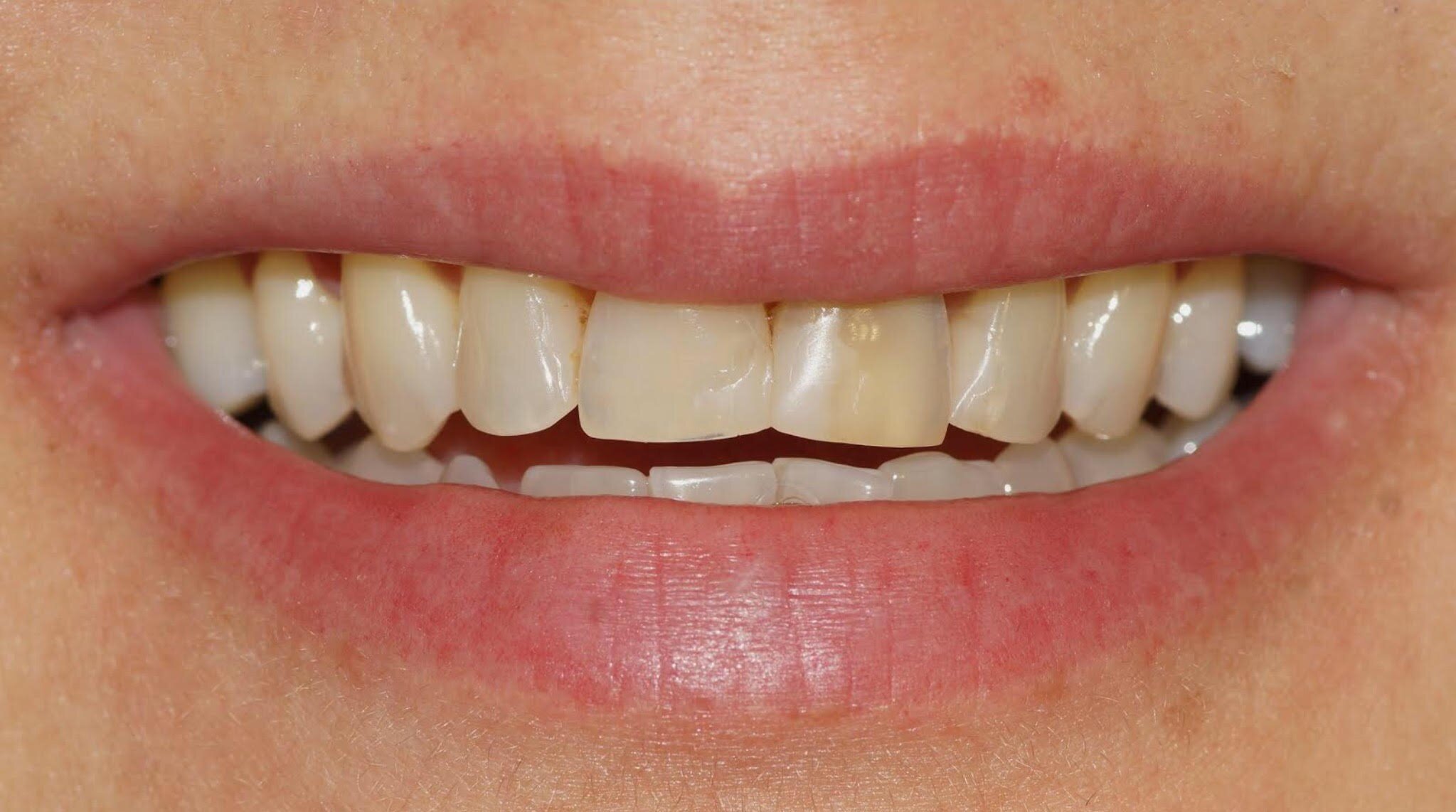
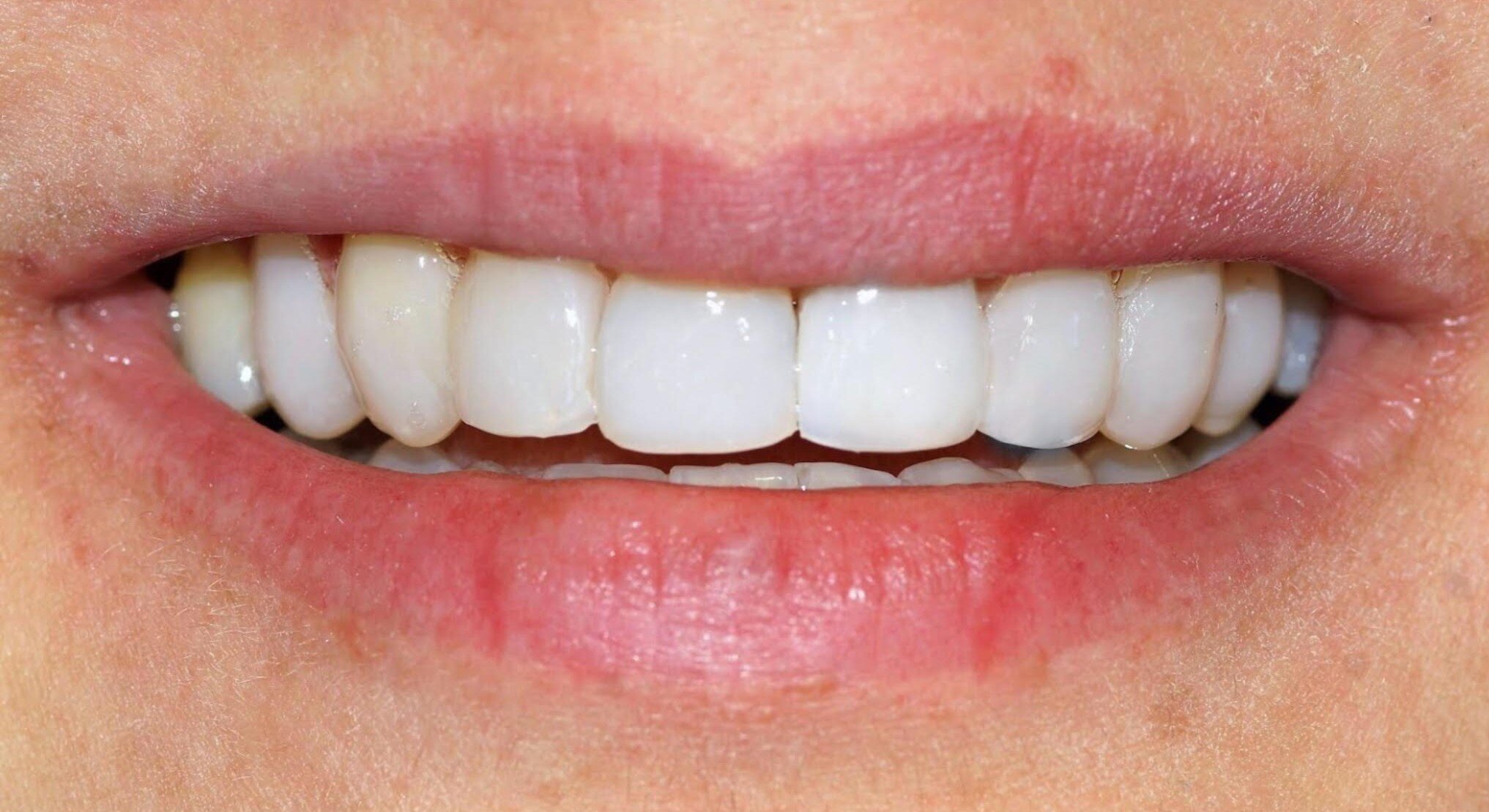
This is one individual outcome involving both whitening and veneers, not a prediction or guarantee of your result. Starting teeth, oral health, bite and treatment needs vary. Differences in lighting, angle and tooth position can affect photographic comparisons.
Explore more before-and-after photographs or ask about a cosmetic consultation.
One material, different treatment goals
Composite bonding for chips, edges and small gaps
Composite bonding can be a focused addition to a suitable tooth rather than a veneer across its entire front surface. We assess how much tooth is affected, how the opposing teeth contact it and what you would like to change before deciding how much material to add.
Edge bonding
A carefully shaped addition may refine an uneven or chipped biting edge. The available space and bite matter: adding length without checking the contacts can leave the repair vulnerable to chipping.
A local repair
A small, restorable chip may suit direct resin. Pain, a deeper crack or a damaged older filling may need a different assessment and treatment before cosmetic finishing is considered.
Shape and spacing
Composite bonding may help selected small spaces or tooth proportions. We assess gum health, tooth position and cleaning access; closing every space with extra material is not automatically the right approach.
We distinguish a local bonding repair from a resin veneer so that your estimate reflects the actual treatment proposed. The number of teeth, surfaces involved, colour work, appointments and ongoing maintenance can all differ. There is no standard package that suits every smile.
If tooth position is the main concern, Invisalign assessment may be useful before adding restorative material. If a tooth is painful or has fractured, read our cracked-tooth and biting-pain guide. For decay or an existing filling, see white fillings and tooth repair.
The photographs on this page show an existing case involving whitening followed by eight upper resin veneers. They illustrate that particular treatment and are not presented as an edge-bonding-only result. We can explain examples relevant to your own concern at your consultation.
More widespread shortening or loss of biting surfaces may need a broader plan. Our Restoring Worn Teeth guide explains that assessment. Where visual planning would help a cosmetic decision, Digital Smile Design uses scans and photographs; planning fees apply.
Resin veneers or bonding: what is the difference?
Both use tooth-coloured composite resin bonded to the tooth. The distinction is usually how much of the visible tooth is being changed. Resin veneers cover much of the front surface; localised bonding adds or replaces material in a smaller area. Your dentist can blend shades, opacity and translucency, then shape and polish the surface. [1]
A small bonding repair
For a suitable chip, uneven edge or small gap, a carefully placed addition may be enough. Keeping the treatment local can preserve more of the original tooth.
A resin veneer
For a broader change in visible shape or colour, composite can be layered across the front of a tooth. One tooth or several may be considered after assessment.
A combined approach
Whitening, orthodontics and selective bonding may work together. Sometimes a clean, whitening alone or leaving healthy teeth as they are will meet your priorities.

Healthy foundations first
What would you like to change?
Perhaps an edge catches your eye in photographs, a small gap bothers you, or worn teeth no longer feel balanced. We assess the cause before covering it. Decay, gum inflammation, erosion or ongoing wear may need care first. [3]
Your consultation considers tooth proportions, lip movement, gum levels, existing fillings and how your teeth meet. Photographs and clinically indicated radiographs can help us explain your options.
Learn about a dental examination and clean and healthy gum care.
Where resin veneers may help
Chips & uneven edges
Rebuild selected small defects and refine tooth outlines where there is enough sound structure and the bite permits it.
Small gaps & proportions
Adjust the width or shape of suitable teeth. The result needs to preserve pleasing proportions and allow cleaning between teeth.
Some colour concerns
Mask selected discolouration or blend a repair with surrounding teeth. Deep staining and very dark teeth can limit the result.
Suitability is individual. Veneers do not straighten roots, treat gum disease or correct an underlying bite problem. [1][2]
Your resin veneers appointment, step by step
Direct composite is shaped by the dentist in your mouth, rather than made as a separate ceramic shell in a laboratory. The placement stage can often be completed in one visit, but assessment, preparatory care, whitening and review can require additional appointments. [1]
- 1Listen & assessDiscuss your goals, examine the teeth and gums, and check the bite and alternatives.
- 2Plan the shadeChoose a colour and shape that suit you. Complete any agreed whitening first and allow the shade to settle.
- 3Prepare & bondKeep the area clean and dry. Prepare the surface and use an adhesive; reshape the tooth only as needed.
- 4Sculpt & cureBuild the composite in controlled layers, shaping contours and setting the material with a curing light.
- 5Polish & reviewRefine texture and edges, check floss access and bite, and explain aftercare and review arrangements.
Your comfort matters. Additive work may not require an injection. When preparation or other treatment makes local anaesthetic appropriate, we discuss it beforehand and plan around your comfort. Tell us if you are feeling nervous so we can take things at a manageable pace.

Plan the colour before changing the shape
If you would like a brighter overall smile, we may discuss whitening suitable natural teeth first—including lower and side teeth that show when you speak or laugh. New upper veneers can then be matched to the settled shade. Existing composite does not whiten like natural enamel.
We allow an appropriate interval after bleaching before adhesive work, often around two weeks or longer. Laboratory research shows that bleaching can temporarily reduce bond strength; your timing is tailored to the whitening method and planned restoration. [6]
Making an informed choice
Resin veneers have limitations
Resin veneers offer flexibility, but composite is not a permanent, maintenance-free surface. Understanding the trade-offs helps you decide whether it fits your expectations. [2][4]
Polish & colour can change
Composite can lose gloss, become rough or develop staining, particularly around the margins. Polishing may help some changes; deeper discolouration may require repair or replacement.
Edges can chip or wear
Hard biting, nail-biting, clenching and grinding can stress the material. A small chip may be repairable, but repeated problems require assessment of the cause.
Not every colour can be masked
Hiding a very dark tooth may require more opaque material or thickness. There is a balance between masking, translucency and avoiding an over-contoured appearance.
The bite sets boundaries
Heavy contacts, a deep bite, crowding or limited space can restrict safe changes. Orthodontics or a different restoration may be more suitable.
Minimal preparation varies
Little or no enamel removal is possible in selected cases. It is not a universal promise. Any removal of tooth structure is irreversible.
Your teeth still need care
Veneers do not protect against decay or gum disease. Sensitivity, gum irritation, debonding and future treatment are possible. We discuss your individual risks before consent.
If you have active decay, inflamed gums, ongoing erosion, significant tooth loss or uncontrolled grinding, these concerns may need attention before cosmetic bonding. Sometimes we recommend postponing treatment or choosing another approach. If you would like to compare materials, Learn About Porcelain Veneers.
Compare your veneer options
Resin veneers compared with porcelain
The right material depends on the condition of your teeth, the change you want and how you feel about preparation, maintenance and cost. Neither option lasts indefinitely. You can also Learn About Porcelain Veneers for more detail about ceramic treatment. [2][5]
| Consideration | Direct composite resin | Porcelain / ceramic |
|---|---|---|
| How it is made | Layered and shaped directly by the dentist. | Usually custom-made outside the mouth, then bonded. |
| Appointment planning | Placement often in one visit; preparation and review may add visits. | Typically more than one visit for planning, preparation and fitting. |
| Tooth preparation | Little or none in selected additive cases; varies by tooth. | Often needs enamel preparation; amount varies. |
| Colour & surface | Natural effects are possible; more prone to staining and loss of polish. | Generally retains colour and gloss better. |
| Repair | Often amenable to local polishing or direct repair. | Some defects can be repaired; others need replacement. |
| Cost & longevity | Often lower initial fees; budget for maintenance. | Usually higher initial fees; generally better long-term performance. |
Would you like to explore porcelain?
Learn more about the procedure, suitability and care before choosing your next step.
Learn About Porcelain Veneers. If the main issue is tooth position, Invisalign may be worth considering; a heavily damaged tooth may need a different restorative plan.
Looking after your resin veneers
Keep the margins clean
Brush twice daily with fluoride toothpaste and clean between teeth every day. Ask us to demonstrate cleaning around your particular restorations.
Protect against extra force
Avoid biting pens, nails, packaging and hard objects. Discuss a sports mouthguard or protective splint if indicated. Protection reduces some risks; it does not eliminate them.
Make time for reviews
Attend at intervals matched to your oral health. We check margins, bite, gum health and surface finish, and discuss polishing or repair where needed.
Tea, coffee, red wine and tobacco can contribute to staining over time. Tell us if an edge feels rough, floss catches, your bite changes or a veneer chips. Seek assessment for persistent sensitivity rather than assuming it is normal. [2]
Resin veneers cost in Melbourne
A small edge repair and a set of full-front veneers involve different amounts of planning, material and chair time. Fees also reflect the complexity of colour matching, existing restorations, bite adjustments and any health care needed first.
We provide an individual treatment plan and estimate, explain what is included, and discuss likely maintenance. You can compare composite, porcelain and other suitable options before committing. Please ask reception about current fees and available payment options and their terms.
A consultation or online booking does not confirm suitability. Any necessary examination, imaging or treatment is explained separately.
Resin veneers: what does the research tell us?
A 2023 systematic review identified surface roughness, colour mismatch and marginal discolouration among commonly reported complications of composite laminate veneers. A 2022 practice-based study found better longevity for ceramic than direct composite veneers. These findings support discussing maintenance and material choice openly. [4][5]
Studies differ in patients, techniques, materials and follow-up. “Survival” may include a veneer that has been repaired; “success” can use stricter criteria. A published average cannot predict how long your own veneers will last, and is not a guarantee from this practice.
Your questions, answered
Composite and resin veneers FAQs
Are composite veneers and resin veneers the same?
Yes. Both names describe veneers made from tooth-coloured composite resin. Direct veneers are sculpted onto your teeth by the dentist. Bonding uses the same family of materials but may cover only a chip, edge or gap rather than most of the front surface.
Can I have bonding on just one tooth?
Often, yes. A small, localised repair may be enough if the surrounding tooth is healthy and the bite is suitable. Matching one tooth requires careful attention to colour, translucency, texture and shape. There is no automatic need to treat a whole row of teeth.
Do resin veneers need drilling?
Some additive cases need little or no removal of healthy enamel. Others need reshaping, removal of decay or replacement of existing fillings. We explain this before treatment. If tooth structure is removed, that change is permanent; even additive bonding should not be described as risk-free or guaranteed reversible.
Is getting resin veneers painful?
Purely additive bonding may need no local anaesthetic. If tooth preparation or other dental work is needed, local anaesthetic may be recommended. Tell us about sensitivity or dental anxiety so we can plan your comfort and explain each step. Temporary sensitivity or gum tenderness can occur.
Can composite veneers fix crooked teeth?
They can disguise some small irregularities by changing visible shape, but they do not move teeth or correct the bite. Adding resin to an already prominent tooth can make it look bulky. Invisalign or other orthodontic treatment may be a more conservative starting point for crowding or alignment concerns.
Can I choose a very white shade for resin veneers?
We can discuss a range of shades, from a subtle match to a brighter appearance. Your starting colour, the thickness available and the neighbouring teeth influence what can be achieved. Very dark teeth can be harder to mask without extra thickness or a less translucent appearance.
Should I whiten before resin veneers?
If you want your natural teeth brighter, discuss whitening before final colour matching. This can include visible lower and side teeth, even when only upper front teeth are being veneered. Composite does not bleach like natural enamel. We allow the shade to settle and an appropriate interval before bonding, often around two weeks or longer depending on the treatment.
How long do resin veneers last?
There is no single expiry date. Longevity depends on the size and location of the restoration, remaining enamel, bite, grinding, habits and care. Expect reviews and possible polishing, repair or replacement over time. A restoration that remains in place may still need maintenance; research survival figures do not mean maintenance-free results.
Can resin veneers stain or chip?
Yes. Composite can become rougher, lose gloss, stain at the edges, wear, chip or debond. Small defects can sometimes be polished or repaired; more extensive problems may need replacement. Your natural tooth can still develop decay around a restoration, so daily cleaning and dental reviews remain important.
Can you repair a chipped composite veneer?
Often, a local repair is possible after we check the cause and the remaining material. It may avoid replacing the entire veneer, but a perfect colour match or invisible join cannot always be achieved. Repeated chipping can indicate an underlying bite or grinding problem that needs attention.
Can I have resin veneers if I grind my teeth?
Grinding and clenching can increase the risk of wear, fracture and debonding. We assess your bite and the pattern of wear before recommending cosmetic work. Treatment may need to be modified, delayed or avoided. A protective splint may be advised, but it cannot remove all risk.
How much do resin veneers cost in Melbourne?
Fees depend on how many teeth are involved, whether you need a small bonding repair or full veneers, the complexity of shade and shape changes, and any dental care needed first. We provide a tailored estimate and explain likely maintenance costs before you decide. Contact us for current fees; online photos cannot establish an accurate quote.
Are porcelain veneers better than composite?
The most suitable choice depends on your priorities and teeth. Porcelain generally holds its gloss and colour better and has stronger long-term clinical performance, but usually costs more initially and may require more preparation. Composite is directly shaped and often easier to repair. Both options can fail and need future care. Learn About Porcelain Veneers.
Do I need eight or ten resin veneers?
No set number is right for everyone. We look at what shows when you smile, speak and laugh, as well as the proportions of individual teeth. Your plan may involve one small repair, a few veneers, whitening, orthodontics or no cosmetic treatment.
What if my bite feels high afterwards?
Contact us if your teeth do not meet comfortably, floss catches, an edge feels sharp or sensitivity is not settling. A review allows us to check the bite, margins and polish. Do not try to file or glue a restoration yourself.
References & further reading
Patient information and research informing this guide. Research findings describe study populations, not guaranteed individual outcomes.
- Australian Dental Association. Crowns, bridges and veneers.
- American Dental Association, MouthHealthy. Veneers.
- Better Health Channel, Victorian Government. Cosmetic dentistry and teeth whitening.
- Lim TW, Tan SK, Li KY & Burrow MF (2023). Survival and complication rates of resin composite laminate veneers: a systematic review and meta-analysis.
- Mazzetti T and colleagues (2022). 10-year practice-based evaluation of ceramic and direct composite veneers.
- Savian TG and colleagues (2021). Vital bleaching influences the bond strength of adhesive systems to enamel and dentin: a systematic review and meta-analysis of in vitro studies.

Let’s talk about your smile
Explore a change that suits you
Bring your questions, a photograph or simply an idea of what you would like to improve. We will help you understand the options and choose your next step.
Enhance Dental · Level 2, Suite 219, 566 St Kilda Road, Melbourne VIC 3004 · Location, directions and contact details