
White fillings · Stela · Melbourne
Restore your tooth.
Feel comfortable with your smile.
White fillings can repair decay, replace a failing restoration and rebuild selected chipped or worn teeth with a tooth-coloured finish.
At Enhance Dental, Dr Joseph Paino frequently uses Stela alongside other carefully selected restorative options. We do not place amalgam fillings. Your tooth, bite and priorities guide the choice.
Personal care on St Kilda Road, Melbourne. We explain your options, fees and next steps before treatment.

See the possibilities
White fillings and a crown: a real Enhance Dental case
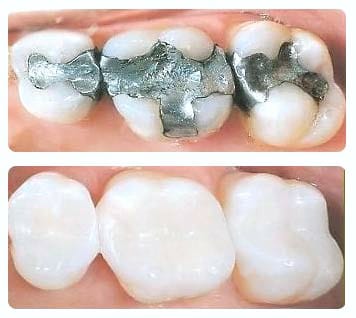
A more natural appearance, with support where needed
In this existing Enhance Dental case, the outer teeth were restored with white fillings. The centre tooth was weaker and received a porcelain crown to provide additional coverage and support.
The photograph shows why choosing the right restoration matters: a filling may suit one tooth, while the tooth beside it needs a different approach.
Actual historical Enhance Dental case. The filling brand was not documented on the original page, so this is not presented as a Stela case. Results and treatment needs vary.
Small repairs can make a meaningful difference
When can white fillings help?
A direct filling is shaped in your tooth during the appointment. It can restore missing structure and make the surface easier to clean and use comfortably. The aim is to preserve sound tooth wherever practical, while providing an appropriate seal and shape.[11]
Repair a cavity
Restore a tooth damaged by decay after assessing how deep the problem extends and the health of the nerve inside.
Replace a failing filling
Address a broken restoration, recurrent decay or a defect that affects function. Some smaller defects can be repaired.
Rebuild shape
Repair selected chips, worn areas or exposed necks of teeth. We also investigate why the damage occurred.
Early decay without a hole may sometimes be managed with fluoride, cleaning and dietary changes rather than drilling. A severely weakened or cracked tooth may need an onlay, crown or other care. An examination helps us find the right level of treatment.
Australian-developed restorative technology
Stela fillings: a modern amalgam alternative
Stela is a self-cure, bulk-fill composite resin made by SDI in Australia. It was developed as an alternative to amalgam and is one of the white filling materials Dr Paino often uses for suitable restorations.[1]
“Self-cure” means it hardens through a chemical reaction. Its dedicated primer bonds the material to the tooth and helps initiate setting at the interface. The Stela system does not need a curing light. That can be useful where light access would be difficult.[2][5]
“Bulk-fill” means a suitable cavity can be filled in one placement rather than repeated thin layers. It does not mean every large cavity should receive a filling: the remaining tooth and its load-bearing cusps still need enough support.

Bonded tooth-coloured repair
A resin restoration offers an alternative to a silver-coloured metal filling. The appearance is planned around the tooth and its position.
Chemical setting
Stela’s setting mechanism avoids dependence on light reaching the deepest part of the restoration. Correct mixing, primer use and timing remain important.
Promising early evidence
Published trials support short-term clinical performance in selected back teeth. We consider these findings together with your individual risks.
Good technique still matters. Stela requires its own primer system and a field protected from contamination. Its instructions specify a full four-minute finishing time; this is only one stage of the appointment, not the duration of your visit. Stela is not a material for placing directly onto an exposed nerve.[2]
Evidence, explained in plain language
How good is Stela? What the research shows
Clinical trials tell us how restorations perform in patients. Laboratory studies help explain properties such as strength, setting and staining. They answer different questions, so a favourable laboratory result cannot establish how long a filling will last in your mouth.
| Study & evidence type | What was found | What it means for you |
|---|---|---|
| 18-month clinical trial Loguercio et al., 2025 [3] | 165 back-tooth restorations in 55 participants compared Stela Automix, Stela Capsule and a light-cured bulk-fill composite. Functional and biological performance was comparable at 18 months, with some aesthetic differences. | Encouraging clinical evidence for the studied restorations. Eighteen months is still a short follow-up for a filling. |
| 12-month clinical trial Ragab et al., 2026 [4] | 60 restorations in 20 patients compared self-, dual- and light-cured materials. All remained in service at one year. Surface gloss and texture favoured the light-cured comparator. | The reported 100% survival applies to this small, one-year study, including only 20 Stela restorations. It is not your personal success rate or a lifetime guarantee. |
| Primer and setting Guarneri et al., 2025 [5] | Laboratory testing found that Stela Primer accelerated and improved the setting reaction. Adding light was not a substitute for using the correct primer. | Stela is a complete material-and-primer system. Following its specific instructions matters. |
| Mechanical properties Laporte et al., 2025 [6] | Stela Automix showed higher compressive strength than two tested light-cured composites, before and after laboratory ageing. Ageing reduced strength in every group. | Promising strength in a test does not make a restoration unbreakable, or prove superiority over every material in clinical use. |
| Staining and colour Çarıkçıoğlu et al., 2025 [7] | In beverage-immersion testing, the Stela formulations changed colour more than the light-cured comparison materials. All tested composites discoloured over time. | Stain resistance and polish are part of the choice, particularly for highly visible teeth. Laboratory immersion is not an exact simulation of everyday use. |
| Bonding and margins Laboratory comparison, 2025 [8] | In bovine dentine, Stela with its own primer had limited gaps comparable to the tested light-cured system. The light-cured material had higher bond strength; substituting another adhesive gave poorer Stela results. | No material wins every test. We do not promise a permanently “gap-free” or decay-proof filling. |
Our approach: use Stela where its handling and material properties suit the tooth, and choose another option where appearance, structural support or clinical conditions favour it. The trials above compared Stela with other composites—not directly with amalgam over decades.
Laboratory reports of mineral deposits or ion release do not establish that Stela prevents future decay in patients. A good restoration still needs fluoride toothpaste, cleaning, sensible eating habits and review.[6]
Choose for the tooth, not just the material name
Compare white fillings, onlays and crowns
| Option | Where it may help | Points to consider |
|---|---|---|
| Stela composite | Selected direct restorations, especially suitable back-tooth cavities. Chemically sets with its dedicated primer. | Needs isolation and enough remaining tooth support. Long-term clinical evidence is developing; polish and staining can influence selection. |
| Other direct composites | Tooth-coloured repairs with a choice of shades and handling properties; often helpful for detailed aesthetic work. | Adhesive technique, moisture control and correct light curing are important. Wear, fracture and staining remain possible. |
| Glass ionomer | Selected neck-of-tooth areas, interim restorations, bases and other situations determined by the tooth and decay risk. | Different strength, wear and appearance properties. It is not interchangeable with composite in every load-bearing cavity. |
| Ceramic onlay or overlay | A partial-coverage restoration that may protect weakened cusps while preserving appropriate tooth structure. | Usually involves records, fabrication and a separate fitting visit. Preparation, bonding and bite planning are needed. |
| Porcelain or zirconia crown | A more extensively damaged but restorable tooth that needs coverage and support. | Requires more preparation than a small filling. Material choice, nerve health, risks and maintenance need discussion. |
Explore Porcelain Crowns for larger restorations, or explore composite bonding and resin veneers for suitable smile changes. A bridge is a different treatment used to Discover Porcelain Bridges.
An amalgam-free practice, with individual advice
Replacing old amalgam fillings: when does it make sense?
We place no new amalgam. If you already have an amalgam filling, we assess the filling and tooth rather than recommend automatic replacement. A sound, comfortable filling can often be monitored.[10]
A clinical problem
Decay, a fractured tooth or restoration, a failed seal or a functional problem may make repair or replacement appropriate.
An appearance concern
You may prefer a tooth-coloured restoration. We discuss the cosmetic benefit alongside the cost and effect on the remaining tooth.
A weakened tooth
Removing an old filling can reveal cracks or less sound tooth than expected. An onlay or crown may offer more suitable support.
The Australian Dental Association states that replacing sound amalgam without a clinical reason has not been shown to improve general health. Our choice to provide amalgam-free restorations is not a claim that every existing amalgam filling is harmful.[10]
Replacement can involve loss of additional tooth structure, sensitivity and possible further treatment. We explain these considerations and use appropriate isolation, water cooling and suction when an existing restoration is removed. Tell us about allergies, pregnancy and any health concerns so we can plan appropriately.
From assessment to comfortable chewing
Your white fillings appointment, step by step
Most direct white fillings can be completed in one treatment visit. The time and approach depend on the tooth and the number of restorations. We discuss your comfort and check that you are ready before starting.
Where local anaesthetic is needed, numbing cream and our computer-controlled CALAJECT system can help make delivery more comfortable. Please tell us if injections or previous dental experiences worry you.
Explore care for nervous patients · See our dental technology

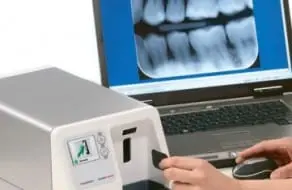
- Look closely and explainExamine the tooth, existing filling, gums and bite. Intraoral photographs and radiographs, where indicated, help us explain the findings and agree a plan.
- Prepare conservativelyProvide anaesthetic when needed, remove the defective material and manage decay while preserving appropriate tooth structure. Protect the working area from contamination.
- Restore the toothUse a matrix band where needed to recreate shape and contact with the next tooth. Apply the selected material’s primer or bonding system and allow correct setting or curing.
- Shape, polish and checkRefine the contour and surface, check floss contact and adjust your bite. We explain when to eat, what sensations to expect and when to contact us.

Limitations, deep cavities and the health of your tooth
Every restoration has limits. White fillings can wear, stain, chip, loosen or develop decay at their edges. A large restoration or heavy grinding puts greater demands on the filling and the remaining tooth.
For a deep cavity, we assess the nerve before deciding how to manage the decay. In suitable living teeth, selective decay removal can reduce the chance of exposing the pulp. If the nerve is exposed or unhealthy, further pulp treatment or root canal treatment may be needed. Stela itself is not a pulp-capping material.[2][12]
A material cannot restore a tooth that is no longer restorable, remove the cause of grinding or compensate for uncontrolled decay risk. We discuss other treatment or referral when that is the more appropriate path.
Keep your repair working well
White fillings: longevity, aftercare and costs
How long can a filling last?
A major review of 2,816 back-tooth composite restorations found that decay risk and the number of restored surfaces affected survival. Decay and fracture were the main reasons for failure. This was research on established composites, not a long-term Stela trial.[9]
The useful question is how well a particular restoration suits your tooth and how it can be maintained. Reviews may identify an area that can be polished or repaired rather than replacing the whole filling.
Your individual estimate
Costs depend on the tooth, surfaces involved, complexity and any additional care. We explain the findings and proposed fees before proceeding. Ask about payment options and contact our team for current fees.

After your appointment
Wait until numbness has worn off before chewing so you do not bite your cheek or tongue. Follow the eating advice given for your specific restoration.
Protect the repair
Brush twice daily with fluoride toothpaste and clean between teeth. Limit frequent sugar exposure and discuss dry mouth or grinding with us.
Know when to call
A high bite, worsening or lingering sensitivity, pain on biting, a loose filling or swelling needs review. Severe pain or swelling warrants prompt contact.
For a brighter overall shade, plan teeth whitening before elective visible restorations where appropriate. Existing fillings do not whiten like natural enamel; we explain the timing and shade choices.
Lost a filling or broken a tooth? Read about emergency dental care and call so we can assess the urgency.
Your questions, answered
16 helpful FAQs about white fillings and Stela
What are white fillings made of?
Most direct white fillings are composite resins: a resin matrix reinforced with fine filler particles. They bond to enamel and dentine using the appropriate adhesive system. Stela is a self-cure composite. Porcelain and zirconia restorations are different ceramic options made outside the mouth.
Does Enhance Dental use amalgam?
No. We do not place amalgam fillings. We offer tooth-coloured options and choose the restoration around the condition of your tooth. Having an old amalgam filling does not automatically mean it needs replacement.
Is Stela a white amalgam filling?
No. Stela is a tooth-coloured composite resin, not amalgam. SDI developed it as an amalgam alternative. It sets chemically with its dedicated primer, without needing a curing light for the Stela system.
Is Stela suitable for every filling?
No single material suits every tooth. Stela is often useful for selected back-tooth restorations. We also consider the cavity size, remaining tooth, moisture control, bite and appearance. Another composite, glass ionomer, an onlay or a crown may be more appropriate.
How strong are Stela fillings?
Laboratory studies report encouraging mechanical properties, and clinical trials report promising short-term performance. These results do not make Stela unbreakable or prove it lasts longer than all other materials. The tooth, restoration size, bite and decay risk matter as well.
How long do white fillings last?
There is no fixed expiry date. Many composite restorations function for years, while some need repair or replacement sooner. Larger fillings, decay risk, grinding and cracks can shorten service. Long-term research on established composites cannot be used as a ten-year guarantee for newer Stela restorations.
Should I replace all my old amalgam fillings?
Not routinely. We assess each filling for decay, fracture, poor function and other clinical concerns. If your concern is appearance, we discuss the cosmetic benefit alongside the tooth preparation, cost and risks. Replacing a sound filling is not a proven treatment for general health complaints.
Will getting a white filling hurt?
Local anaesthetic is often used when treating decay or removing an old filling. We discuss numbing cream and our CALAJECT delivery system where appropriate, check your comfort and allow breaks. Sensations and anaesthetic needs vary; a completely pain-free experience cannot be promised.
Do white fillings need a scan or dental laboratory?
A direct white filling is generally shaped in your tooth during the appointment, without laboratory manufacture. If a ceramic onlay or crown is more appropriate, digital scanning and laboratory fabrication may be part of that separate treatment.
Can a large filling be replaced with Stela instead of a crown?
Sometimes a direct restoration is suitable, but a material’s strength cannot replace missing tooth support. A tooth with thin cusps, cracks or extensive loss may benefit from an onlay or crown. We explain the more conservative options and the risk of fracture before you decide.
Can Stela fillings stain?
Yes. All resin restorations can change appearance. Laboratory beverage studies found more staining in the tested Stela formulations than in some light-cured comparison materials. This does not predict your exact result, but it is one reason to consider material choice carefully for highly visible teeth.
Is Stela BPA-free?
SDI describes Stela as BPA-free and HEMA-free. It is still a methacrylate-based dental resin, so this does not mean it is free of every possible allergen. Tell us about previous reactions to dental materials, resins or acrylics.
What if my tooth is sensitive after a filling?
Mild short-lived sensitivity can occur. Contact us if your bite feels high, sensitivity is worsening or lingering, or the tooth hurts when biting. Severe pain or swelling needs prompt assessment. Deep decay or an already irritated pulp can sometimes require further treatment.
Can white fillings be whitened?
Whitening does not lighten a filling in the same predictable way as natural enamel. If you are planning whitening and visible new fillings, discuss the order before shade selection. Urgent decay or a broken tooth should be assessed first.
How much do white fillings cost in Melbourne?
The fee depends on the tooth, number of surfaces, complexity, material and any preliminary care. We explain the proposed treatment and provide an individual estimate. Ask reception about current fees and payment options; the size of a visible hole alone cannot establish the cost.
How do I book for a broken or lost filling?
Call Enhance Dental on (03) 9533 8488 or book online. Tell reception about pain, swelling, sharp edges or a lost filling so the urgency can be assessed. We are at Level 2, Suite 219, 566 St Kilda Road, Melbourne VIC 3004.
References & further reading
Manufacturer information explains the product and its instructions. Peer-reviewed patient trials and laboratory studies are identified separately above. Evidence reviewed 2 November 2026.
- SDI. Stela product information and Australian development.
- SDI. Stela Australian instructions for use: indications, isolation, primer and setting.
- Loguercio AD et al. (2025). Clinical evaluation of a new chemically-cured bulk-fill composite in posterior restorations: 18-month multicentre randomised clinical trial. Journal of Dentistry 162:106031.
- Ragab MA et al. (2026). Clinical performance of an innovative self-cure bulk-fill composite compared to dual-cure and light-cure bulk-fill composite: a 1-year randomised clinical trial. Clinical Oral Investigations 30:269.
- Guarneri JAG et al. (2025; online 2024). Ability of a novel primer to enhance the polymerization of a self-cured resin composite. Dental Materials 41:42–50.
- Laporte C et al. (2025). Mechanical, Antibacterial, and Physico-Chemical Properties of Three Different Polymer-Based Direct Restorative Materials: An In Vitro Study. Polymers 17:1272.
- Çarıkçıoğlu B et al. (2025). Color stability of a novel self-cure bulk-fill composite compared to light-cure bulk-fill and injectable composite resins. BMC Oral Health 25:1478.
- Comparative Evaluation of Microshear Bond Strength and Microgap Formation of a New Self-Cure Bulk-Fill and a Light-Cure Composite Resin in Bonding to Dentin (2025). Laboratory study.
- Opdam NJM et al. (2014). Longevity of posterior composite restorations: a systematic review and meta-analysis. Journal of Dental Research 93:943–949.
- Australian Dental Association. Policy Statement 6.18: Safety of Dental Amalgam.
- Direct Composite Restorations on Permanent Teeth in the Anterior and Posterior Region: An Evidence-Based Clinical Practice Guideline, Part 1 (2024).
- Deep Caries Management: EFCD–ESE–ORCA S3-Level Clinical Practice Guideline (2026).
- Healthdirect Australia. Dental fillings: treatment, materials and aftercare.

Your care with Dr Joseph Paino
B.D.Sc. (Melbourne) · Principal dentist, Enhance Dental
Meet Dr Paino and the team

Let’s look after your tooth
A repair that suits your tooth and your priorities
Whether you have a cavity, an old filling you are unsure about or a tooth that has chipped, bring your questions. We will explain what we find and help you choose your next step.
Enhance Dental · Level 2, Suite 219, 566 St Kilda Road, Melbourne VIC 3004
Directions, contact details and enquiry form
General dental information supports an individual examination. Treatment has benefits, risks and limitations; photographs and research results do not guarantee your outcome.