
Gum health • Melbourne
Gentle, tailored gum disease care
Bleeding gums are common, but they are not something you have to ignore. At Enhance Dental, we check gum health carefully and explain what we find in plain language. Your plan may be as simple as a check-up and scale and clean every 4 or 6 months, or may include more focused periodontal treatment if the gums and supporting bone need it.
We take a calm, practical approach: understand your needs, show you what is happening, and agree on the next step together. You will not be judged for how long it has been since your last visit.
A dental examination is needed to diagnose gum disease and recommend care. Treatment and maintenance intervals depend on your individual findings.
Start with the signs
What is gum disease?
Gum disease (periodontal disease) is inflammation affecting the gums and, in more advanced cases, the ligament and alveolar bone that support the teeth. It often begins when plaque—a sticky film of bacteria—builds up around the gumline. Plaque that stays in place can harden into tartar (calculus), which needs professional removal.
Gingivitis is early gum inflammation. Gums may look red or swollen and bleed when brushing. With appropriate cleaning and daily home care, gingivitis can usually be reversed without permanent damage. Periodontitis affects deeper supporting tissues and can cause pockets, gum recession and loss of alveolar bone. Existing bone loss cannot simply grow back, but treatment can often control the disease and help reduce further breakdown.
Periodontitis can develop gradually and may not hurt. A lack of pain does not always mean the gums are healthy.

Possible signs
Bleeding when brushing or flossing, red or puffy gums, persistent bad breath or taste, gum recession, sensitive roots, gaps that are changing, or teeth that feel loose.
Common contributors
Dental plaque is the main trigger. Smoking or vaping, diabetes, some dry-mouth medicines, stress, hormonal changes, family history and difficulty cleaning between teeth can add to risk.
No blame, just a plan
Many things can make daily cleaning or regular visits difficult. We will meet you where you are and make the plan manageable, practical and tailored to you.
A closer look at the supporting tissues
Healthy gums and gum disease: a visual comparison
These illustrations show a healthy tooth and supporting tissues alongside changes that can occur with gum disease. They are general diagrams, not a diagnosis; your own gum measurements and dental images help us assess your individual gum and bone health.
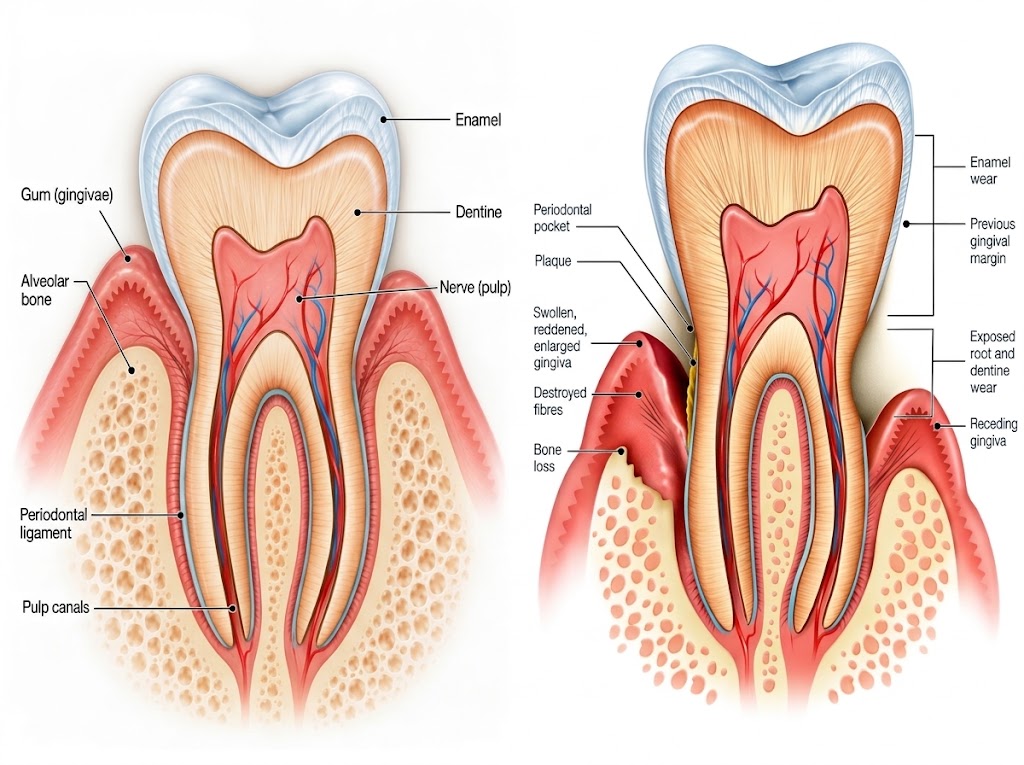
Healthy tooth and supporting tissues. Gum disease, often due to plaque and/or using a hard tooth brush, can damage the gum and/or the supporting a tooth.
What the diagrams show
Healthy support, and changes to watch
Healthy tissues: The gum fits closely around the tooth. The periodontal ligament connects the root to the supporting alveolar bone.
With periodontitis: Plaque bacteria can inflame the gums. In established disease, deeper pockets and damage to the supporting attachment and bone may develop.
Brushing too hard can contribute to gum recession, but plaque biofilm drives gum disease. This diagram is illustrative; an examination and radiographs when clinically indicated help assess your own gum and bone health.
Careful checks, explained clearly
How we assess gum health
We combine what you tell us with a clinical examination. The checks help us distinguish simple gum inflammation from periodontitis and decide whether preventive cleaning is enough or more focused treatment is appropriate.
Periodontal probing
A small periodontal probe gently measures the space between each tooth and gum at several points. We record pocket depths and may also note bleeding, recession, tooth movement and areas that are harder to clean. The measurements create a baseline so we can compare your gum health over time.
Digital radiographs
When clinically appropriate, digital dental X-rays help us assess the height and pattern of the alveolar bone around teeth. We use radiographs selectively, based on your history, examination and previous images—not automatically at every visit. We explain why an image is recommended before taking it.
Your health and home care
We ask about health conditions, medicines, smoking or vaping, previous gum treatment and your current cleaning routine. This helps us tailor advice and consider factors that may affect gum inflammation or healing.
The right level of care for you
From a regular scale and clean to periodontal treatment
Not everyone with bleeding gums needs deep cleaning. We will explain what the findings mean and discuss suitable options, likely visits and costs before treatment begins.
Preventive check-up and clean
If your gums are healthy or have mild inflammation, care may involve a check-up and professional scale and clean, often at a 4- or 6-month interval where clinically suitable. We remove plaque and tartar we can reach, review brushing and interdental cleaning, and set a recall interval around your needs and risk.
Non-surgical periodontal treatment
If deeper pockets or deposits below the gumline are present, treatment may involve careful subgingival cleaning (periodontal debridement) in one or more visits. We can discuss ways to make treatment comfortable, including taking breaks or using local anaesthetic when appropriate. The aim is to reduce the bacterial deposits and inflammation and make the area easier to keep clean.
Review and maintenance
After active treatment, we recheck the gums and review home care. Some people benefit from supportive periodontal maintenance at shorter intervals—often around 3 or 4 months—while others need a different schedule. We personalise the interval rather than using one timetable for everyone.
Specialist care when needed
If disease is advanced, complex or not responding as expected, we can discuss referral to a periodontist (gum specialist) and coordinate care. Specialist treatment may include additional non-surgical or surgical options, depending on a full assessment.
Gentle care matters. Tell us if you feel anxious, sensitive or overwhelmed. We can explain each step, agree on a signal to pause, use a supportive pace and adjust the visit to suit you.
Your mouth is part of your health
Gum disease, diabetes and cardiovascular health
Diabetes and gum health
The relationship works in both directions. Diabetes—particularly when blood glucose is not well controlled—can increase the risk or severity of periodontitis and affect healing. Periodontitis may also make glucose management more difficult for some people.
A 2022 Cochrane review of clinical trials found that periodontal treatment in people with diabetes and periodontitis lowered HbA1c by an average of about 0.43 percentage points at 3–4 months and 0.30 points at 6 months compared with usual care. This is a modest, short-term average from research; it does not mean gum treatment cures diabetes or replaces your GP, diabetes team or prescribed care. Please tell us if you have diabetes and share any relevant changes to your health or medicines.
Heart and blood vessel health
Research finds an association between periodontitis and atherosclerotic cardiovascular disease, including heart attack and stroke. Shared risk factors and ongoing research make the relationship complex. An association does not prove that gum disease directly causes heart disease, and periodontal treatment has not been proven to prevent a heart attack or stroke.
Keeping your gums healthy is worthwhile for your mouth and overall wellbeing. Continue to follow your doctor’s advice for cardiovascular risk, and let us know about relevant heart conditions or medicines so we can plan dental care appropriately.
Gum inflammation and general health can influence one another in different ways. If you are pregnant, smoke or vape, have a condition that affects immunity, or take medicines that cause dry mouth, please mention it. We can consider this information when planning your care and liaise with your medical practitioner when appropriate and with your consent.

Small steps make a difference
Daily habits that support healthier gums
- Brush gently twice a day with a soft toothbrush and fluoride toothpaste, angling the bristles towards the gumline.
- Clean between your teeth daily with floss or appropriately sized interdental brushes. We can show you which option fits your spaces.
- If your gums bleed, do not scrub harder or stop cleaning. Brush gently and arrange an assessment, especially if bleeding persists.
- If you smoke or vape, ask your GP, dentist or Quitline about support to stop. Smoking can mask bleeding while increasing gum risk.
- Keep review visits at the interval recommended for your gum health, health history and risk factors.
A familiar team, here to help
Thoughtful care at every visit
Our team will take time to listen, explain what the gum measurements and images mean, and work with you on a realistic next step. If your needs change, we can adjust the plan together.
We welcome questions and will check in about your comfort throughout your appointment.

Clear answers to common questions
Gum disease FAQs
Do bleeding gums always mean gum disease?
Bleeding is a common sign of gum inflammation, often related to plaque, but other factors can contribute. A dental examination is needed to identify the cause. Healthy gums generally should not bleed regularly when brushed or cleaned between the teeth.
Can gum disease be present without pain?
Yes. Gingivitis and periodontitis can be painless, particularly early on. Bleeding, recession, bad breath or changes in tooth position may be easier to notice than pain, and some people have few obvious symptoms. Periodontal measurements and radiographs when appropriate help assess what is happening.
Will I need deep cleaning?
Not necessarily. Some patients need only a check-up, scale and clean, personalised home-care advice and routine review. If there are deeper periodontal pockets or deposits below the gumline, we may recommend non-surgical periodontal treatment. We will explain the findings and options before proceeding.
How often should I have a check-up and scale and clean?
It depends on your gum health and risk. A 4- or 6-monthly visit may suit some people; those with periodontitis may need shorter supportive maintenance intervals. We will discuss a schedule that makes sense for your circumstances and review it over time.
Do I need X-rays at every visit?
No. Digital radiographs are taken when there is a clinical reason, such as checking bone levels or investigating a specific concern. We consider your existing images and individual history, explain the reason, and use X-rays selectively.
Does treating gum disease protect my heart or control diabetes?
Periodontitis is associated with cardiovascular disease, but current evidence does not prove that treating gum disease prevents heart attacks or strokes. In people with both diabetes and periodontitis, periodontal treatment may modestly improve HbA1c over the short term, but it is not a replacement for medical diabetes care. We will discuss oral health findings without making promises about medical outcomes.
Can periodontitis be cured?
Gingivitis can usually be reversed. Periodontitis is generally managed as a long-term condition: treatment can reduce inflammation and help control further tissue damage, but lost bone does not routinely regenerate on its own. Ongoing home care and maintenance are important.
When should I seek prompt dental or medical help?
Arrange a dental assessment if you have persistent bleeding, swelling, pus, gum recession or a loose tooth. Facial swelling with fever or feeling very unwell needs urgent care. If swelling affects breathing or swallowing, seek emergency medical help immediately.
Comfort and procedure details
Does deep cleaning (periodontal debridement) hurt?
We plan treatment around your comfort. Because cleaning below the gumline can be sensitive, we can discuss topical numbing gel or local anaesthetic where appropriate. You may still notice pressure or vibration, but you should tell us if you feel pain. Agreeing on a hand signal lets us pause and check in at any time.
What should I expect in the days after periodontal treatment?
Some tenderness, slight bleeding or temporary sensitivity to hot and cold can occur as the gums settle. The amount and duration vary, and sensitivity may last longer when roots are exposed. We will give you tailored aftercare advice. Contact us if symptoms worsen, are severe, or do not improve as expected.
Aesthetic and structural concerns
Can receded gums or lost bone grow back on their own?
Gum or bone lost through periodontitis does not usually grow back by itself. Treatment aims to control active disease and protect the support that remains. In selected cases, a periodontist may consider regenerative surgery for particular bone defects, or gum grafting for recession; suitability and results vary, so an assessment is needed.
Why can “black triangles” appear between teeth after treatment?
Inflamed gums can be swollen and partly fill spaces between teeth. As inflammation settles, those spaces may become more visible. This can reflect the underlying shape of the teeth or previous loss of gum and bone support; it is not, by itself, proof that treatment has succeeded or failed. We can explain what is happening and discuss suitable options if the appearance concerns you.
At-home care and cleaning tools
Is an electric toothbrush or a water flosser better for gum disease?
There is no single tool that is best for everyone. A powered brush with a pressure sensor can help some people brush gently and consistently. A water flosser may be a useful addition, especially around bridges, braces or implants, but it may not replace the interdental cleaning method suited to your teeth. We can demonstrate options for your mouth.
Why might interdental brushes be recommended instead of regular floss?
The right method depends on the space between your teeth. Floss can suit tight contacts, while a correctly sized interdental brush may clean more effectively where there is room, such as with recession or open spaces. We can measure the spaces and recommend a size. Do not force a brush into a tight gap, as this can injure the gum.
Costs and special circumstances
Does private health insurance cover gum disease treatment?
Cover varies by fund and policy. Any rebate depends on the treatment item numbers, your level of cover, waiting periods and remaining annual limits. We can provide an estimate and relevant item numbers for you to check directly with your fund before treatment; your fund can confirm your exact benefit and gap.
Is gum disease treatment safe during pregnancy?
Routine preventive and necessary dental care, including gum assessment and cleaning, is generally considered safe during pregnancy. Hormonal changes can make gums more prone to inflammation. Please tell us if you are pregnant or may be pregnant, and mention any relevant health advice or medicines so we can tailor care and coordinate with your maternity care team if needed.
How can vaping affect my gums?
Research on vaping and periodontal health is still developing, and results are mixed, so we cannot predict an individual effect with certainty. Smoking is an established risk factor for gum disease; vaping is not risk-free, and nicotine may affect blood flow and healing. Please tell us if you vape or smoke so we can consider it when assessing your gum health and healing.
Can gum disease return after treatment?
Yes. Periodontitis can become active again if plaque builds up or risk factors change. Daily home care and a maintenance interval tailored to your gum measurements and health help us monitor stability and respond early if signs return.
Evidence and further reading
Reliable gum health resources
We draw on current clinical guidance and research. These sources provide more detail for patients who would like to read further:
- Healthdirect Australia: Gum disease — symptoms, diagnosis and treatment information reviewed in February 2025.
- Cochrane review indexed on PubMed (2022): Periodontal treatment and glycaemic control in people with diabetes — 35 randomised studies and moderate-certainty evidence of a short-term HbA1c reduction.
- American Heart Association scientific statement (2026): Periodontal disease and atherosclerotic cardiovascular disease — reviews the association and the evidence gaps.
- Diabetes Australia: Dental health — practical information on diabetes, gum health and dental visits.
- Australian Dental Association Victoria: Diabetes and periodontal health — professional information on the relationship and coordinated care.
You deserve care that feels manageable
Let’s check your gum health together
If your gums bleed, look swollen or have changed—or if it has been a while since your last visit—we can start with a thorough, gentle assessment. We will explain what we find and talk through a plan that suits your mouth, health and preferences.
Enhance Dental • Melbourne • Gum health care tailored to you