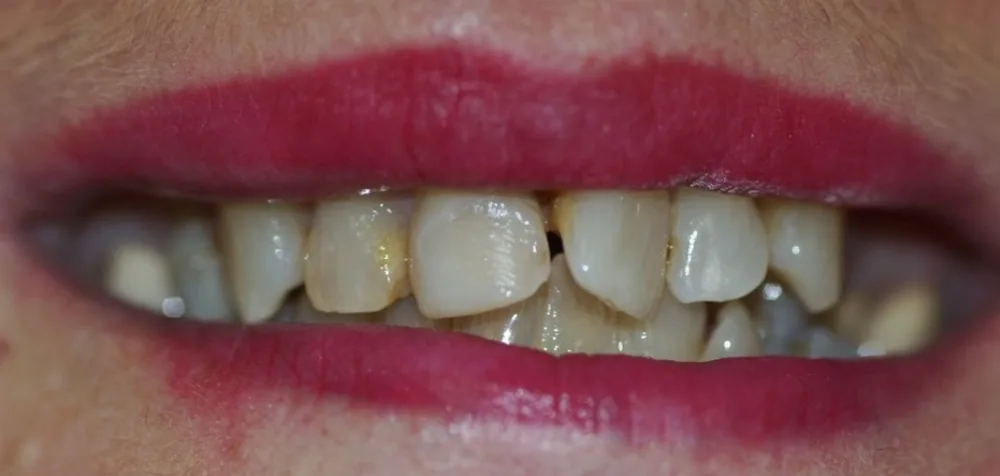
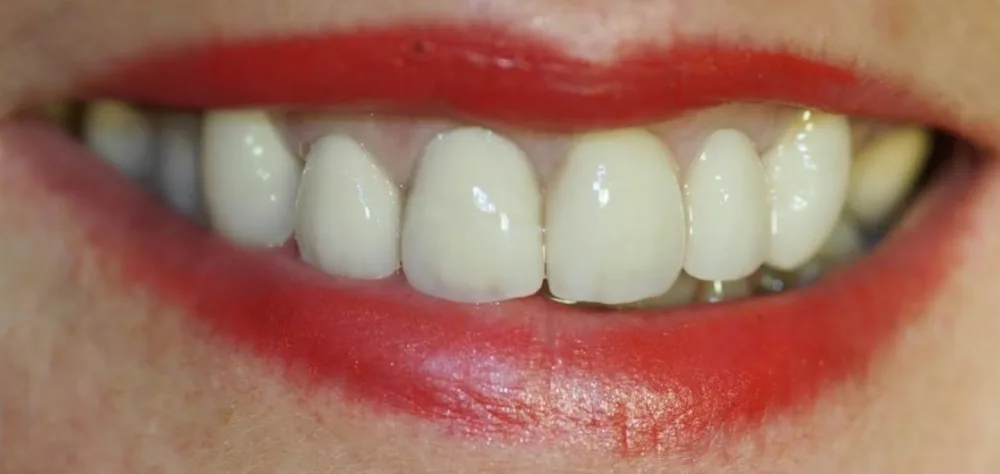
Restoring shape and balance
Six upper front teeth restored with full ceramic crowns, with the tooth edges shaped to complement the smile.

Porcelain & zirconia crowns · Melbourne
Repair a damaged tooth, rebuild worn teeth or refresh ageing restorations with crowns thoughtfully shaped for your smile.
Discover porcelain crowns in Melbourne with Dr Joseph Paino. We bring together careful bite planning, contemporary ceramics and a gentle approach to help you smile and chew with greater confidence.
St Kilda Road · Practice established 1995 · Personal care from Dr Paino

Real patients. Thoughtful dentistry.
From worn front teeth to a heavily restored back tooth, see examples of Dr Joseph Paino’s work at Enhance Dental.
Six upper front teeth restored with full ceramic crowns, with the tooth edges shaped to complement the smile.
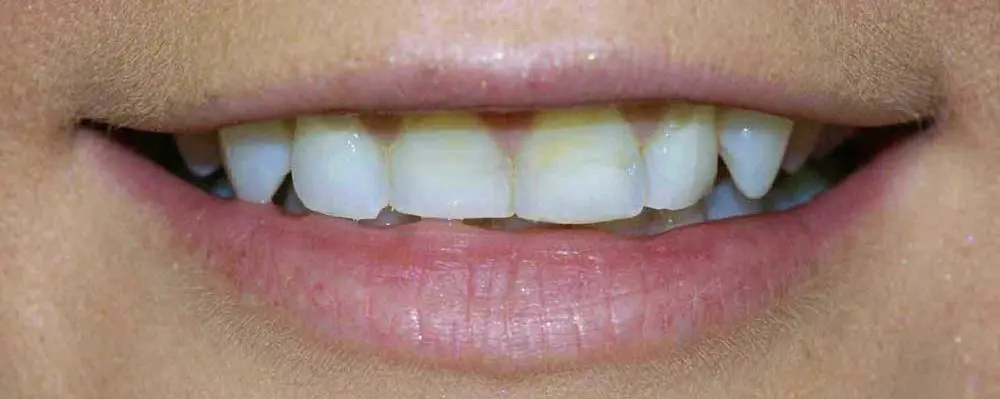
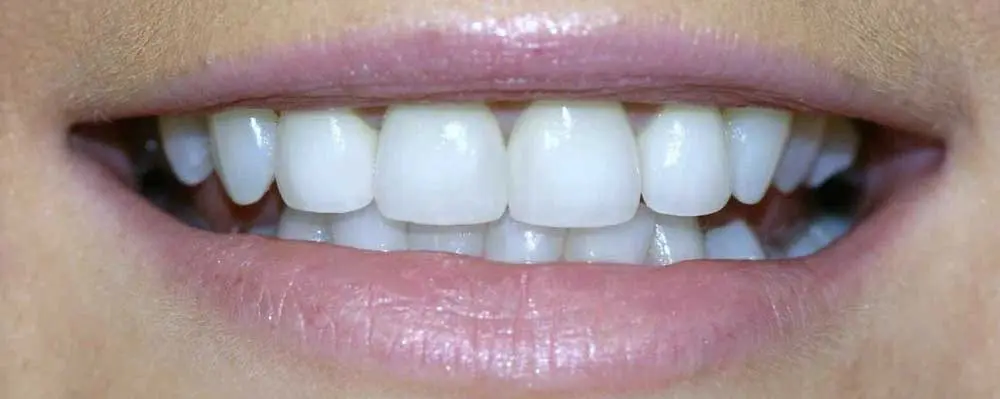
Full ceramic crowns used to restore the appearance of aged and worn teeth in this Enhance Dental case.

A crown on the central tooth, alongside tooth-coloured fillings on neighbouring teeth. Different teeth can need different solutions.
Actual Enhance Dental patient cases. Results vary with the starting condition, treatment and individual circumstances. Historical case photos do not identify the ceramic used in every case and do not predict your result.
Protect your tooth. Rediscover your smile.
A crown covers and restores a tooth when a filling or smaller restoration may not provide enough support. The aim is to preserve the natural tooth where possible, restore comfortable function and plan an appearance that suits the surrounding teeth.
Strength and support
A heavily restored tooth may have very little natural structure supporting a large amalgam (metal) filling. If the filling has fractured, decay has developed around it, or part of the tooth has broken away, another large filling may not give enough support. A crown can cover and support a restorable tooth, rebuilding its shape and chewing surface.
We assess the remaining tooth, cracks and nerve health before recommending porcelain crowns, zirconia or a more conservative onlay. A sound amalgam filling does not need replacing simply because it is metal.
Appearance
A crown can change the visible shape or shade of a tooth when other options are unsuitable. If the tooth is healthy and the change is mainly cosmetic, we also discuss more conservative options such as whitening, bonding or a veneer.
Worn and shortened teeth
Teeth that have become short, flat, chipped or extensively worn can affect your smile and how your teeth meet. Porcelain crowns or zirconia crowns may help rebuild selected teeth, while bonded composite or onlays can be suitable alternatives.
We first investigate the causes, including grinding, clenching and acid erosion. The aim is to restore appropriate shape and function while preserving as much sound tooth as possible and managing further wear.
A crown is not always the best answer. Dr Paino will explain the diagnosis, alternatives, likely preparation, limitations, costs and maintenance before you decide. Explore Learn About Porcelain Veneers, resin veneers and bonding, or Explore Dental Implants where relevant.
When several teeth need attention
If many teeth are severely worn, broken or dominated by failing large fillings, treating each tooth in isolation may miss the bigger picture. Full mouth rehabilitation brings the health, function and appearance of your teeth into one coordinated plan.
Understand the starting point
Dr Paino assesses the teeth, existing restorations, gums, bite and jaw function. Photographs, scans or impressions and X-rays may be needed. We discuss your concerns, the causes of breakdown and which teeth can predictably be restored.
Design before treatment
For extensively worn teeth, the proposed tooth length, biting contacts and available space need careful planning. Where appropriate, diagnostic models, mock-ups or provisional restorations can help assess proposed changes before the final restorations are completed. A change in bite height is considered only when clinically justified.
A coordinated approach
Your plan may combine porcelain crowns, zirconia crowns, onlays, bonded composite or other care. Some teeth may need no restoration. We explain the sequence, alternatives, fees and maintenance; complex cases may also benefit from specialist input.
Start with a plan for the whole smile. Whether you need one crown or a more extensive reconstruction, our aim is to restore suitable teeth, establish comfortable function and create an appearance that suits you. Treatment may be staged where appropriate, with ongoing care and grinding protection discussed from the outset.
See the possibilities before deciding

Wondering how longer teeth, a different shape or a refreshed smile might look? Digital smile design uses images to help explore proposed changes in relation to your lips, smile line and facial features.
At Enhance Dental, Digital Smile Design (DSD) can create a photo-based smile simulation to help you discuss possible changes before committing to treatment. Share what you like about your smile and what you would like to change.
For porcelain crowns or full mouth rehabilitation, appearance is one part of the plan. The final recommendation also depends on tooth condition, gum health, bite, material and what is clinically achievable. A photo simulation cannot assess strength, fit or function; further records and planning may be required.
Beautiful ceramics, chosen for you
When patients ask about porcelain crowns, they may mean tooth-coloured ceramic crowns generally. Modern porcelain crowns are planned to balance appearance with the demands of everyday chewing. The exact material—zirconia, e.max or another ceramic—matters. Dr Paino will explain the options after assessing your tooth, bite and appearance goals.
Commonly selected at Enhance Dental
Zirconia is a strong ceramic and is our most commonly used crown material. Recent generations can provide a more lifelike appearance than earlier zirconia, while offering useful strength for many restorative situations. Shade, translucency, thickness, tooth position and bite are considered together. A strong crown still needs accurate design, appropriate finishing and ongoing care.
When translucency matters
For selected teeth, lithium disilicate (commonly called e.max) can offer a highly natural, translucent appearance, including at the incisal edge. It may be a desirable option when aesthetics are a priority and the tooth, bite and risk factors make it suitable. Bruxism or heavy loading can change the choice or the protection plan.
Other suitable restorations
“Porcelain crowns” is often used as a general term for tooth-coloured ceramic crowns. Other ceramics, an onlay, a veneer, a filling or a metal option may be discussed where appropriate. We explain the specific material proposed for your case. The recommendation is based on the tooth’s condition and your preferences, not a preset package.
| What matters to you | What we assess | How it guides the plan |
|---|---|---|
| Strength for a back tooth | Remaining tooth, bite forces, wear and grinding | Zirconia is often considered where strength is a priority. |
| Translucency at a front tooth | Natural tooth shade, neighbouring teeth, incisal edge and bite | e.max or another ceramic may be considered when it suits the case. |
| Clenching or bruxism | Clinical signs, history, symptoms and existing appliances | Material, bite design and a protective appliance may all need consideration. |
| Minimising tooth reduction | Position, shape, damage and the change being planned | A filling, onlay or veneer may be more suitable than a full crown in some cases. |
Your preferences have a place in the decision
Some patients want a particularly natural result with visible translucency at the front edge of a tooth. We discuss what is achievable for that tooth, whether e.max or another ceramic is suitable, and how your bite may affect the long-term maintenance plan. Zirconia is often chosen when strength is a major consideration, but material choice remains case-specific.
If you clench or grind, tell us—even if you are not sure how often it happens. We assess your teeth, bite and existing appliances before recommending a crown material. Where a protective appliance is indicated, Dr Paino may discuss a custom vapour-polished nylon bite splint made by Melbourne’s 3D Sleep Lab. The practice uses this option for its strength, smooth finish and hygiene and durability characteristics compared with conventional acrylic splints. Appliance choice, care and expected service life vary between patients; no splint can remove every risk of damage.
If you have completed Invisalign, your upper and lower Vivera retainers may remain part of your retention plan. We can check their fit after crown treatment. Retainers are not automatically a substitute for a prescribed bite splint; the right appliance depends on your clinical needs.
Comfort comes first
Knowing what to expect can make a real difference. Tell us about your concerns so we can take things at a pace that suits you.
01 · Numbing cream
Local anaesthetic is usually needed for crown preparation. We apply numbing cream to the gum before the injection to help reduce the initial sensation.
02 · CALAJECT
Our sophisticated CALAJECT computer-controlled system delivers local anaesthetic at a controlled flow rate, helping make the injection as comfortable as possible. Sensations vary from person to person.
03 · Your pace
We allow the anaesthetic to work and check that you are numb before starting. You may feel pressure or vibration; signal us if anything feels uncomfortable so we can pause and adjust.
Ask us about support for nervous patients, or call to discuss your concerns before booking.
Digital precision · Melbourne craftsmanship
Dr Joseph Paino works with Noble Dental Ceramics for laboratory-made crowns and bridges. Based in Glen Iris, Melbourne, Noble combines experienced ceramic technicians with digital design and manufacturing. Its directors, Robert Kunz and Shane Mullaney, each bring more than 30 years of crown and bridge experience.[1]
Noble offers CAD/CAM workflows, zirconia restorations and other ceramics. We plan the design with the laboratory around the supporting teeth, available space and bite.
Noble states that its restorations are 100% Australian made. Working with a Melbourne laboratory supports communication about your individual case.
Noble describes its materials as “TGA approved”. The ceramic and restoration design still need to be suitable for your clinical situation.
Noble advertises guaranteed workmanship. Ask us about the applicable terms; a laboratory guarantee does not promise a lifetime clinical result.
Noble also offers custom shade matching, diagnostic wax-ups, provisional restorations, and monolithic and layered zirconia options. We explain which construction is recommended for you.[2]
Missing a tooth as well? A crown restores an existing tooth; a bridge replaces a gap using supporting teeth or implants. Explore our Discover Porcelain Bridges to compare suitable options.
A more comfortable way to take records
We use our 3Shape TRIOS intraoral scanner to record a detailed, three-dimensional digital model of your teeth and how they meet. For suitable crown and bridge cases, this replaces a tray of impression material and its setting time.
The scan can be reviewed on screen, with areas checked and rescanned where needed. Digital records support communication with the laboratory during design. We still check the finished crown’s margins, contacts, appearance and bite carefully in your mouth.[3]
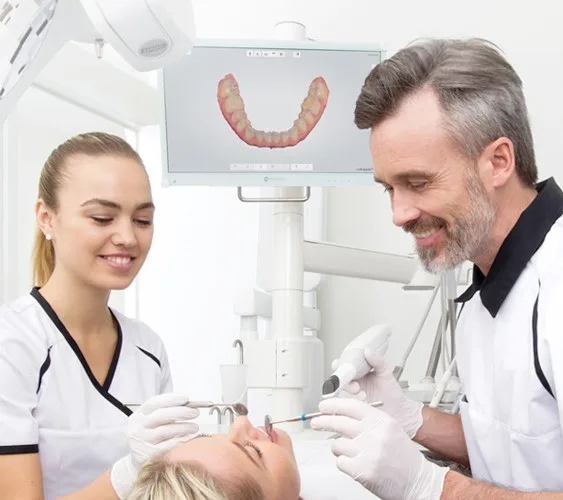
What does the research say? A randomised clinical trial of 70 single back-tooth crowns found favourable fit and efficiency with TRIOS scanning compared with conventional impressions followed by laboratory scanning. This supports that particular workflow; it does not establish the same result for every bridge length or clinical situation.[4]
Digital scanning has limits. Clear access to the preparation margins, moisture control and a good scan remain essential. Deep margins, bleeding, movement and longer spans can make records more demanding. Additional records or a conventional impression may sometimes be needed. Scanning cannot guarantee a perfect fit or eliminate adjustment.
Explore our advanced dental technology or learn about TRIOS from 3Shape. Ask about digital scanning at your crown consultation.
From diagnosis to fit
Most laboratory-made porcelain crowns involve two main treatment appointments, with time between them for fabrication. Here is what you can expect.
We examine the tooth and surrounding tissues, review your symptoms and relevant dental history, and take radiographs or other records when clinically indicated. We discuss whether a crown is appropriate, the alternatives, material choices and a written estimate before treatment begins.
Once you are comfortable and numb, Dr Paino removes decay or unsuitable old restorations as needed, rebuilds the tooth where required and shapes it to make room for the crown. Our TRIOS digital scanner usually records the prepared tooth and your bite, avoiding a tray of impression material in suitable cases. A conventional impression may occasionally be needed. For a laboratory-made crown, a temporary crown usually protects the tooth while the final restoration is made. We explain how to care for it between visits.
Your crown is custom-made with Noble Dental Ceramics in Melbourne using the selected ceramic. The shade, contour and surface detail are planned to suit your neighbouring teeth. For a front tooth, we can discuss the brightness, shape and translucency you prefer, alongside what is suitable for your bite.
At your fitting visit, we remove the temporary crown and check the final crown’s fit, contacts, appearance and bite. You have the opportunity to see the appearance before the crown is cemented or bonded in place. We explain home care and any review or protective appliance recommended for you. Many laboratory crowns involve two main treatment visits, but timing and appointments vary.
The people behind your care
Dr Joseph Paino graduated from the University of Melbourne in 1988 and established Enhance Dental in 1995. Your crown is planned around your tooth, priorities and bite.
Zirconia is our most commonly selected material, combining strength with today’s improved aesthetics. For selected front teeth, we discuss e.max when extra translucency is a priority.
Clear fees, care instructions and a plan for review. Eligible treatment may be covered by our 7-year guarantee, subject to its maintenance requirements, exclusions and full terms.


Plan with confidence
The fee for porcelain crowns depends on the tooth, material, laboratory requirements, preparation and any other care needed. We explain the proposed treatment and costs before you decide. You can also ask about our payment options.
Caring for porcelain crowns matters: the underlying tooth remains vulnerable to decay and gum disease. Brush twice daily with fluoride toothpaste, clean between your teeth each day and attend the reviews recommended for you. Contact the practice if a crown feels loose, chips or changes your bite.
Eligible zirconia crowns, porcelain crowns, implant crowns and bridges commenced and completed at Enhance Dental may be covered under the practice’s 7-year guarantee, subject to its full current terms. The policy has maintenance requirements, exclusions and other conditions; read the details and ask how they apply to your proposed treatment.
Questions patients ask
Local anaesthetic is usually required for preparation. We use numbing cream and CALAJECT controlled delivery to help make the injection comfortable, then check that you are numb. Mild tenderness or sensitivity can occur afterwards. Tell us if pain persists or your bite feels uneven.
They may be. Contemporary zirconia options have improved in appearance, and the shade, translucency and finish can be selected for the case. For some front teeth with very high translucency demands, e.max or another ceramic may also be considered. The tooth, bite and your expectations guide the decision.
Patients may use “porcelain crowns” as a general term for tooth-coloured ceramics. Zirconia and e.max (lithium disilicate) are different materials with different optical and mechanical properties. Zirconia is often selected when strength is a priority. e.max can be chosen for the translucency it can provide in selected cases. Neither material is automatically best for everyone.
Not necessarily. Bruxism, bite force, crown position and the condition of the tooth all affect risk assessment. We may recommend a different material or a protective appliance. If an appliance is recommended, follow the wearing and review instructions given for your case.
Possibly. If you completed Invisalign, bring your upper and lower Vivera retainers so we can assess fit after restorative treatment. A retainer helps maintain tooth position but is not automatically equivalent to a bite splint designed for grinding protection.
Laboratory-made porcelain crowns often involve two main visits: preparation and records, then fitting. The number and timing depend on the tooth, any preliminary care, the material and laboratory process, and your individual plan.
Porcelain veneers can be an excellent cosmetic option, but they are most predictable when bonded to sound natural tooth enamel. If a tooth already has very large fillings or little enamel remaining, a veneer may not have enough reliable support and may not protect the weakened parts of the tooth.
In these situations, a crown is often the more appropriate choice because it covers and supports the remaining tooth structure and helps restore everyday chewing function. Dr Paino will assess how much sound tooth remains, your bite and whether a crown, onlay or another restoration best suits your tooth.
If the nerve inside a crowned tooth dies or becomes infected, it does not automatically mean the crown needs replacing. In suitable cases, root canal treatment can be carried out through an access opening in the existing crown, leaving the crown in place. Afterwards, the opening is sealed with a matching tooth-coloured filling.
Dr Paino will assess the tooth and crown first. If the crown is damaged, leaking or affected by decay, or access cannot be achieved safely, it may need to be removed or replaced.
Crowns can last many years. A long-term study published in the Journal of Dentistry reported median survival of more than 14.6 years for crowns, counting any further treatment as a failure. This 2003 study followed 89 crowns on back teeth; it is a useful reference, rather than a universal lifespan for modern zirconia or porcelain crowns.
Your crown may last longer or need attention sooner. Longevity depends on the remaining tooth, gum health, bite, material, home care and factors such as grinding or trauma. Regular reviews and any recommended protective appliance help us monitor and maintain your restoration.
No. Tooth-coloured crowns do not lighten in the same way as natural teeth. If whitening is part of your smile plan, discuss its timing before choosing the final crown shade.
Eligible crowns completed at Enhance Dental may be covered, subject to the current policy terms. Maintenance, appliance use when prescribed, exclusions and other conditions apply. Read the full guarantee terms and ask us to explain how they relate to your treatment.
Call Enhance Dental on (03) 9533 8488 or book online. We are at Level 2, Suite 219, 566 St Kilda Road, Melbourne.
Further reading: Healthdirect’s dental crown guide and how CALAJECT works.
Your next step
If you are considering porcelain crowns, bring your questions about zirconia, e.max, appearance, bite protection, fees and timing. Dr Joseph Paino will explain the findings and suitable choices so you can make an informed decision.
Dental information on this page is general and does not replace an examination. Crowns have risks and limitations, and individual results vary. Further assessment, records and treatment fees will be explained before you proceed.