
Wisdom teeth · Gentle care · Melbourne
Clear answers.
A calmer plan for your wisdom teeth.
A sore gum, a partly erupted tooth or an unexpected X-ray finding can leave you unsure what comes next. We take time to explain the problem and help you choose a suitable way forward.
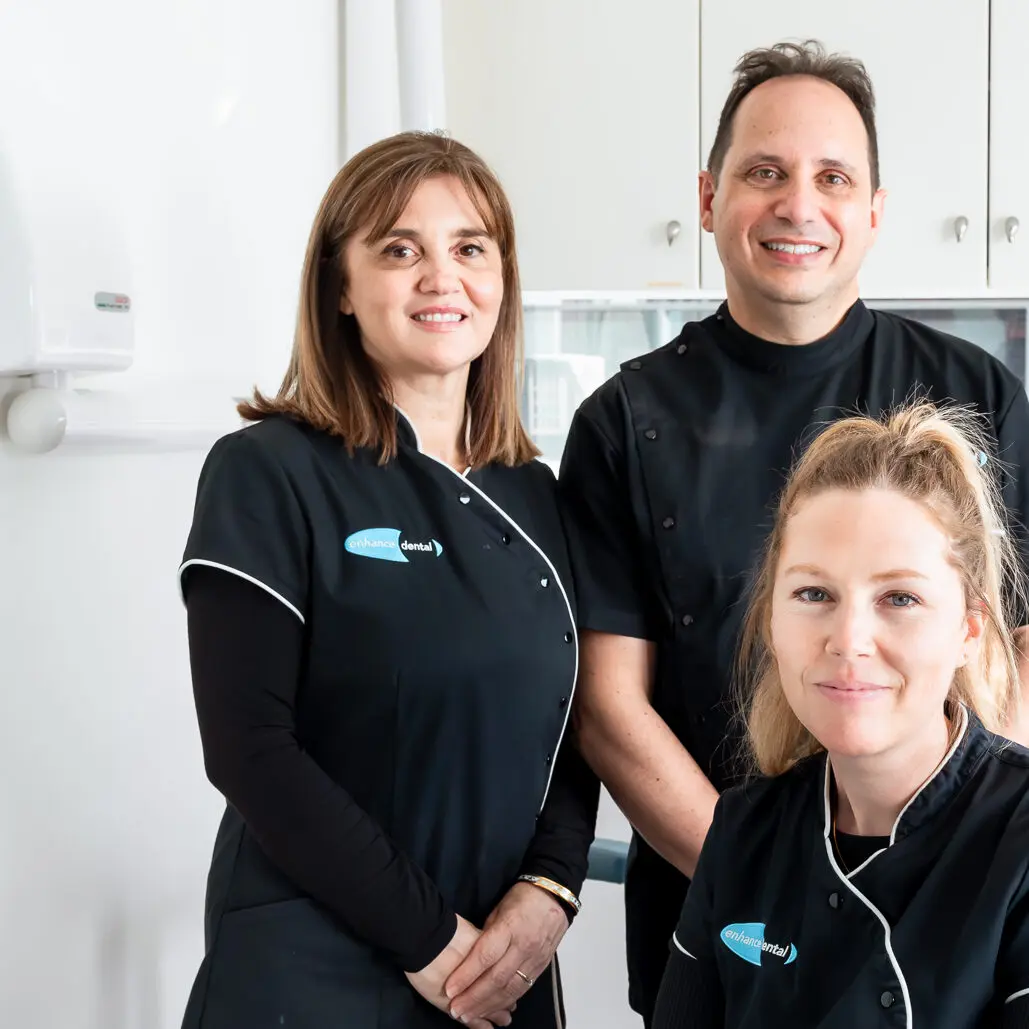
At Enhance Dental, Dr Joseph Paino assesses your wisdom teeth, discusses whether removal is needed and plans your comfort. Suitable care may take place here, with sleep dentistry considered where appropriate; complex cases and cases where general anaesthesia is considered are referred to OMFS.
St Kilda Road, Melbourne · Nervous patients welcome · Individual assessment before treatment
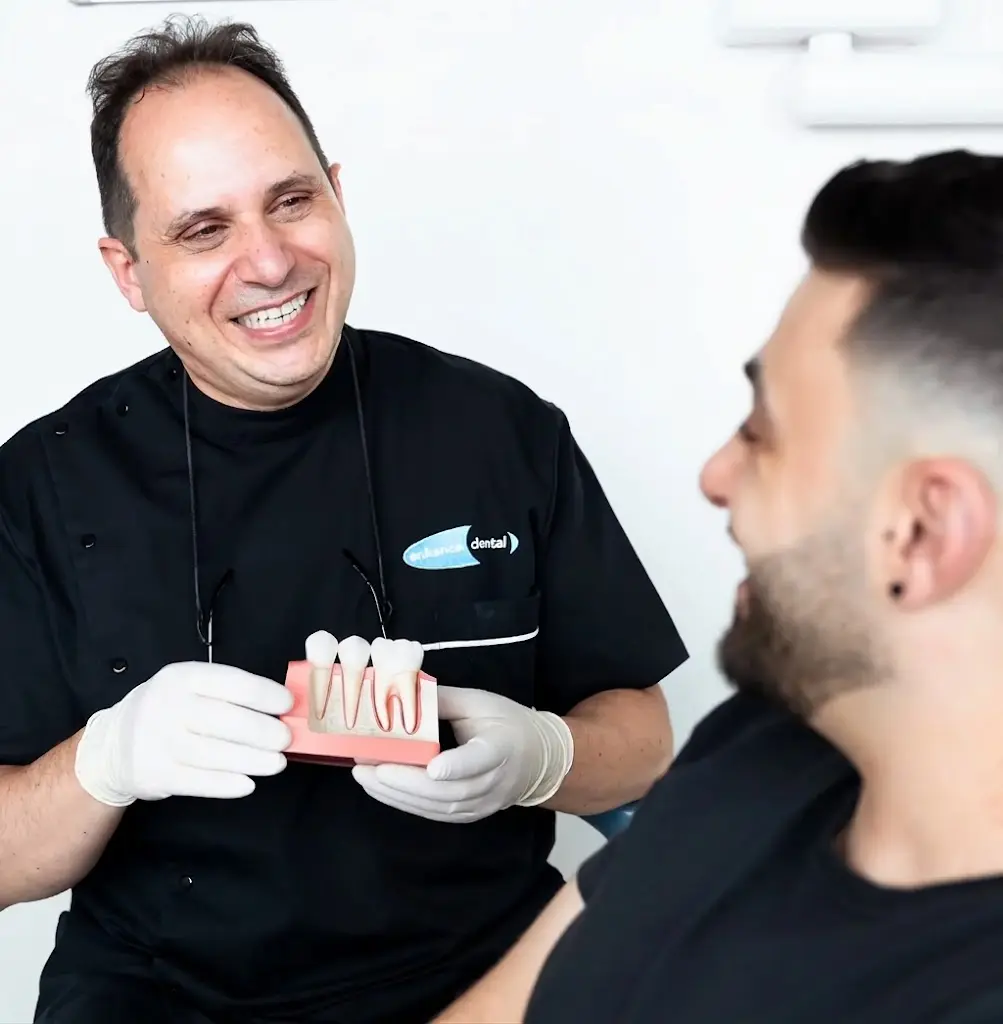
An individual decision, not automatic extraction
Do your wisdom teeth need to be removed?
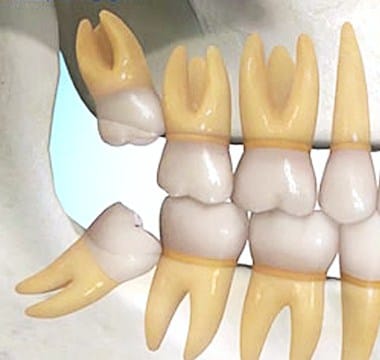
Wisdom teeth are the third molars at the back of the mouth. They usually emerge in the late teens or early adulthood, although timing varies and some people do not develop all four.
An impacted wisdom tooth cannot erupt into a normal position because its path is blocked or space is limited. It can be fully covered by bone or gum, or only partly visible. Impaction alone does not tell us whether removal is the best choice.[1]
Healthy, useful teeth that can be cleaned may be retained. Teeth without symptoms still need assessment for hidden problems. If monitoring is appropriate, we agree a review plan and explain what changes to report.[2]
Repeated gum problems
Recurring or significant inflammation around a partly erupted tooth can make cleaning difficult and lead to repeated painful episodes.
Decay or damage
A wisdom tooth or the second molar beside it may develop decay, gum disease or root damage that needs treatment.
Other findings
A cyst or other abnormality, an over-erupted tooth injuring soft tissues, or a specific wider treatment plan may warrant action.
What about crowding? Wisdom teeth removal is not a reliable way to prevent or correct crowding of the front teeth. If you have had orthodontic treatment, follow your retainer advice and discuss changes rather than assume the wisdom teeth are responsible.[2]
Understanding the sore gum around a wisdom tooth
Pericoronitis: what it means and how we treat it
Pericoronitis means inflammation of the gum around a tooth, usually a partly erupted wisdom tooth. A gum flap can trap food and bacteria, leading to soreness, swelling and sometimes infection. You may notice a bad taste, pain towards the ear or difficulty opening comfortably.
We assess the tooth, gum and extent of any infection. Treatment commonly starts with gentle cleaning and irrigation beneath the gum flap, advice on keeping the area clean and pain relief suited to you. We address an active episode before planning elective removal where appropriate; urgent drainage, extraction or hospital care may instead be needed depending on the findings.[3]
Antibiotics when indicated
Antibiotics may be needed for spreading infection, systemic illness such as fever, persistent swelling despite local treatment or particular medical risks. They are an addition to appropriate dental care, not a substitute for treating the cause.
A plan beyond this episode
Once symptoms are controlled, we discuss whether cleaning and review are enough or whether repeated episodes, the tooth’s position or other disease favour removal. A first mild episode does not automatically mean surgery.
We explain why an antibiotic is or is not recommended and review your progress as needed. Do not take leftover antibiotics or delay review because pain temporarily settles.[4]
When swelling needs urgent help
Call us promptly for facial swelling, fever, worsening pain or reduced opening. If swelling is rapidly spreading, or you have difficulty breathing or swallowing, call 000 or attend an emergency department immediately. Do not wait for an online enquiry response.
Look at the anatomy before deciding
Digital OPG and CBCT for wisdom teeth assessment
Imaging helps us understand the roots, adjacent teeth, bone and important nearby structures. We review suitable existing images and request further imaging only when justified. With your consent, relevant images can be obtained from another provider and shared with a specialist.
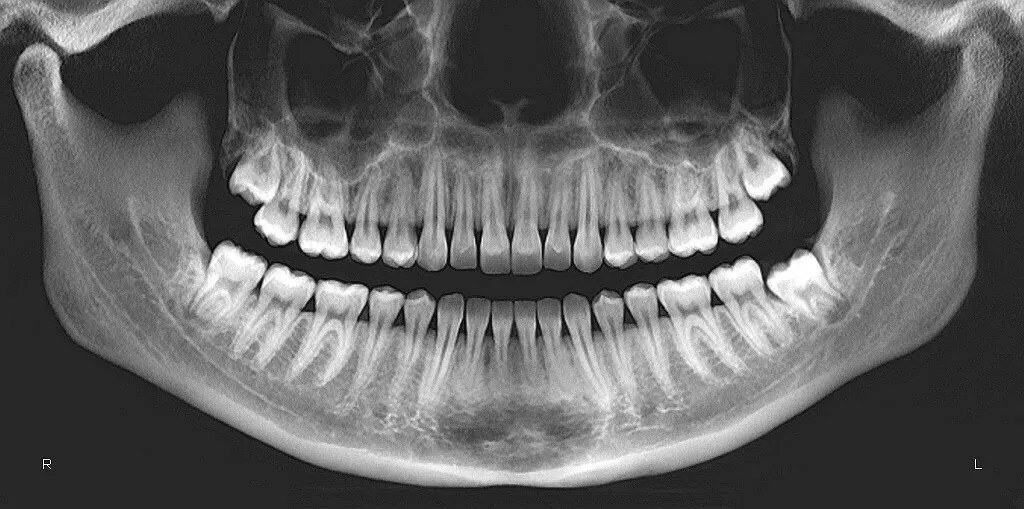
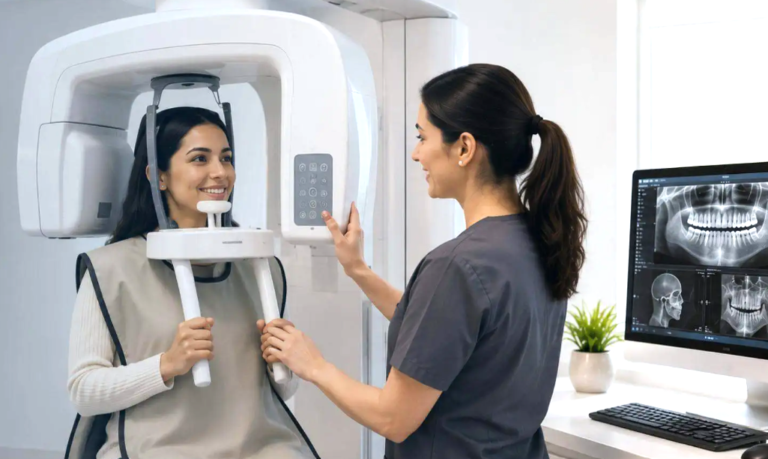
| Imaging | What it can help assess | Important limitations |
|---|---|---|
| OPG: panoramic X-ray | Wisdom tooth position and root shape, adjacent teeth, the bony lower jaw canal and upper sinus regions. | A two-dimensional image can have magnification and overlapping structures. Apparent closeness does not always establish actual contact. |
| CBCT: cone beam CT | A specific three-dimensional question about roots, the canal or other anatomy when this may change treatment planning or referral. | Involves additional radiation and is not a routine screening scan. It does not guarantee avoidance of nerve injury. |
| Other dental X-rays | Selected detail of decay, the adjacent second molar or another finding where an intraoral image is appropriate. | Image choice depends on the clinical question. More images are not automatically better. |
Research guidance recommends reserving CBCT for an individual question that conventional imaging cannot answer adequately. We consider the necessary field of view and exposure: digital does not mean radiation-free.[5]
Explore our advanced dental technology and ask us to explain your images at your assessment.
Careful assessment of nerves and the upper sinus
Inferior alveolar nerve
This nerve runs through a canal in the lower jaw and provides feeling to lower teeth, the lower lip and chin. Lower wisdom tooth roots can lie close to its bony canal.
Lingual nerve
This nerve supplies feeling to the tongue and contributes to taste. It runs in nearby soft tissues and is not reliably mapped by an OPG or routine CBCT.
Upper jaw sinus
Upper wisdom tooth roots can be near the maxillary sinus, an air space above the back teeth. Their relationship can affect planning and referral.
We assess root shape—including curved, divergent or twisted roots—depth of impaction and the relationship to surrounding structures. Imaging shows important anatomy, particularly the bony canal containing the inferior alveolar nerve, rather than a complete picture of every nerve fibre.
Potential consequences include altered sensation, and for an upper tooth a communication between the mouth and sinus. Risk varies considerably between teeth. If the anatomy or procedure is complex, we refer for specialist assessment rather than assume a scan has removed the risk.[7]
Could a coronectomy be an alternative?
For selected lower wisdom teeth close to the inferior alveolar nerve, an oral surgeon may consider coronectomy: removing the crown while leaving suitable roots in place. Research supports reduced nerve-injury risk in appropriately selected high-risk teeth, but roots can move, become exposed or need later treatment. It is not suitable for every tooth and requires informed consent and follow-up.[8]
Your comfort is part of the treatment plan
Gentle wisdom teeth care, with or without sleep dentistry
You do not have to be confident about dentistry to come and see us. Tell us about your concerns, medical conditions and previous experiences, including anything that has made treatment difficult.
We can agree how much explanation you prefer, a clear pause signal and planned breaks. If you do not want sedation—or it is not suitable—we can still discuss a supported appointment while you are awake, or another appropriate provider or setting.
Read our guide for nervous dental patients. There is no pressure to choose sedation simply because you feel anxious.
Gentle local anaesthetic
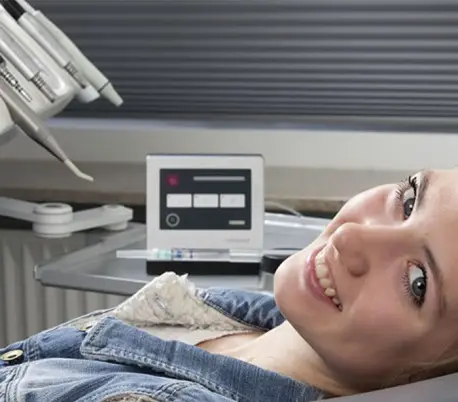
Numbing cream where appropriate and CALAJECT computer-controlled delivery help us plan a comfortable injection. We allow time for the anaesthetic to work and check before starting.
Jaw and lip comfort
A bite block can help support your jaw so you do not have to hold it open continuously. Lip balm, comfortable positioning and breaks can help reduce dryness and fatigue.
Controlled techniques
We use careful, controlled techniques suited to the tooth. Where appropriate, dividing a tooth into sections can help removal rather than relying on force. Sharp pain is a reason to stop and reassess.
CALAJECT: thoughtful anaesthetic delivery
CALAJECT controls the flow of local anaesthetic. It is one part of our gentle approach, alongside communication and checking numbness. During removal you may still notice pressure, movement or sound; a completely sensation-free or pain-free experience cannot be promised.
Let us know about jaw joint problems, limited opening, a strong gag reflex or sore lips so we can adapt the plan.
Local anaesthetic, IV sedation or general anaesthesia?
| Approach | What to expect | How we plan it |
|---|---|---|
| Local anaesthetic, awake | The treatment area is numbed. You remain awake and can communicate, with practical comfort measures and breaks. | Appropriate for many suitable extractions, including some anxious patients who prefer to remain awake. |
| IV conscious sedation “Sleep dentistry” | Medication through a vein helps you feel relaxed and drowsy. You may doze but remain able to respond. Local anaesthetic is also used. | Can be arranged here for suitable patients and procedures with our visiting sedation team. Assessment, preparation and an adult escort are required. |
| General anaesthesia | You are unconscious under the care of an anaesthetic team in an appropriate hospital or surgical facility. | We refer to OMFS for assessment when GA is considered. The specialist and anaesthetist decide the suitable setting and plan. |
We work with Dental Sedation Victoria, led by Dr Barry Creighton, for visiting IV conscious sedation. The sedation practitioner and registered nurse look after sedation and monitoring while your dental treatment is provided. Suitability depends on health, medicines, airway and procedure—not anxiety alone.[14]
Sedation is different from general anaesthesia. Drowsiness, nausea and other risks are discussed before you consent; complete sleep or no memory cannot be guaranteed. Follow your own written instructions about food, drink, medicines, adult supervision and driving restrictions. Do not fast or stop prescribed medicines based on general web advice.
Explore sleep dentistry at Enhance Dental or ask us about a comfort plan without sedation.
Specialist care when that is the right setting
Referral to the oral surgeons at OMFS

We refer suitable patients to the experienced oral and maxillofacial surgeons at OMFS, a Melbourne specialist group whose work includes wisdom tooth surgery, other oral surgery and treatment of jaw conditions.[15]
Referral is appropriate when general anaesthesia is being considered or when the anatomy, difficulty or medical circumstances call for specialist care. Examples include deeply impacted teeth, difficult or twisted roots, a close relationship to the inferior alveolar nerve, and upper roots close to the sinus.

With your consent, we provide the referral details and relevant radiographs, medical information and treatment concerns. The surgeon assesses you independently and discusses monitoring, complete extraction or other suitable options, as well as local anaesthetic, sedation or GA. A referral does not automatically mean a general anaesthetic or removal of all four wisdom teeth.[12]
OMFS lists its main rooms at Level 15, 501 Swanston Street, Melbourne VIC 3000, with contact number (03) 9347 3788. Confirm your actual consultation and surgery locations with their team; surgery may be arranged at another facility.
OMFS wisdom tooth surgery information · Preparing for general anaesthesia
Specialist, sedation, anaesthetist and hospital fees may be separate. We help you understand the referral pathway; the treating specialist explains their treatment and fees.
Know what comes next
Your wisdom teeth appointment, step by step
- Listen, examine and assessDiscuss your symptoms, health, medicines and worries. Examine the tooth and gum, review imaging and explain whether monitoring, initial treatment, removal or referral is appropriate.
- Agree the plan and your comfortDiscuss relevant risks, alternatives, the anaesthetic approach, costs and recovery. Treat active inflammation or infection as required and arrange specialist assessment where needed.
- Remove the tooth when indicatedOnce the area is adequately numb, the tooth may be removed whole or in sections. Surgical removal may involve a small gum incision, removal of some bone and stitches. The technique depends on the tooth.
- Support the first stage of healingCheck the site and bleeding control, provide written aftercare and individual pain-relief advice, and explain who to contact if you have concerns.
You may have one tooth treated, staged treatment or more than one removed at a visit. We do not give a fixed procedure time or recommend treating all four without considering your circumstances.
Practical guidance, with support if you need it
Recovering after wisdom teeth removal
Follow the instructions from the clinician who treated you. The outline below helps you prepare, but the extent of surgery, anaesthetic and your health can change the advice.
Protect the healing socket
Rest, avoid strenuous exercise and leave the socket alone. Use the supplied gauze as instructed. Avoid vigorous rinsing, spitting or probing the wound, and take care while your lip or tongue is numb.
Expect gradual recovery
Swelling and jaw stiffness can peak around days two to three. Choose comfortable soft foods, drink regularly and use any recommended cold packs outside the cheek with a cloth barrier.
Return at your own pace
After the first 24 hours, gentle rinsing and careful cleaning may be advised. Build back towards normal food and activity as comfortable, and attend any planned review.
Avoid smoking and vaping during healing, and follow advice about alcohol and drinking through straws. Your treating team will explain how to clean around the site and whether a specific mouthwash is appropriate.[16]
Pain relief is individual. We consider your medical history, allergies and other medicines. Non-opioid medicines are usually the first option when suitable; stronger medicines are not automatically better. Follow your prescribed or recommended doses and ask before combining products.[11]
Allow flexibility with work, study and childcare. Recovery may take a few days or around a week, sometimes longer after complex surgery. Sedation or GA also brings specific escort, supervision, driving and activity restrictions.[1][13]
Possible complications—and how we support you
Most people recover without a major problem, but no technique can remove every risk. We explain the risks relevant to your tooth, plan to reduce them and provide clear aftercare and review advice.
Dry socket
The protective clot may break down or be lost, leaving painful delayed healing. Pain can increase several days after removal and spread towards the ear. Review may involve gentle irrigation, a soothing dressing and pain relief; antibiotics are not usually the treatment without signs of infection.
Infection
Increasing swelling, fever, discharge, feeling unwell or worsening difficulty opening needs assessment. Treatment depends on the cause and severity and may include cleaning, drainage and antibiotics when indicated.
Swelling, bruising and stiffness
Some are expected, especially after surgery. They should begin settling rather than keep worsening. Marked swelling after initial improvement, or pain that is not controlled, warrants review.
Bleeding
Some blood-stained saliva can occur early. Persistent active bleeding needs firm pressure with the supplied gauze as directed and contact with the treating team if it does not settle. Tell us about blood-thinning medicines; do not stop them yourself.
Altered sensation
Nerve irritation or injury can cause numbness, tingling or altered sensation in the lower lip, chin or tongue, and occasionally altered taste. It may be temporary, but persistent or permanent changes are possible. Report unexpected ongoing numbness after the anaesthetic should have worn off.
Sinus or nearby structures
Upper extractions can occasionally create an opening to the sinus. Adjacent teeth or restorations can be damaged; jaw fracture and other serious complications are rare. Your anatomy guides the specific discussion and referral decision.
Dry socket is not automatically a bacterial infection. Clot breakdown and inflammation are important features. A Cochrane review found that chlorhexidine rinses or socket gel probably reduce dry socket in studied patients, but they can have unwanted effects. We recommend a suitable approach rather than advise everyone to self-start mouthwash.[9]
Please contact the treating team if recovery concerns you
Call for bleeding that does not stop with pressure, worsening pain or swelling, fever, discharge or persistent altered sensation. For rapidly spreading swelling or breathing or swallowing difficulty, seek emergency care immediately.
If we performed your treatment, contact Enhance Dental on (03) 9533 8488. If OMFS or another surgeon treated you, follow their postoperative contact instructions; we can help direct you to the right team. We take concerns seriously and arrange appropriate assessment or escalation.[17]
Research that informs the choices
Wisdom teeth research: what it means for your care
| Question | What the evidence says | Our practical approach |
|---|---|---|
| Remove or monitor? Cochrane, 2020 [2] | Evidence was insufficient to decide universally between removal and retention of asymptomatic, disease-free impacted teeth. Evidence about preventing front-tooth crowding was also limited. | Assess disease and risk, consider your preferences and arrange monitoring when appropriate. |
| Does CBCT prevent nerve injury? Robbins et al., 2022 [6] | A systematic review of seven randomised trials found moderate-certainty evidence that adding CBCT does not routinely reduce nerve injury compared with panoramic assessment. | Use 3D imaging selectively to answer a question that may change care, rather than promise protection from a scan. |
| Could coronectomy help? Kang et al., 2025 [8] | A review of 34 studies supported reduced nerve-injury risk for selected high-risk lower teeth, with a need to consider root movement, failure and later intervention. | Refer for specialist discussion where this may be suitable. Follow-up and the condition of the retained roots matter. |
| Antibiotics for everyone? Cochrane, 2021 [10] | Low-certainty evidence suggests preventive antibiotics may reduce infection after impacted wisdom tooth surgery, mainly studied in healthy patients treated by surgeons. | Balance individual benefit against side effects and resistance. Preventive prescribing differs from treating an existing infection. |
| Can dry socket be prevented? Cochrane, 2022 [9] | Chlorhexidine rinse or socket gel probably reduces dry socket in the studied settings. Evidence and suitability vary; no measure guarantees prevention. | Use appropriate local care and aftercare advice, and review promptly if pain increases rather than settles. |
Study results describe groups of patients. They are not a personal complication rate or a guarantee for your tooth.
Wisdom teeth costs in Melbourne: clear estimates first
The cost depends on consultation and imaging needs, tooth position, complexity, number treated and anaesthetic approach. We explain the proposed treatment and estimate before you decide. Where referral or sedation is planned, ask which fees come from each provider and check insurance benefits against the proposed item numbers.
Explore our payment options or contact our team about arranging an assessment. For current pain or swelling, please call rather than wait for an email reply.
Questions are always welcome
16 helpful FAQs about wisdom teeth
Do all wisdom teeth need to be removed?
No. Healthy, useful wisdom teeth that can be kept clean may be monitored. Impacted teeth also need an individual assessment: symptoms, disease, nearby structures, future risks and your preferences all matter. Monitoring means planned reviews rather than simply ignoring the teeth.
What are impacted wisdom teeth?
These are third molars that cannot emerge into a normal functional position because of limited space, another tooth or bone. A tooth may remain fully covered or appear only partly through the gum. An impacted tooth is not automatically diseased or painful.
What does pericoronitis mean?
Pericoronitis is inflammation, often with infection, of the gum around a partly erupted tooth. Food and bacteria can collect beneath the gum flap. A tender swollen gum, bad taste, pain or reduced opening may occur. We assess and treat the episode, then plan how to reduce recurrence.
Will I need antibiotics before my wisdom tooth is removed?
Not always. Local cleaning and irrigation are often the first steps for pericoronitis. Antibiotics may be needed for spreading or systemic infection, persistent swelling despite local treatment, or particular medical risks. They do not replace treatment of the cause. The timing of removal depends on the examination.
What is a digital OPG?
An OPG is a panoramic X-ray showing a broad two-dimensional view of the teeth and jaws. It helps assess wisdom tooth position, roots, adjacent teeth, the lower jaw canal and upper sinus regions. We assess existing images first and request new imaging when clinically justified.
Does everyone need a CBCT scan?
No. A CBCT provides three-dimensional X-ray information and is used when a specific question cannot be answered adequately by simpler images and the answer may affect care. It is not a routine requirement for every wisdom tooth. Digital imaging still involves radiation.
Can a scan guarantee that a nerve will not be injured?
No. Imaging helps show the relationship between roots and the bony canal containing the inferior alveolar nerve. The nerve itself and all soft-tissue structures are not fully mapped by these scans. We discuss the individual risk, treatment options and whether specialist assessment is appropriate.
What happens if my wisdom tooth is close to the inferior alveolar nerve?
We review the images and consider whether removal is needed, whether further imaging would help, and referral to OMFS. In selected high-risk lower teeth, a specialist may discuss coronectomy: removing the crown while leaving suitable roots. This has its own risks and follow-up requirements.
Can I have sleep dentistry for wisdom teeth?
For suitable patients and suitable treatment, IV conscious sedation can be arranged at Enhance Dental with our visiting Dental Sedation Victoria team. It helps you feel relaxed and drowsy and is used alongside local anaesthetic. It is different from general anaesthesia; suitability requires assessment.
What if I cannot have, or do not want, sedation?
Tell us. We can plan care while you are awake with clear explanations, an agreed pause signal, breaks, numbing cream where appropriate and carefully delivered local anaesthetic. A bite block can support the jaw, and lip balm can help protect the lips. Treatment complexity may still require referral.
Do you use CALAJECT for local anaesthetic?
We use CALAJECT, a computer-controlled local anaesthetic delivery system, as part of our gentle approach. We allow time for the anaesthetic to work and check comfort before starting. Pressure and movement can still be felt during removal. Tell us about any sharp pain so we can stop and reassess.
When will you refer me to OMFS?
We refer when general anaesthesia is being considered or when the tooth, anatomy or health factors make specialist care appropriate. Examples include difficult or twisted roots, deep impaction, roots near a major nerve or upper roots close to the sinus. The specialist assesses the safest suitable approach and setting.
What is dry socket and when can it happen?
Dry socket is painful delayed socket healing associated with breakdown or loss of the protective clot. Pain may increase a few days after removal, sometimes radiating towards the ear with an unpleasant taste or smell. It is not automatically a bacterial infection. Contact the treating team for assessment, cleaning, possible dressing and pain relief.
How long does recovery from wisdom teeth removal take?
Recovery varies with the tooth, technique, number removed and your health. Swelling and jaw stiffness often increase over the first two to three days before improving. Some people resume light activities quickly; others need several days or around a week off. We give advice suited to your procedure and work.
Will removing wisdom teeth stop my front teeth becoming crowded?
Removal is not a reliable way to prevent or correct front-tooth crowding. Tooth position can change for several reasons. If you have had orthodontic treatment, continue wearing retainers as instructed and discuss any change in fit or alignment with your dentist or orthodontist.
How much does wisdom teeth treatment cost in Melbourne?
Fees depend on the assessment, imaging, complexity, number of teeth, anaesthetic approach and provider. We explain the proposed care and estimate before treatment. Specialist, sedation, anaesthetist and hospital fees may be separate. Ask about likely item numbers and check any health fund benefits directly.
References & further reading
Clinical guidance, systematic reviews and provider information are identified separately. Evidence reviewed 2 November 2026. Your examination and treating team’s instructions take priority over general information.
- Healthdirect Australia. Removing wisdom teeth. Patient information, reviewed January 2026.
- Ghaeminia H et al. (2020). Surgical removal versus retention for asymptomatic disease-free impacted wisdom teeth. Cochrane review CD003879.
- SDCEP (2026). Acute pericoronitis: assessment, local treatment and referral.
- SDCEP. Drug Prescribing for Dentistry: bacterial infections and antibiotic stewardship.
- Matzen LH & Berkhout E (2019). Cone beam CT imaging of the mandibular third molar: EADMFR position paper. Dentomaxillofacial Radiology 48:20190039.
- Robbins J et al. (2022). Does adding CBCT to panoramic imaging reduce nerve injuries after third molar surgery? Systematic review. BMC Oral Health 22:466.
- British Association of Oral and Maxillofacial Surgeons. Removal of impacted wisdom teeth: patient information.
- Kang FW et al. (2025). Coronectomy in lower third molar surgery: systematic review and meta-analysis. Journal of Oral and Maxillofacial Surgery 83:601–615.
- Daly BJM et al. (2022). Local interventions for dry socket. Cochrane review CD006968.
- Lodi G et al. (2021). Antibiotics to prevent complications following tooth extractions. Cochrane review CD003811.
- Carrasco-Labra A et al. (2024). Evidence-based clinical practice guideline for managing acute dental pain. Journal of the American Dental Association 155:102–117.e9.
- OMFS. Wisdom tooth surgery: specialist assessment and treatment options.
- OMFS. Preparing for general anaesthesia. Follow your treating team’s individual instructions.
- Dental Sedation Victoria. Visiting IV conscious sedation service led by Dr Barry Creighton.
- OMFS. Melbourne oral and maxillofacial surgery practice and specialist team.
- OMFS. Post-operative care, including dental extractions.
- NHS. Wisdom tooth removal: recovery and complications.

Your care with Dr Joseph Paino
B.D.Sc. (Melbourne) · Principal dentist, Enhance Dental
Meet Dr Paino and the team

Take the next step at your pace
Let’s make a clear plan for your wisdom teeth
Whether you are in pain, have been told a tooth is impacted or feel nervous about removal, we can start with an assessment and an honest conversation about your options.
Enhance Dental · Level 2, Suite 219, 566 St Kilda Road, Melbourne VIC 3004
Directions, contact details and enquiry form
Any surgical or invasive procedure carries risks. Before proceeding, you should seek a second opinion from an appropriately qualified health practitioner. General information does not replace individual assessment.