
Composite bonding · Thoughtful details · Melbourne
A little refinement.
A smile that feels like you.
Composite bonding can refine a chipped edge, soften an uneven outline or improve a selected small gap. At Enhance Dental, Dr Joseph Paino shapes each addition to complement the tooth and the smile around it.
Often involving just one or two teeth, this focused approach gives you space to explore a change that matters to you.
Choose “FREE Invisalign or Cosmetic Consultation” when booking. Further assessment, records and treatment may involve fees.

A focused approach
Composite bonding in Melbourne, with attention to detail
Composite bonding uses tooth-coloured resin to add to or rebuild a selected area of a tooth. The material is carefully bonded, shaped and polished to blend with the surrounding smile.
Your goal may be a smoother outline after a small chip, a more even edge or a small improvement in tooth proportions. We consider the tooth, its shade and the bite before recommending the most useful addition.
A single-tooth composite bonding repair deserves careful colour matching, translucency and surface detail. We take time to explain the options and the scope that would suit your teeth.
Considering a broader smile change? Our dedicated composite resin veneers page explains coordinated changes across more of the visible tooth surfaces, including smile design, whitening and Invisalign planning.
Small changes, thoughtfully chosen
5 details composite bonding can help refine
A small chip
Rebuild a suitable chipped area and restore a pleasing tooth outline, with resin selected to blend with the surrounding surface.
An uneven edge
Refine selected differences in the biting edges, considering the smile arc, tooth proportions and how the teeth contact.
A small gap
Explore whether carefully placed additions could improve a selected space while preserving tooth proportions and cleaning access.
A tooth-shape detail
Add to a selected contour, soften an outline or refine the balance of a suitable tooth beside its neighbours.
The finishing touch after alignment
After Invisalign, consider a selected edge or proportion that could benefit from a small addition, coordinated with your retainer.
Your starting point
Tell us what catches your eye
A photograph or a brief description can help start the conversation. Your assessment then guides the treatment and the estimate.
Everyday treatment examples
What might a focused bonding plan look like?
These illustrative examples show the kinds of changes we can discuss at your assessment. They explain treatment scope and are separate from the real patient veneer photographs in our smile gallery.
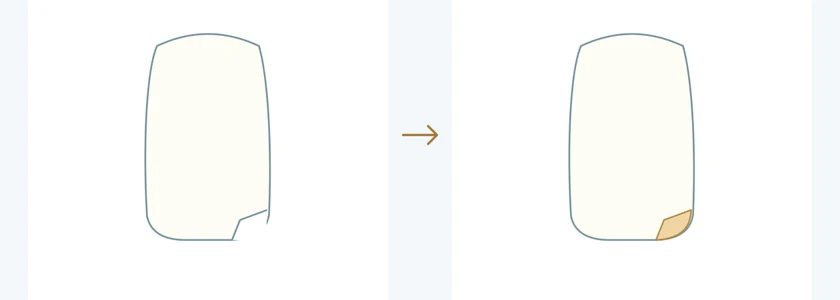
Refining one chipped corner
The goal: restore the outline of a front tooth after a small chip.
The approach: check the tooth and bite, select a matching resin and shape a local addition. The emphasis is on blending the repaired corner with the existing tooth.
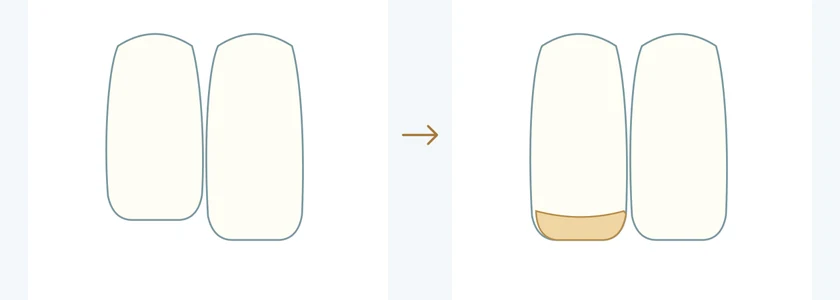
Balancing two tooth edges
The goal: make a selected pair of edges appear more coordinated.
The approach: assess the cause of the difference, available space and contacts, then consider a small addition where it helps achieve the agreed proportions.
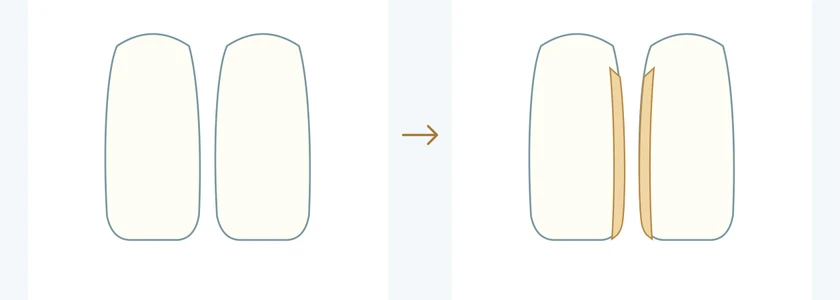
Finishing after Invisalign
The goal: refine a tooth-shape detail after alignment.
The approach: agree the final tooth position and shade, add resin where useful and coordinate the retainer with the finished tooth shape.
For a real case involving whitening and eight upper veneers, visit our resin veneers before-and-after section.
Colour, shape and natural character
A small addition deserves a considered finish
For composite bonding, the surrounding teeth guide shade, translucency and surface texture. We also look at the shape of the edges, the small spaces between the tooth tips and the outline of your lips when you smile.
Composite bonding can be part of this design conversation even when only one tooth is involved. Where photographs, scans or a visual proposal would help, we can explain the scope of Digital Smile Design and its fees.
Plan the shade first
Thinking about whitening too?
If you would like a brighter overall smile, we can discuss whitening natural teeth before choosing the final resin colour. After an appropriate settling interval, the addition is matched to the agreed shade.
A clear, comfortable starting point
Plan your composite bonding with confidence
Bring the detail that matters to you
A close-up photograph can help you explain the edge, corner or space you have in mind. You can also tell us what you would like to keep about your smile. Your own priorities shape the discussion, whether the goal is a subtle refinement or restoring a familiar tooth outline.
If you are considering whitening or currently wearing aligners, mention this when you book. We can coordinate composite bonding with the colour and tooth positions you are working towards, and explain which stage would be most useful first.
Understand the proposed addition
At your assessment, we look at the starting tooth shape, available enamel, existing restorations and the way the opposing teeth meet. We discuss where the resin would be added and how the contour can blend with the neighbouring teeth. Photos or scans may help explain a detail, with their scope and fees agreed beforehand.
Know what your estimate covers
Your composite bonding estimate identifies the tooth or teeth, the surfaces involved and the agreed refinement. Ask about assessment, shade matching, preparation, placement, finishing and any planned review. This makes it easier to compare a small repair with a broader veneer proposal and understand the clinical time reserved for your care.
You are welcome to take time to consider the options. A cosmetic consultation can be the first conversation; a further examination may be needed before a definitive treatment recommendation or quote.
Coordinate the finishing details
We consider polishing, cleaning access and the bite as part of the appointment. If composite bonding follows Invisalign, we plan the retainer around the finished shape. If a sports mouthguard or protective splint is appropriate, its fit can also be discussed. These practical details help bring the whole plan together.
Your appointment, step by step
How composite bonding is carried out
- Talk & assessExplain the detail you want to change. We check the tooth, gums and bite.
- Choose the shadeMatch colour and translucency to your teeth and any agreed whitening.
- Prepare & bondPrepare the selected surface and apply the adhesive and resin.
- Shape & polishRefine the outline, texture and finish, then check the contacts.
- Review & enjoyDiscuss home care and arrange a review where helpful.
A small, suitable addition can often be completed in one placement appointment. The time we reserve reflects the area involved and the detail needed. Assessment or preliminary care may be separate visits.
Some additive treatment may need no injection. If local anaesthetic would be helpful, we discuss your comfort options beforehand. You can also read about our gentle approach for nervous patients.
The right starting point
Bonding within a wider plan
Align, then refine
Where tooth position is a key concern, Invisalign can be considered first. Selected bonding may then help a final edge or proportion. Your retention plan is matched to the completed teeth.
Restore a worn area
When wear involves several surfaces, we consider the cause and the whole bite before selecting the restoration. Your plan may involve broader additive care or another suitable approach.
Care for a damaged tooth
A small chip, an older filling and a deeper crack can need different care. We examine the tooth and explain the treatment that supports its structure and comfort.
Composite bonding cost in Melbourne
A clear fee for the refinement you choose
Your written estimate reflects the tooth or teeth involved, the size and location of the addition, preparation, shade matching, shaping, polishing and bite assessment.
A small chip repair, edge bonding and a full resin veneer have different scopes. This is why they are quoted for the work involved. We explain what is included and identify any separate examination, imaging, whitening, digital-planning or review fees.
You can ask about expected maintenance and payment arrangements and their terms before choosing your next step.
Our team can help you choose the appropriate introductory or examination appointment.
Caring for the details
Looking after your bonded teeth
Daily brushing with fluoride toothpaste, cleaning between teeth and regular reviews help care for the tooth and its restoration. Avoid using teeth to open packaging or biting pens and nails.
Composite bonding can develop staining, wear or small chips over time. Polishing, adjustment or a local repair may refresh a suitable area. We check the cause and explain the most useful care rather than assume the whole addition needs replacement.
Preparation varies by tooth. Some additive work needs little or no enamel removal; any enamel removed is a permanent change. Your own assessment includes preparation, sensitivity, gum response and bite considerations, so you understand the scope before treatment. [1]
Your questions, warmly answered
Composite bonding: helpful questions
What is composite bonding?
Composite bonding is a direct technique using tooth-coloured resin to add to or restore a selected part of a tooth. The resin is bonded, shaped, hardened and polished to suit the surrounding smile. It can be useful for a small chip, an uneven edge, a selected gap or a focused change in tooth shape.
Can composite bonding help just one or two teeth?
Yes, where that scope suits your teeth and goals. We can focus on one or two teeth and match the resin to their neighbours. A single-tooth refinement still needs attention to shade, translucency, texture and bite. Your plan identifies the areas being treated and the changes being proposed.
Is edge bonding the same as a full resin veneer?
Edge bonding focuses on a biting edge or a selected part of the tooth. A resin veneer changes more of the visible front surface and may form part of a coordinated smile treatment. Both use composite resin; their extent, planning and chair time can differ.
Can composite bonding improve a chipped front tooth?
A suitable small chip can often be rebuilt with resin, restoring the outline and blending it with the tooth. We first check the depth of the chip, the remaining tooth and the bite. If a new injury has caused pain or sensitivity, tell our team when booking so we can arrange the appropriate assessment.
Can composite bonding close a small gap?
Selected small spaces can be refined by adding resin to the neighbouring tooth surfaces. We consider the cause of the gap, tooth proportions, gum health and cleaning access. Where tooth movement would produce a better starting point, we can discuss alignment as part of the options.
Can I have composite bonding after Invisalign?
Yes. After alignment, small additions may help refine an edge, tooth proportion or a selected space. We agree the final tooth positions and any whitening first, then consider bonding where useful. Your retainer needs to fit the finished tooth shapes, so retention is coordinated with the restoration.
Should I whiten before composite bonding?
If you would like a brighter natural shade, we can plan whitening before choosing the final resin colour. We allow an appropriate interval for shade and bonding conditions to settle. Existing composite keeps its own shade during bleaching, which makes the sequence worth discussing before treatment.
Can composite bonding usually be completed in one appointment?
The placement stage for a small, suitable refinement can often be completed in one appointment. Consultation, assessment, records or preliminary treatment may be separate. We explain the time reserved for shade selection, shaping, polishing and checking the bite, along with any follow-up.
Will I need an injection?
Some purely additive work can be carried out without local anaesthetic. The tooth, preparation and your comfort guide that decision. If an injection would be helpful, we explain it beforehand and discuss a gentle approach. You are welcome to tell us about sensitivity or dental anxiety when you book.
Does composite bonding require tooth preparation?
Selected additive changes can need little or no removal of healthy enamel. Other teeth benefit from careful reshaping or replacement of an older restoration. We explain the preparation involved for your tooth. Any enamel removed is a permanent change, and removal of bonded material also needs professional care.
Can composite bonding be repaired or polished?
Often, yes. A local repair, adjustment or polish may refresh an area after we check the tooth and the cause of any change. We assess colour matching and the remaining material before recommending the scope. Reviews also let us check the bite, margins and gum health.
How do I look after composite bonding?
Brush twice daily with fluoride toothpaste, clean between your teeth and attend your recommended reviews. Avoid biting pens, nails and packaging. Resin can develop staining, wear or chips, so polishing or repair may be useful over time. We discuss any grinding or sports-protection needs as part of your care.
How much does composite bonding cost in Melbourne?
Fees reflect the tooth or teeth involved, the size and position of the addition, shade matching, preparation, finishing time and bite checks. A small chip repair has a different scope from a full veneer. We provide a written estimate, identify any separate assessment or records fees and explain likely maintenance.
When would a resin veneer be a better treatment to explore?
If you would like broader changes to visible tooth colour, shape or proportions, we can discuss a dedicated composite resin veneer plan. For a small detail, local bonding may meet your goal. Your consultation is a chance to compare the appropriate scopes and fees without having to choose in advance.
Is the cosmetic consultation free?
The introductory cosmetic consultation is a free discussion about your goals, possible options and next steps. A complete examination, X-rays, scans, digital design and treatment may have separate fees. Select “FREE Invisalign or Cosmetic Consultation” when booking online, or call our team for help choosing the appointment.
Explore the possibilities
More ways to care for your smile
A welcoming place to begin
Let’s talk about that detail.
Whether you have one tooth in mind or a few questions about your smile, Dr Joseph Paino will help you explore a considered next step.
Free introductory discussion; further assessment, records and treatment may involve fees. Enhance Dental · Level 2, Suite 219, 566 St Kilda Road, Melbourne VIC 3004 · Plan your visit.
References & further reading
- Australian Dental Association. Crowns, bridges and veneers — information about composite resin, tooth surfaces and ongoing care.
- American Dental Association, MouthHealthy. Veneers — background on composite materials, repair and maintenance.