
Cracked tooth treatment · St Kilda Road, Melbourne
Biting should feel comfortable.
A sharp twinge when you chew? Pain as you release your bite? Let’s find out what your tooth is telling you.
A cracked tooth can be hard to spot and frustrating to live with. Dr Joseph Paino will listen to your symptoms, assess the tooth and explain whether it needs protection, repair or another approach.
Practice established in 1995 · Personal care from Dr Paino · Clear treatment options
Does this sound familiar?
Cracked tooth symptoms can come and go
You may feel fine between meals, then get a sudden jolt from one particular bite. Sometimes it is difficult to tell which tooth is responsible.
A sharp bite
Pain on biting or chewing, especially on something firm or grainy.
Pain on release
A brief twinge as the pressure comes off the tooth.
Temperature sensitivity
Cold, hot or sweet foods may trigger discomfort.
An elusive toothache
Intermittent symptoms around a tooth that may look normal.
These symptoms can occur with a cracked tooth, often called Cracked Tooth Syndrome (CTS), but they do not confirm the diagnosis. Some cracks cause no symptoms at all.
Understanding the cause
Why can a back tooth develop a crack?
A heavily restored tooth
A large filling or previous decay can leave less natural tooth supporting the cusps—the raised parts you chew on. Thin walls can be more vulnerable to flexing or fracture.
Repeated biting forces
Years of chewing, clenching or grinding can place repeated stress on a tooth. Cracks can also develop in teeth with little or no previous filling.
A sudden load or injury
Biting something unexpectedly hard, chewing ice or an injury can damage tooth structure. The size of a visible mark does not reliably tell us the depth of the crack.
The presence of an old amalgam filling alone is not a reason to replace it. We assess its condition and the tooth around it.
Your first visit
A careful assessment. A clearer answer.
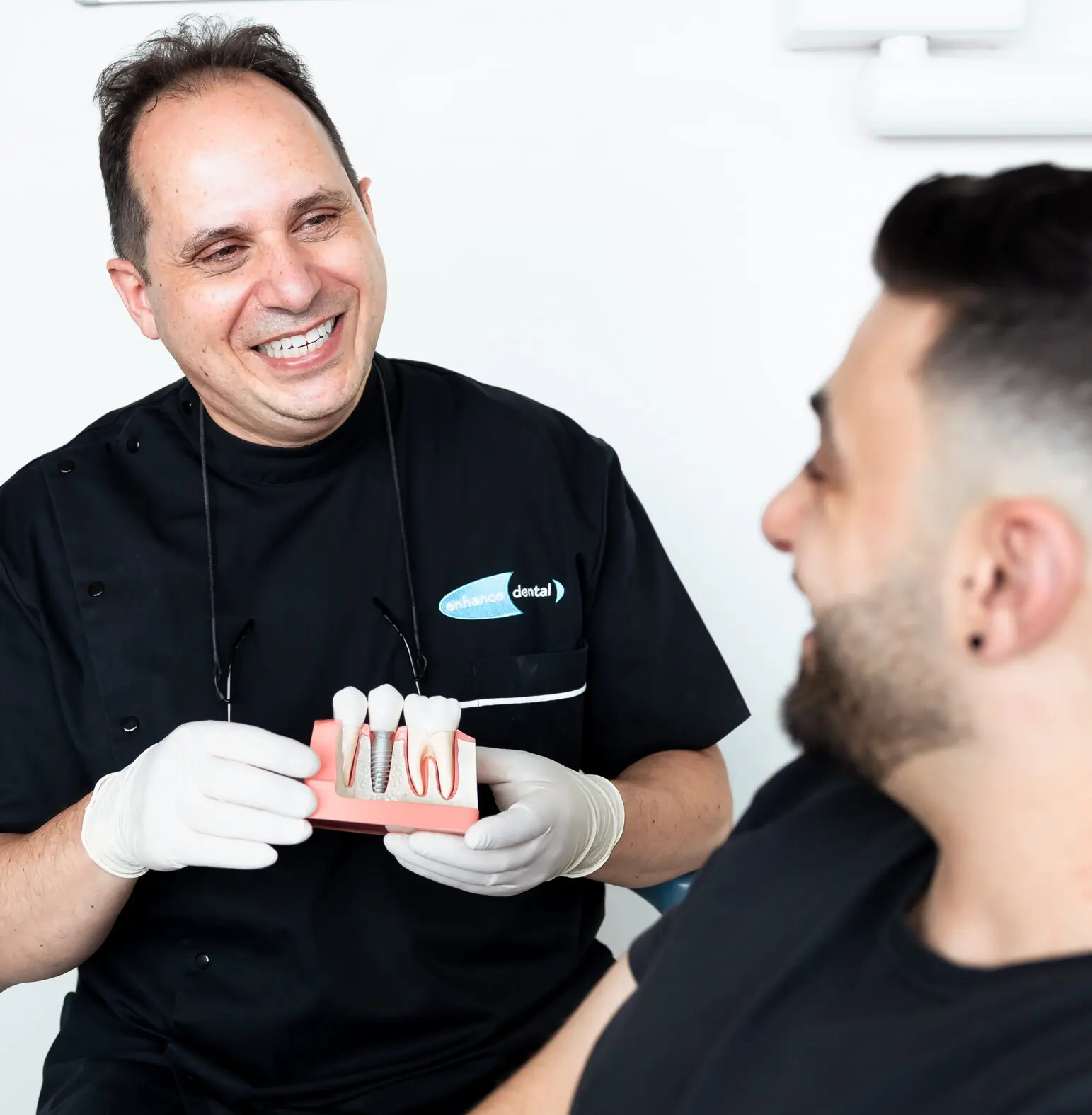
Tell us what triggers the pain, how long it lasts and whether you have noticed grinding, a recent filling or an injury. You do not need to reproduce the pain before coming in.
We’ll explain what we find and help you make an informed decision about your tooth.
Listen and examine
Dr Paino checks the tooth, existing restorations, bite and surrounding gum. Light and magnification can help reveal signs of a crack.
Test gently and purposefully
Selected bite tests, cold or other pulp sensibility tests and gum measurements help us understand where the symptoms come from and how the tooth is responding.
Use imaging when indicated
Dental X-rays help assess decay, infection, bone and other causes of pain. A fine crack may be invisible on an X-ray. CBCT does not reliably reveal every crack either.
Explain the choices
We discuss whether the tooth appears restorable, what remains uncertain and the options and fees. Sometimes removal of a filling, temporary stabilisation or a specialist opinion helps clarify the outlook.
What if we cannot see the whole crack?
That is a genuine limitation with some cracked teeth. Its full extent may only become apparent during treatment or review. We explain that uncertainty and how it could affect the plan.
Dr Paino’s patient explanation
When might a cracked tooth need a crown?
Think of protective coverage as a way to support vulnerable biting surfaces. The decision depends on how much sound tooth remains, where the crack runs, the health of the pulp and your bite.
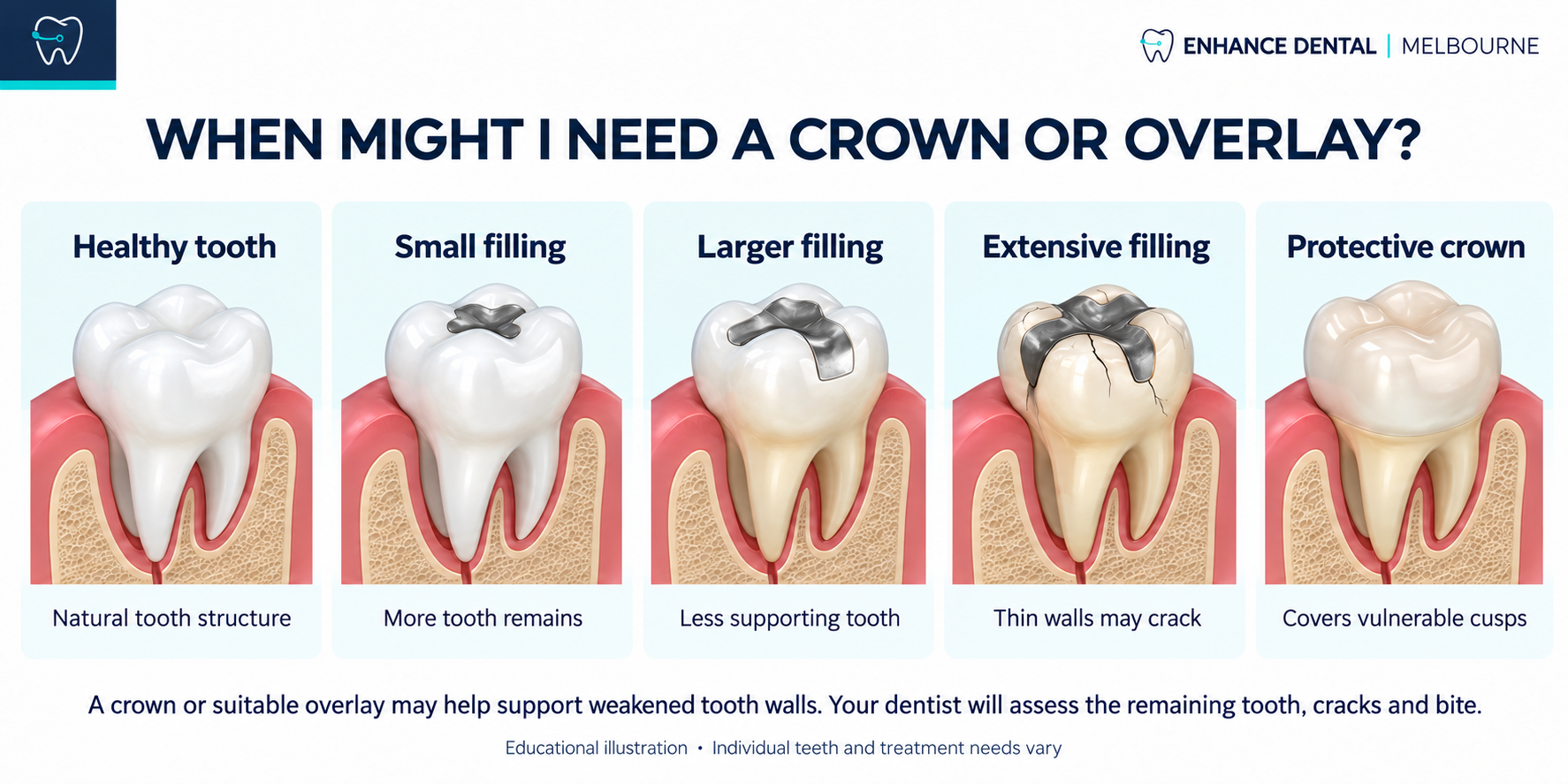
Download Dr Paino’s crown explanation (PDF) →
Why another filling may not be enough
A filling can repair a cavity, but a restoration inside the tooth may leave weakened cusps unsupported. When a cracked tooth has large fillings or vulnerable walls, chewing can continue to flex those parts.
How a crown can help
A crown covers the prepared tooth and can help brace its remaining structure. An onlay or overlay can sometimes cover the vulnerable cusps while preserving more tooth. This is called cuspal coverage.
Protection is the aim—not a promise that the crack will heal.
A crown can reduce movement and help restore comfortable chewing in suitable cases. It cannot guarantee that a crack will stop progressing or that the pulp will remain healthy.
Treatment that fits the findings
A crown is one option. Your tooth guides the plan.
Preserve & monitor
A lower-risk crack
Some shallow enamel lines or selected symptom-free cracks can be monitored after assessment. A bonded restoration may be appropriate where the tooth remains well supported.
Support & restore
A restorable, weakened tooth
A crown, onlay or overlay may help support vulnerable cusps. In some cases we first stabilise the tooth and review the symptoms and pulp before completing the definitive restoration.
Address deeper damage
An affected pulp or root
Root canal treatment may be needed for an irreversibly inflamed or infected pulp. A split or deeply damaged tooth may not be restorable. We explain specialist referral, extraction and replacement options when relevant.

A real treatment example
Different teeth can need different solutions
A crack does not mean every neighbouring filling needs a crown. In this case, the central back tooth needed coverage because of cracks and limited remaining structure, while the adjacent teeth were restored with tooth-coloured fillings.
The aim is to recommend the amount of protection each tooth needs while preserving suitable natural tooth.
Until your appointment
Be kind to the tooth. Get the cause checked.
What can help
- Choose softer food and avoid chewing on the uncomfortable tooth.
- Avoid ice, hard sweets, nuts and other foods that trigger pain.
- Keep the area clean with gentle brushing and interdental cleaning.
- Note your symptoms and bring any splint or retainer to your visit.
What to avoid
- Do not keep biting on hard objects to “test” for a crack.
- Do not try to glue the tooth or place aspirin directly on the gum.
- Do not assume that disappearing pain means the crack has healed.
- Do not use pain relief as a substitute for assessment of recurring symptoms. A pharmacist can advise what is suitable for you.

Here to help you feel at ease
Your comfort matters.
Let us know if you feel anxious about your tooth or your appointment. We can talk through each step, answer your questions and pause when you need a break.
Personal care on St Kilda Road
We’ll help you understand the next step

Dr Joseph Paino
Principal dentist · University of Melbourne graduate, 1988

Brigitte
Practice manager · helping you plan your appointment

Elena
Practice coordinator · administration and accounts
Concerned about treatment comfort?
Tell us before we start. If local anaesthetic is needed, we can use numbing cream and CALAJECT computer-controlled delivery. We allow time for the anaesthetic to work and check that you are numb. Sensations vary; signal us if you need a pause.
Clear choices and costs
We explain suitable options, limitations and the written estimate before you decide. Eligible restorations may be covered by our 7-year guarantee, subject to its maintenance requirements, exclusions and full terms. Ask how it applies to a cracked tooth.
Questions we hear in the chair
Cracked teeth: 12 helpful questions answered
What is Cracked Tooth Syndrome (CTS)?
Cracked Tooth Syndrome is a familiar term for symptoms associated with an incomplete crack in a tooth. Dentists increasingly use the more specific term “cracked tooth” because cracks vary widely in their position, depth and effect on the pulp. It most often concerns a back tooth. A cracked tooth is different from a tooth that has split into separate parts.
Why does my tooth hurt when I bite down or release my bite?
A weakened section of tooth can move slightly under pressure, irritating sensitive tissues inside the tooth. Some people feel a brief, sharp pain as they release a bite; others notice discomfort while chewing. Decay, an inflamed pulp, a high filling and other conditions can cause similar symptoms, so a bite test and examination are needed.
Can a tooth be cracked even if the X-ray looks normal?
Yes. Fine cracks often do not show directly on routine dental X-rays. X-rays are still useful for looking for decay, infection, bone changes and other causes of pain. Dr Paino may combine these findings with bite tests, light, magnification, pulp sensibility tests and careful gum measurements. Selected complex cases may need specialist assessment or additional imaging.
Does every cracked tooth need a crown?
No. A shallow enamel line may need observation, while some restorable cracks can be managed with a bonded filling, onlay or overlay. A crown is often considered when the tooth is heavily restored, its biting cusps need support, or symptoms and crack features indicate a need for protective coverage. The amount and quality of remaining tooth, pulp health and your bite guide the choice.
Is a crown better than another filling for a cracked tooth?
For a significantly weakened cracked tooth, a crown can provide coverage and support that a filling inside the tooth may not provide. Research supports protective cuspal coverage in suitable cracked teeth. An onlay or overlay can sometimes provide that coverage while preserving more natural tooth. There is no single restoration that is best for every crack.
Can a crown stop a crack getting worse?
A crown can help brace a restorable tooth and reduce movement of vulnerable parts under chewing forces. It does not heal the crack or guarantee that it will stop extending. A crack can occasionally progress despite treatment, and further care or extraction may become necessary. We discuss the findings and uncertainties before you decide.
Will I need root canal treatment as well as a crown?
Not necessarily. Many cracked teeth can be treated while preserving a healthy or recoverable pulp. Root canal treatment may be needed if the pulp becomes irreversibly inflamed or infected, or dies. The pulp can sometimes deteriorate after the tooth has been restored. We assess it initially and explain any need to review symptoms or arrange endodontic care.
What if the crack runs below the gum?
A crack below the gum does not automatically mean that the tooth must be removed. Its depth, direction, relationship to the root and surrounding tissues, and whether a restoration can be sealed all matter. A deep isolated gum pocket or a split tooth can indicate a less favourable outlook. Some teeth need a specialist opinion; others may not be predictably restorable.
Can a cracked tooth heal on its own?
A crack through the hard structure of a tooth does not normally knit together like a broken bone. Symptoms can come and go without the crack having healed. Some low-risk cracks can be monitored after assessment, but recurring bite pain deserves a dental examination. Avoid repeatedly testing the tooth with hard foods.
Are large amalgam fillings always a reason for a crown?
No. A sound metal filling does not need replacement simply because it is amalgam. What matters is the condition of the filling and remaining tooth: thin walls, cracks, decay, a broken cusp, symptoms or an unsuitable bite may change the recommendation. We assess the whole tooth before suggesting a crown or another restoration.
Can grinding or clenching make a cracked tooth worse?
Repeated heavy forces may contribute to tooth wear and the progression of some cracks. Tell us about clenching, grinding, jaw discomfort and any existing splint or retainer. We assess your bite and may discuss a suitable protective appliance. An appliance helps manage loading but cannot remove every risk of further damage.
How much does cracked tooth treatment cost?
The cost depends on what we find and whether you need monitoring, a filling, an onlay, a crown, root canal treatment or other care. Dr Paino explains the proposed treatment, alternatives and written estimate before you proceed. If the extent of a crack becomes clearer during treatment, we discuss how that may change the plan and fees.
A clearer answer starts with a conversation
Let’s make a plan for comfortable chewing.
You do not need to know whether it is a crack, a filling or the nerve. Book an assessment with Dr Joseph Paino and we’ll help you understand what is happening and what can be done.
Level 2, Suite 219, 566 St Kilda Road, Melbourne VIC 3004 · Contact us for directions and parking information