
Tooth wear · Bite planning · Melbourne
Restoring worn teeth.
A plan for your teeth, bite and smile.
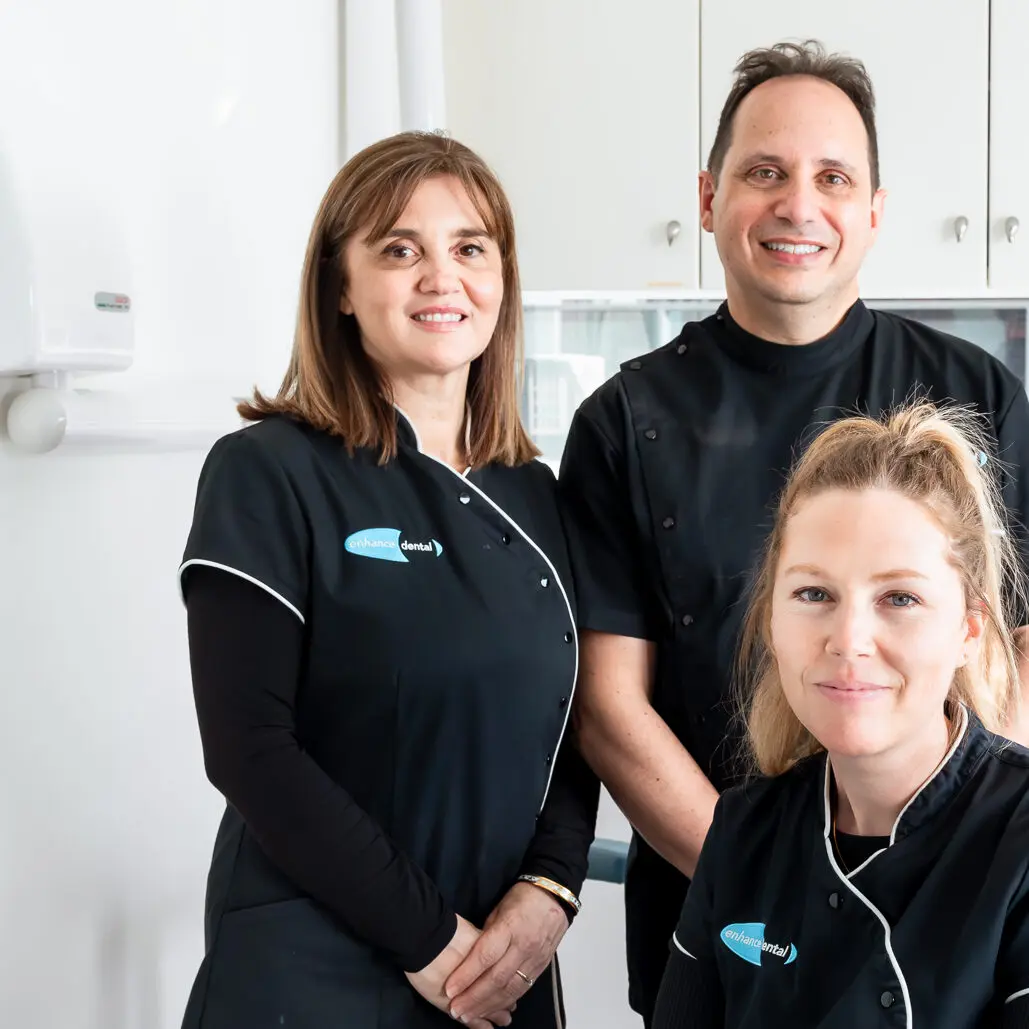
Shorter, chipped or sensitive teeth can affect your comfort and smile. Dr Joseph Paino assesses the cause of wear before recommending repair.
Your plan may involve prevention and monitoring, composite bonding, onlays or crowns—chosen for the teeth that need them. Some wear can be monitored safely. When restoration is justified, the aim is to preserve useful tooth structure, rebuild suitable teeth and manage the risks of further damage.
Enhance Dental Melbourne · Level 2, Suite 219, 566 St Kilda Road, Melbourne VIC 3004
Understand what is changing
When should worn teeth be assessed?
You may notice that front teeth look shorter, their edges are uneven, or chewing surfaces are becoming flat or hollowed. Sensitivity, repeated chipping or restorations that keep breaking can also prompt a review. An examination helps distinguish wear from decay, a crack or a restoration problem.
Appearance
You may be concerned about lost length, changing proportions or a smile that looks different in photographs. Tell us which features you would like to preserve as well as change.
Comfort and function
Sensitivity, difficulty chewing or sharp edges need attention. Pain should not be assumed to be a normal consequence of wear without checking the tooth.
Change over time
Photographs, previous records and digital scans can help us compare the pattern. One snapshot of old wear does not show how quickly it is progressing now.
Wear severity alone does not determine the treatment. The rate of change, remaining tooth, symptoms, bite and your priorities matter. Consensus guidance supports prevention and monitoring, with restoration considered when the consequences and patient needs justify it.1 The FDI’s tooth-wear guidance also emphasises diagnosis, prevention and appropriate management.5
Grinding, erosion and other causes of tooth wear
Tooth wear is often multifactorial. Contact between teeth, acid exposure and other mechanical effects may interact. We assess the pattern and history rather than assume every flat or shortened tooth is caused by grinding.
Grinding and clenching
Bruxism can contribute to damage of teeth or restorations. Some people notice jaw fatigue or a partner hears grinding; others do not. Existing wear does not, by itself, measure present night-time activity.2
Acid erosion
Repeated dietary acid exposure, reflux or vomiting can contribute to loss of tooth tissue. Timing and frequency matter. Managing the source is important even when the teeth are being restored.3
Other contributing factors
Cleaning habits, biting objects, reduced saliva and the condition of existing restorations may be relevant. Several factors can occur together, so adding a stronger material alone may not address the whole problem.
Where the history suggests reflux, repeated vomiting, medication-related dryness or a sleep concern, appropriate medical input may be part of the plan. We do not ask you to stop prescribed medicines or assume that dental treatment can resolve a medical cause.
Our jaw pain and grinding guide covers symptoms and conservative management. The occlusal splints page explains tooth protection. This page focuses on decisions about restoring tooth tissue that has already been lost.
Diagnosis before a treatment package
Your worn-teeth assessment with Dr Paino
We discuss what you have noticed, the pace of change, sensitivity, previous repairs and what you want to achieve. Bring any old photographs, dental records and appliances that may be useful, including retainers or a bite splint.
The examination looks at the remaining tooth structure, existing restorations, gums, tooth contacts and jaw function. We assess whether individual teeth are restorable and whether a small repair or a coordinated plan is more suitable.
Digital photographs and 3Shape TRIOS scans can record the starting position and support planning. Radiographs are selected where they can answer questions about decay, supporting structures or a tooth’s condition. They are not automatically required for every minor worn edge.
We explain the findings and uncertainty before deciding on treatment. In some cases, a period of prevention and comparison is useful; in others, significant damage or symptoms justify earlier intervention.
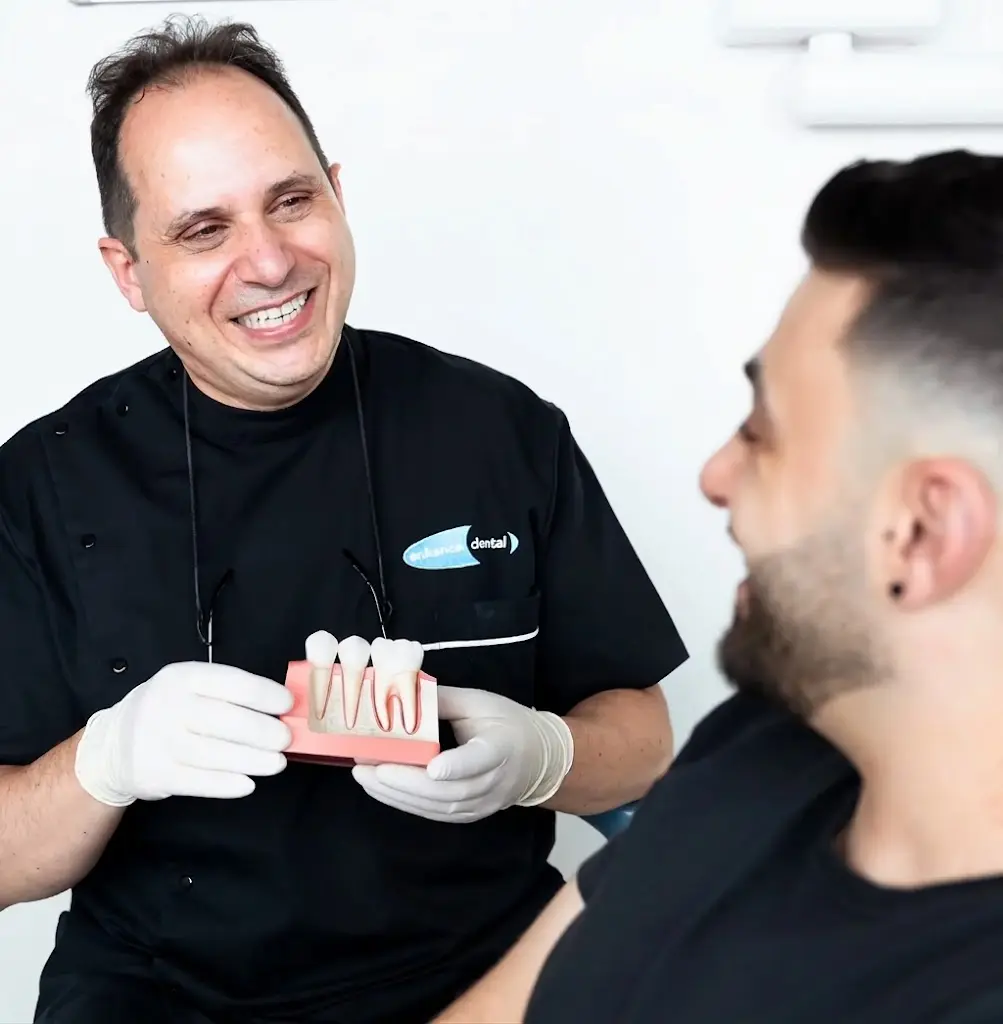
Different teeth can need different solutions
How can worn teeth be restored?
There is no single best material or a fixed number of teeth that everyone should have treated. We compare appropriate options, including the amount of preparation, expected maintenance and the consequences of doing nothing for now. A 2025 consensus supports both direct and indirect minimally invasive approaches, selected for the tooth loss and treatment goals.6
| Approach | When it may be considered | Trade-offs to discuss |
|---|---|---|
| Prevention and monitoring | Wear that is stable or does not currently justify restoration. | Needs a baseline, risk management and review. It does not replace tissue already lost. |
| Direct composite bonding | Selected edges, surfaces or more extensive additive rebuilding where the bite and tooth allow it. | Can often preserve tooth structure and allow repair, but may chip, stain, wear or need maintenance. |
| Onlays or overlays | Restoring a chewing surface or covering selected cusps when the remaining tooth permits a partial restoration. | Requires suitable support, access and material thickness. Preparation and bonding conditions vary. |
| Crowns | Selected extensively damaged or heavily restored teeth where more extensive coverage is justified. | Usually requires more preparation. The remaining tooth, nerve health and long-term maintenance need discussion. |
| Alignment before restoration | When tooth position or available space makes a restorative-only plan less suitable. | Adds a treatment stage and retention requirements. It may help make a more conservative restoration possible in selected cases. |
Composite bonding and additive restoration
Tooth-coloured resin can rebuild suitable worn surfaces. An additive approach may reduce the need to remove more tissue, although not every tooth can be treated without preparation. Contacts, available space, isolation and the condition of the tooth guide the design. Read about composite bonding and resin veneers for the material and its care.
Onlays, overlays and crowns
A laboratory-made partial restoration may cover a damaged chewing surface or cusps while leaving other surfaces intact. A crown covers more of the tooth and may be considered where damage is more extensive. The extent of wear does not automatically mean every tooth needs a crown. Our Explore Porcelain Crowns explains the materials and procedure.
Veneers are not a complete answer to every wear pattern
A veneer mainly changes a visible tooth surface. Where wear involves biting surfaces, reduced space or several failing restorations, the plan needs to account for those features as well as appearance. We explain whether a veneer, local bonding or another restoration suits the individual tooth.
An existing Enhance Dental treatment example
Restoring the appearance of worn teeth
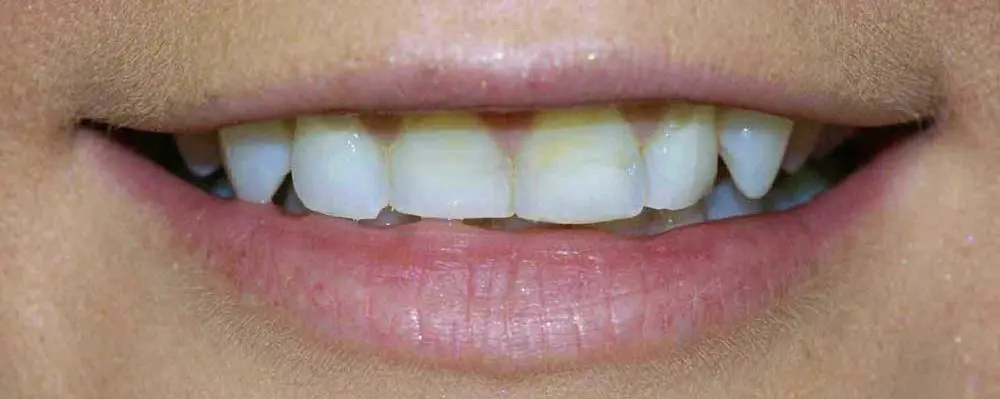
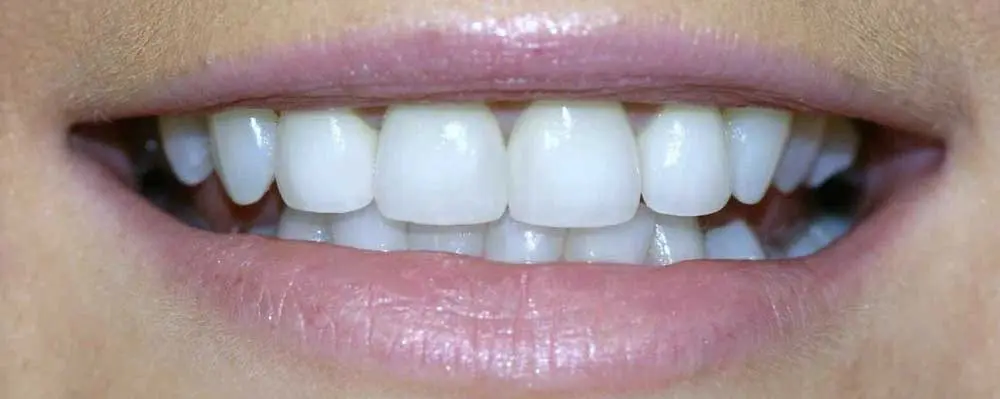
Actual Enhance Dental patient case, already shown in our crowns information. Full ceramic crowns restored the appearance of aged and worn teeth. The original wear cause and exact ceramic are not identified in these historical images. This example does not establish that you need crowns or predict your result. Individual outcomes and maintenance vary.
Photographs show appearance at particular moments; they do not establish long-term performance, comfort or suitability for another patient. We use cases to explain a discussion, alongside your own examination. Explore the smile gallery for other treatment examples.
Plan the whole bite where needed
From a worn edge to full mouth rehabilitation
A single worn edge may need a focused repair. When many teeth are affected, treating one surface at a time without a wider plan can overlook the way the teeth work together. Full mouth rehabilitation describes coordinated care; it is not a standard package or a requirement to restore every tooth.
Records, design and communication
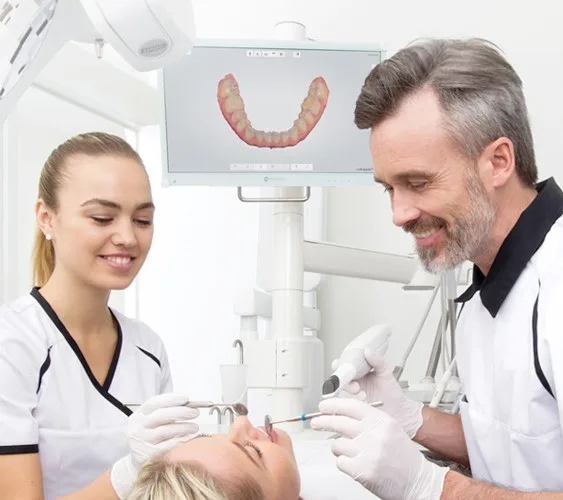
TRIOS scans and digital photography help record tooth shape, proportions and contacts. Where helpful, Digital Smile Design supports discussion of proposed appearance and treatment sequence. A simulation does not confirm how a restoration will feel or function.
Diagnostic models, a wax-up, mock-up or provisional restorations may be useful for selected larger changes. We explain what each stage is intended to test, what it costs and whether further adjustments may be needed.
Increasing bite height is not automatic. It requires a clinical reason and suitable planning. Evidence does not establish that every case needs the same trial phase; an evaluation stage may nevertheless help selected plans. Complex wear, persistent pain or uncertain prognosis may warrant specialist input.6
Identify and manage the drivers
Address active dental disease and discuss acid exposure, grinding or other relevant factors before committing to extensive restoration.
Agree priorities and alternatives
Decide which teeth need care, which can be monitored and whether alignment or another preliminary step is useful. Review the alternatives and a written estimate.
Plan shape and contacts
Use appropriate records and any agreed diagnostic stage to consider tooth length, available space, appearance and function.
Restore in a considered sequence
The plan may combine direct bonding, onlays and crowns. We explain preparation, temporary stages, fitting and the implications of staging treatment.
Review and protect
Check comfort, cleaning and the restorations. Discuss any protective appliance and the review schedule, and reassess the causes of wear over time.
Protecting natural teeth and the new restorations
Restoration changes the shape of a tooth; it does not remove the causes of wear. Acid-risk advice, appropriate cleaning, saliva support and care for grinding may remain important. After an acid exposure, avoid brushing immediately; discuss an appropriate routine and fluoride advice for your circumstances.3
If tooth protection is indicated, we may recommend a custom occlusal splint. The practice uses a vapour-polished nylon appliance manufactured by 3D Sleep for suitable cases, based on TRIOS digital records and a clinical prescription. A splint may help protect teeth while grinding continues; it is not a guaranteed cure.
Tell us if you also wear Invisalign aligners or retainers. Protection and tooth-position maintenance need coordinated planning. An old appliance may not fit after restoration, so bring it to appointments rather than forcing it over changed teeth.
For a persistently dry mouth, review our Dry Mouth information. New pain, repeated fracture or a changed bite needs review rather than simply polishing the same damaged edge again.
A plan you can understand
Tooth wear treatment costs and maintenance
Fees depend on the assessment, number and condition of teeth, records, materials, laboratory work and treatment stages. A small direct repair and a multi-tooth reconstruction involve very different planning and costs. We explain the proposed scope and alternatives before you decide.
Ask about maintenance as well as the initial fee. Composite can need repolishing or repair, and ceramic restorations can chip, loosen or require replacement. Natural teeth remain susceptible to decay and gum disease. No restoration has a guaranteed lifetime in every mouth.
Where staging is appropriate, we explain the sequence and limitations so it forms one coherent plan. We can discuss payment options and any applicable terms, and provide item numbers for your fund to assess. A rebate is not guaranteed.
Restoring worn teeth: 12 helpful questions
Can worn teeth grow back naturally?
Tooth tissue lost through wear does not simply grow back to its original shape. Prevention can reduce further damage, while a restoration can replace selected missing form. The need for restoration depends on symptoms, progression, function and your priorities.
Do all worn teeth need crowns?
No. Monitoring, preventive care, composite additions or partial restorations may be suitable. A crown is considered for particular teeth where the condition justifies it. A severe-looking photograph alone cannot determine which option is right.
Can bonding make short teeth longer?
It can rebuild suitable edges or surfaces where there is adequate support and space. The opposing contacts and cause of wear need assessment. Adding length without planning the bite can leave a restoration vulnerable to chipping.
What is the difference between erosion and grinding wear?
Erosion involves chemical effects of acids, while grinding involves tooth contact and loading. The effects can interact, and an individual pattern may have several causes. We use the history and examination rather than the appearance of one edge alone.
Will a night splint restore my worn teeth?
A splint is intended for a defined protective or clinical purpose; it does not replace missing tooth tissue. Restoration and protection are separate decisions. Some patients need both, while others need monitoring or prevention without restorative treatment.
Can worn teeth be repaired without drilling?
Some additive composite plans need little or no preparation, but this is not possible for every tooth or material. Existing decay, old restorations, space and bonding conditions matter. We explain the expected preparation and its implications for your case.
What are onlays and overlays?
They are partial restorations used to rebuild selected surfaces and often cover one or more cusps. They may preserve surfaces that do not need a full crown, where the tooth and design allow it. Their suitability depends on support, available space and material requirements.
Does restoring worn teeth mean changing my bite height?
Not necessarily. A change in bite height requires a clinical reason and careful planning. We explain whether it is being proposed, how it will be assessed and whether diagnostic or provisional stages are appropriate.
Can Invisalign help before rebuilding worn teeth?
In selected cases, moving teeth can improve position or create space for a restorative plan. It is not required for every wear case. We discuss the extra stage, alternatives, time, cost and retention before you decide.
Is full mouth rehabilitation the same as putting crowns on every tooth?
No. It means coordinating care for a wider problem. Some teeth may need no restoration, while others may need different types of treatment. The plan should explain the purpose of each stage and preserve useful tooth structure where possible.
How long will restored worn teeth last?
Service life varies with the starting tooth, material, design, loading, daily care and ongoing causes of wear. Repairs and replacement may be needed. We discuss expected maintenance and review rather than promise a universal lifespan.
Can I see what longer teeth might look like first?
Digital photography, scans and selected smile-design or mock-up stages can support discussion. These are planning aids, not guarantees of the final appearance or function. We explain which stage is appropriate and the associated fees.
References and further reading
Sources checked 9 November 2026. General information supports a discussion with your dentist; your examination determines your care.
- Loomans B et al. (2017). Severe Tooth Wear: European Consensus Statement on Management Guidelines. Journal of Adhesive Dentistry 19:111–119. doi:10.3290/j.jad.a38102.
- National Institute of Dental and Craniofacial Research. Bruxism.
- Australian Dental Association. Tooth erosion.
- 3Shape. TRIOS intraoral scanners. Manufacturer information about digital records, not a guarantee of a clinical result.
- FDI World Dental Federation (2024). Tooth Wear. International Dental Journal 74:163–164. doi:10.1016/j.identj.2023.10.007.
- SSRD, SEPES and PROSEC consensus (2025): worn dentition rehabilitation and occlusal vertical dimension. Journal of Esthetic and Restorative Dentistry. Evidence and expert consensus; long-term and evaluation-phase uncertainties remain.
Rebuild what is needed. Protect what remains.
If your teeth have changed in shape, comfort or function, arrange an assessment. We will explain the wear pattern, suitable options and a sensible sequence for care.