Home»Cosmetic»Porcelain and Zirconia Crowns Melbourne
Restorative and cosmetic crowns · St Kilda Road, Melbourne
A crown chosen around your tooth, bite and smile goals
Porcelain crowns in Melbourne at Enhance Dental are planned around the tooth, bite and smile goals. Zirconia is the crown material we most commonly choose because contemporary zirconia offers excellent strength with improved appearance, and can be selected and finished to suit the tooth and your smile.
For some front teeth and patients with particularly high aesthetic expectations, a more translucent lithium disilicate crown such as e.max may be considered. The right material depends on the tooth, bite, shade, remaining structure and any clenching or grinding—not appearance alone.
Meet Dr Joseph Paino at Enhance Dental, Level 2, Suite 219, 566 St Kilda Road, Melbourne.
Dr Joseph Paino · B.D.Sc. (Melbourne)Practice established 1995Individual treatment planning
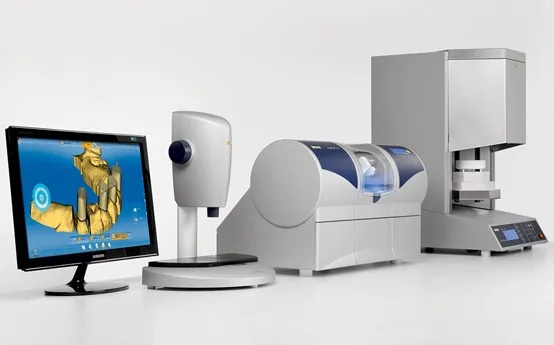
Illustrative crown-design and fabrication equipment from the Enhance Dental media library. The workflow and laboratory used depend on the individual treatment plan.
A careful diagnosis comes first
When might a dental crown be considered?
A crown covers and restores a tooth when a filling or smaller restoration may not provide enough support. The aim is to preserve the natural tooth where possible, restore comfortable function and plan an appearance that suits the surrounding teeth.
Strength and support
For a weakened or heavily restored tooth
A crown may be considered when a tooth has a large filling, a fracture, significant wear or has had root canal treatment. The amount and position of the remaining healthy tooth structure guide whether a crown, onlay or another restoration is more appropriate.
Appearance
For a tooth that affects your smile
A crown can change the visible shape or shade of a tooth when other options are unsuitable. If the tooth is healthy and the change is mainly cosmetic, we also discuss more conservative options such as whitening, bonding or a veneer.
Your whole bite
For a result planned to work comfortably
Tooth position, how your teeth meet, gum health, existing restorations and signs of clenching or grinding all matter. A photo alone cannot determine whether a crown is suitable.
Porcelain crowns in Melbourne: zirconia, e.max and other options
When patients ask about porcelain crowns, they may mean tooth-coloured ceramic crowns generally. The exact material—zirconia, e.max or another ceramic—matters. Dr Paino will explain the options after assessing your tooth, bite and appearance goals.
Commonly selected at Enhance Dental
Zirconia crowns
Zirconia is a strong ceramic and is our most commonly used crown material. Recent generations can provide a more lifelike appearance than earlier zirconia, while offering useful strength for many restorative situations. Shade, translucency, thickness, tooth position and bite are considered together. A strong crown still needs accurate design, appropriate finishing and ongoing care.
When translucency matters
e.max / lithium disilicate crowns
For selected teeth, lithium disilicate (commonly called e.max) can offer a highly natural, translucent appearance, including at the incisal edge. It may be a desirable option when aesthetics are a priority and the tooth, bite and risk factors make it suitable. Bruxism or heavy loading can change the choice or the protection plan.
Other suitable restorations
Porcelain and alternatives
“Porcelain crowns” is often used as a general term for tooth-coloured ceramic crowns. Other ceramics, an onlay, a veneer, a filling or a metal option may be discussed where appropriate. We explain the specific material proposed for your case. The recommendation is based on the tooth’s condition and your preferences, not a preset package.
What matters to you
What we assess
How it guides the plan
Strength for a back tooth
Remaining tooth, bite forces, wear and grinding
Zirconia is often considered where strength is a priority.
Translucency at a front tooth
Natural tooth shade, neighbouring teeth, incisal edge and bite
e.max or another ceramic may be considered when it suits the case.
Clenching or bruxism
Clinical signs, history, symptoms and existing appliances
Material, bite design and a protective appliance may all need consideration.
Minimising tooth reduction
Position, shape, damage and the change being planned
A filling, onlay or veneer may be more suitable than a full crown in some cases.
Your preferences have a place in the decision
High aesthetics and bite protection can be planned together
Some patients want a particularly natural result with visible translucency at the front edge of a tooth. We discuss what is achievable for that tooth, whether e.max or another ceramic is suitable, and how your bite may affect the long-term maintenance plan. Zirconia is often chosen when strength is a major consideration, but material choice remains case-specific.
Grinding, clenching and protective appliances
If you clench or grind, tell us—even if you are not sure how often it happens. We assess your teeth, bite and existing appliances before recommending a crown material. Where a protective appliance is indicated, Dr Paino may discuss a custom vapour-polished nylon bite splint made by Melbourne’s 3D Sleep Lab. The practice uses this option for its strength, smooth finish and hygiene and durability characteristics compared with conventional acrylic splints. Appliance choice, care and expected service life vary between patients; no splint can remove every risk of damage.
If you have completed Invisalign, your upper and lower Vivera retainers may remain part of your retention plan. We can check their fit after crown treatment. Retainers are not automatically a substitute for a prescribed bite splint; the right appliance depends on your clinical needs.
From diagnosis to fit
What happens during crown treatment?
Assessment and discussion
We examine the tooth and surrounding tissues, review your symptoms and relevant dental history, and take radiographs or other records when clinically indicated. We discuss whether a crown is appropriate, the alternatives, material choices and a written estimate before treatment begins.
Preparation and records
If you choose to proceed, the tooth is prepared as conservatively as the case allows. A digital scan or impression records the shape and bite. A temporary crown may be used while the final restoration is made, depending on the tooth and treatment plan.
Custom fabrication
The agreed design and material guide fabrication with a dental laboratory. Shade, shape, contact with neighbouring teeth and bite are planned for your individual case.
Fit, bite check and review
At fitting, the crown is checked for fit, appearance and bite before it is secured. We explain home care and any review or protective appliance recommended for you. Many laboratory crowns involve two main treatment visits, but timing and appointments vary.
Examples from Enhance Dental
Explore crown treatment examples
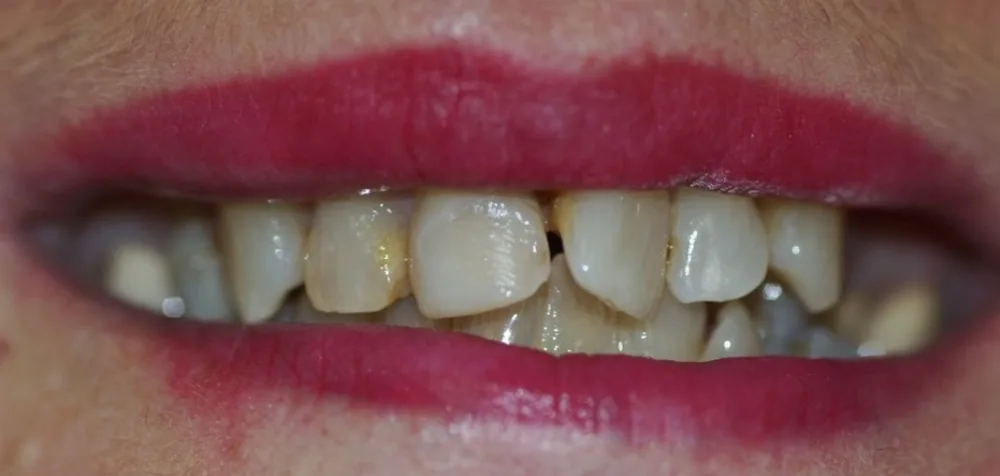
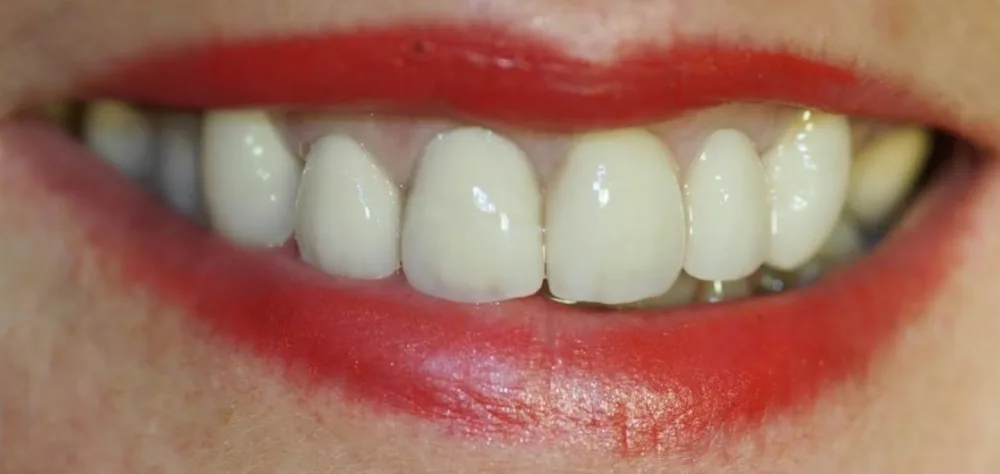
These photographs show individual Enhance Dental patient cases. The restorations and treatment plans were specific to those patients; they do not predict your result. The image records are historical and do not identify the material used in every case, so they are not a catalogue of porcelain crowns or a guide to the material you will need.
BeforeAfter
Upper front crown treatment
An example of a completed upper-front crown case. Shade, shape and proportion are planned for the individual smile; your own treatment may differ.
Posterior teeth before and after restorative care. The original case description notes a crown for the central tooth and tooth-coloured fillings for adjacent teeth.
Back-tooth restorative care
This example shows how treatment can combine restorations according to the condition of each tooth. It is not every tooth that needs a crown.
All clinical outcomes vary. An examination is needed to discuss your own likely options, risks and limitations.
Cost and aftercare
Porcelain crowns: costs, care and the 7-year guarantee
The fee for porcelain crowns depends on the tooth, material, laboratory requirements, preparation and any other care needed. We explain the proposed treatment and costs before you decide. You can also ask about our payment options.
A crown does not make the underlying tooth immune to decay or gum disease. Brush twice daily with fluoride toothpaste, clean between your teeth each day and attend the reviews recommended for you. Contact the practice if a crown feels loose, chips or changes your bite.
Eligible zirconia crowns, porcelain crowns, implant crowns and bridges commenced and completed at Enhance Dental may be covered under the practice’s 7-year guarantee, subject to its full current terms. The policy has maintenance requirements, exclusions and other conditions; read the details and ask how they apply to your proposed treatment.
Questions patients ask
Dental crown questions and answers
Are zirconia crowns a good choice for front teeth?
They may be. Contemporary zirconia options have improved in appearance, and the shade, translucency and finish can be selected for the case. For some front teeth with very high translucency demands, e.max or another ceramic may also be considered. The tooth, bite and your expectations guide the decision.
Are zirconia and e.max both types of porcelain crowns?
Patients may use “porcelain crowns” as a general term for tooth-coloured ceramics. Zirconia and e.max (lithium disilicate) are different materials with different optical and mechanical properties. Zirconia is often selected when strength is a priority. e.max can be chosen for the translucency it can provide in selected cases. Neither material is automatically best for everyone.
Does bruxism mean I cannot have an e.max crown?
Not necessarily. Bruxism, bite force, crown position and the condition of the tooth all affect risk assessment. We may recommend a different material or a protective appliance. If an appliance is recommended, follow the wearing and review instructions given for your case.
Can I use my Vivera retainers after getting crowns?
Possibly. If you completed Invisalign, bring your upper and lower Vivera retainers so we can assess fit after restorative treatment. A retainer helps maintain tooth position but is not automatically equivalent to a bite splint designed for grinding protection.
How many appointments does a crown need?
Many laboratory-made crowns involve two main visits: preparation and records, then fitting. The number and timing depend on the tooth, any preliminary care, the material and laboratory process, and your individual plan.
How long will my dental crown last?
There is no single lifespan that can be guaranteed. Crown performance depends on the tooth and gums, bite, material, home care, maintenance and factors such as grinding or trauma. We will discuss the likely outlook and care for your situation.
Can a crown be whitened?
No. Tooth-coloured crowns do not lighten in the same way as natural teeth. If whitening is part of your smile plan, discuss its timing before choosing the final crown shade.
Is the 7-year guarantee automatic for every crown?
Eligible crowns completed at Enhance Dental may be covered, subject to the current policy terms. Maintenance, appliance use when prescribed, exclusions and other conditions apply. Read the full guarantee terms and ask us to explain how they relate to your treatment.
How do I book a consultation for porcelain crowns in Melbourne?
Call Enhance Dental on (03) 9533 8488 or book online. We are at Level 2, Suite 219, 566 St Kilda Road, Melbourne.
Your next step
Talk through the right crown option for your tooth
If you are considering porcelain crowns, bring your questions about zirconia, e.max, appearance, bite protection, fees and timing. Dr Joseph Paino will explain the findings and suitable choices so you can make an informed decision.
Dental information on this page is general and does not replace an examination. Crowns have risks and limitations, and individual results vary. Further assessment, records and treatment fees will be explained before you proceed.