
Enhance Dental · St Kilda Road, Melbourne
Dental Implants Melbourne
The replacement tooth comes first.
Explore dental implants with a plan built around your future tooth, your bite and your anatomy. Dr Joseph Paino combines CBCT imaging, TRIOS scans of the upper and lower arches and detailed bite records with MoreDent laboratory planning and an MGUIDE surgical guide.
Missing one tooth, several teeth or struggling with a denture? Choose “Consultation only” when booking online, or call our team to confirm the appointment type, fee and records needed.

A considered way to replace missing teeth
A new tooth needs a carefully planned foundation
Dental implants can support a fixed replacement tooth, a bridge or a denture. For a single tooth, the complete restoration usually has three parts: the implant in the jawbone, a connector called an abutment, and the crown you see when you smile.
The objective is a replacement that suits your mouth: how it looks, how it meets the opposing teeth and how you will clean around it. That starts with understanding the space and the intended tooth before deciding where its supporting implant should go.
At Enhance Dental in Melbourne, your assessment brings the surgical and restorative decisions together. You can compare dental implants with other suitable options and understand the proposed stages before choosing treatment.
Existing Enhance Dental patient examples
See the tooth replacement, understand the context
These photographs show individual patients previously featured on our website. They illustrate different stages and situations; your assessment is needed to discuss what may be achievable for you.
A missing front tooth
Actual Enhance Dental patient
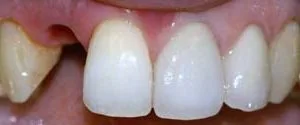
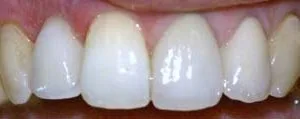
Front-tooth replacement involves the crown, gum contours, neighbouring teeth and smile line. These are considered together when planning dental implants in a visible part of the smile.
Individual results vary. These photographs do not establish a treatment time, surgical method or expected result for another patient. Further procedures may be needed in some cases.
Plan the tooth, then its foundation
Crown-led planning for your dental implants
Dr Paino uses a top-down, restoratively driven approach. This means considering the intended crown first: its position, shape, relationship to the gums and neighbouring teeth, and contact with the opposing teeth.
When planning dental implants, the proposed position is assessed against that restoration and the available bone. Space for the crown and connector, access for cleaning and nearby structures all matter. A position that fits the bone must also work for the tooth it is intended to support.
Dr Paino works with MoreDent laboratory to bring the records into a coordinated digital plan. The proposed restoration and implant position are reviewed before the patient-specific MGUIDE is produced.
This gives you a useful conversation to have at your consultation: how the planned tooth, your bite and your anatomy influence the recommendation.
Begin with the replacement tooth
Consider the crown’s position, appearance, bite and access for cleaning.
Bring your records together
CBCTBone and nearby anatomy in three dimensions.TRIOS scansDigital surfaces of the upper and lower arches.Bite registrationHow the upper and lower teeth meet.Plan the crown and implant together
Review the proposed implant position against the restoration, bone and surrounding structures.
Create your surgical guide
A guide made for your mouth helps transfer the approved digital plan to the procedure.
CBCT for dental implants
A cone beam CT scan provides three-dimensional information about bone volume and relevant anatomy, including nearby roots, nerves or the sinus. Imaging is arranged according to clinical need and helps identify limitations that a surface scan cannot show.
TRIOS: record both arches
Digital scans record the tooth and soft-tissue surfaces across the maxillary (upper) and mandibular (lower) arches. These surface records capture the teeth and surrounding tissues, helping the planning team assess the proposed restoration in relation to the rest of your mouth.
Bite records: connect the two
Detailed bite registration records how the arches meet. Combined with clinical assessment, it helps relate the planned crown to the opposing teeth. The quality and alignment of all records are checked as part of planning dental implants.
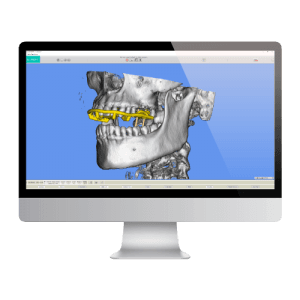
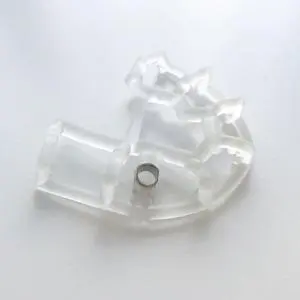
What the guide contributes. The guide and compatible instruments help control the planned direction and depth of implant preparation and placement. Fit, stability, record accuracy and clinical judgement remain essential. Guidance improves the transfer of a plan; it does not eliminate surgical variation or guarantee a particular result.
Explore the technology: MoreDent’s MGUIDE information and laboratory-supported 3D implant planning.
Guided placement and tissue-conscious care
Keyhole dental implants: suitable cases, carefully selected
In selected cases, a guided implant can be placed through a small opening in the gum without raising a larger flap. Often described as flapless or keyhole surgery, this approach may reduce disturbance to the soft tissues.
The decision depends on the available bone, gum tissue, access and whether additional treatment is needed. Some sites require the gum to be lifted, a graft or specialist care. MGUIDE can also be used with a raised-flap procedure.
For guided dental implants, the plan aims to make placement controlled and well organised. A surgical guide does not replace the assessment or the biological time needed for healing.
Your next step
Find out what is possible for your missing tooth
Discuss your options with Dr Paino, understand the records you may need and learn what a complete treatment plan would involve.
One tooth, several teeth or a full arch
Dental implant options to discuss
The number of missing teeth is only one part of the decision. Your bone, gums, remaining teeth, bite and ability to maintain the restoration all influence the options.
A single missing tooth
A dental implant and crown can replace one tooth without using neighbouring teeth to support a conventional bridge. Crown-led planning considers the gap, gum shape and bite, including the particular demands of a front-tooth replacement.
Several missing teeth
Individual dental implants or an implant-supported bridge may be considered. It is not always necessary to place one implant for every missing tooth. The design and available support determine the appropriate arrangement.
A full arch of fixed teeth
Full-arch treatment requires detailed assessment of the proposed teeth, both arches and the bite. The number and position of dental implants, options for temporary teeth and any need for specialist care are assessed individually. The restoration must allow access for ongoing cleaning.
A denture that needs more support
An implant-retained overdenture is removable but uses dental implants to help stabilise it. This is different from a fixed full-arch bridge. Cleaning, attachment maintenance, available space and the overall cost need to be considered.
| Option | What it involves | Key considerations |
|---|---|---|
| Dental implants | A restoration supported by implants in the jawbone. | Surgery, suitable support and healing are required. Ongoing cleaning, review and component maintenance matter. |
| A tooth-supported bridge | A fixed replacement supported by neighbouring teeth. | The condition of those teeth matters. A conventional bridge may require their preparation and needs cleaning underneath. |
| A removable denture | A removable replacement for some or all missing teeth. | Different support, comfort and maintenance needs. Implant retention may be an option when extra stability is needed. |
Preserving a treatable natural tooth may also be appropriate. In some situations, monitoring a space is reasonable. Read more about Discover Porcelain Bridges and dentures, then compare the choices for your mouth.
The assessment comes first
Suitability for dental implants
Assessment for dental implants considers oral health, bone and gum support, the bite and medical history. Smoking, previous gum disease, some medicines and health conditions can affect risk or healing. Jaw growth should also be complete.
Before dental implants, active dental problems may need treatment. If bone grafting, a sinus-related procedure or complex surgical care is indicated, referral to an oral surgeon can form part of the plan.
Bring your medication list and tell us about diabetes, osteoporosis treatment, cancer treatment or previous radiotherapy. Please do not stop prescribed medicines without advice from the treating clinician.
Understand the risks before deciding
Dental implants involve surgery. Risks can include infection, bleeding, failure to integrate with bone and injury to nearby structures. Depending on the site, nerve or sinus complications may be relevant.
Later problems may include inflammation and bone loss around an implant, gum recession, damaged crowns or loose components. Digital planning helps address aspects of treatment but does not remove these risks.
Dr Paino will discuss the risks and alternatives relevant to your situation, including what may be needed if healing or treatment does not progress as planned.
From the first discussion to ongoing care
Dental implants in 5 essential treatment stages
These stages explain dental implants from planning through to ongoing care. Treatment may require several appointments. Your sequence depends on the starting condition of your mouth and the restoration planned.
Discuss your goals and options
Explain the missing or failing tooth, your concerns and any previous advice. Dr Paino considers possible treatment pathways, the need for further assessment and the questions that matter to you.
Assess and plan from the crown
Clinical findings, CBCT where indicated, TRIOS scans of both arches and bite registration inform suitability and the proposed restoration. The digital plan is reviewed with MoreDent before guide production.
Prepare the site and place the implant
Any preliminary treatment is arranged. At placement, the guide fit and stability are checked and the planned procedure is carried out with appropriate anaesthetic. A flapless approach is used only where suitable.
Allow healing and review progress
Healing allows the implant to integrate with the surrounding bone. Follow-up checks and a temporary-tooth plan, where appropriate, help manage this stage. Immediate temporary teeth are suitable only in selected situations.
Fit the restoration and protect it
When appropriate, the final crown, bridge or denture is made and fitted. The bite, appearance and cleaning access are reviewed. Ongoing home care and professional maintenance protect the supporting tissues and allow problems to be identified.
From implant healing stage to final crown
Actual Enhance Dental patient
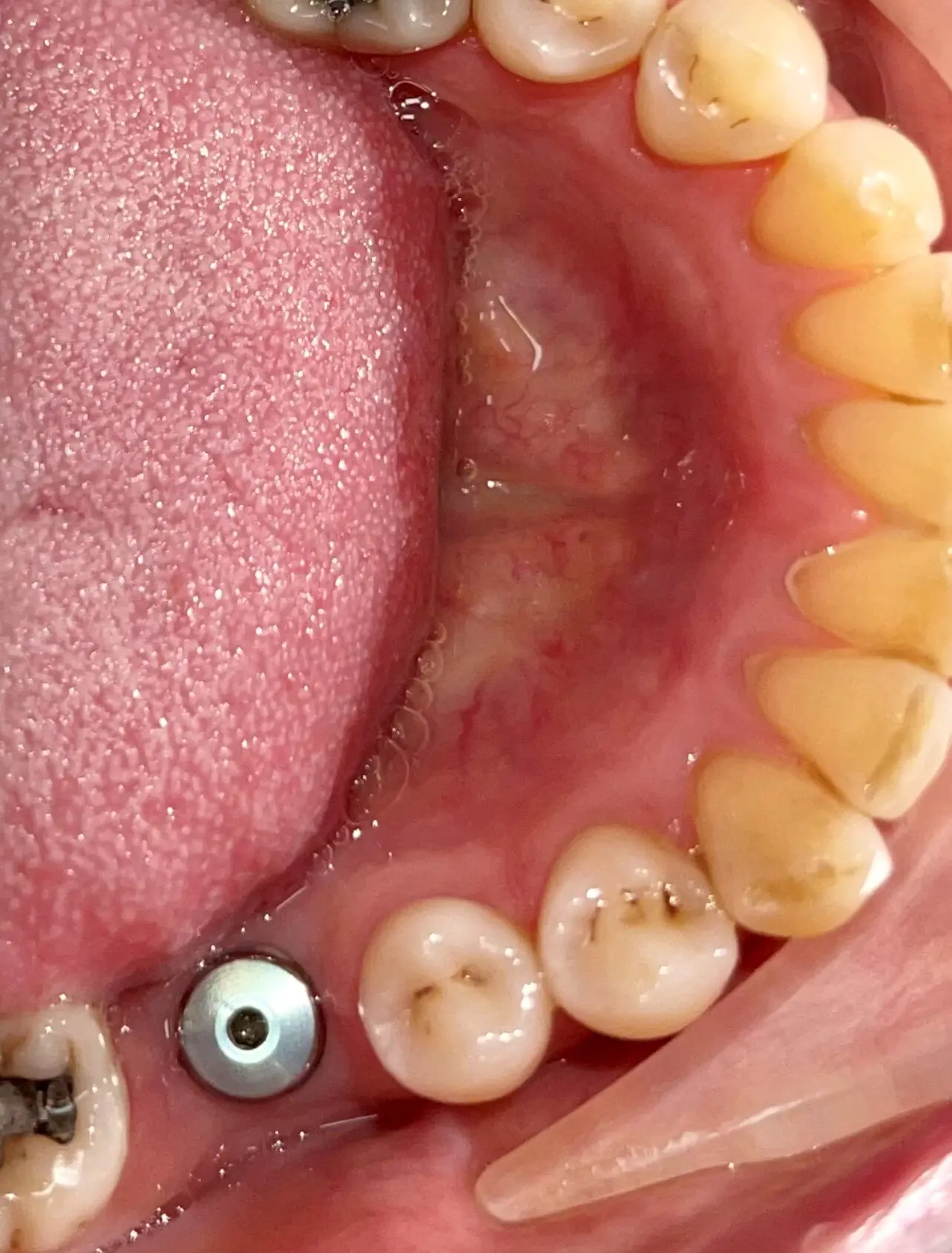
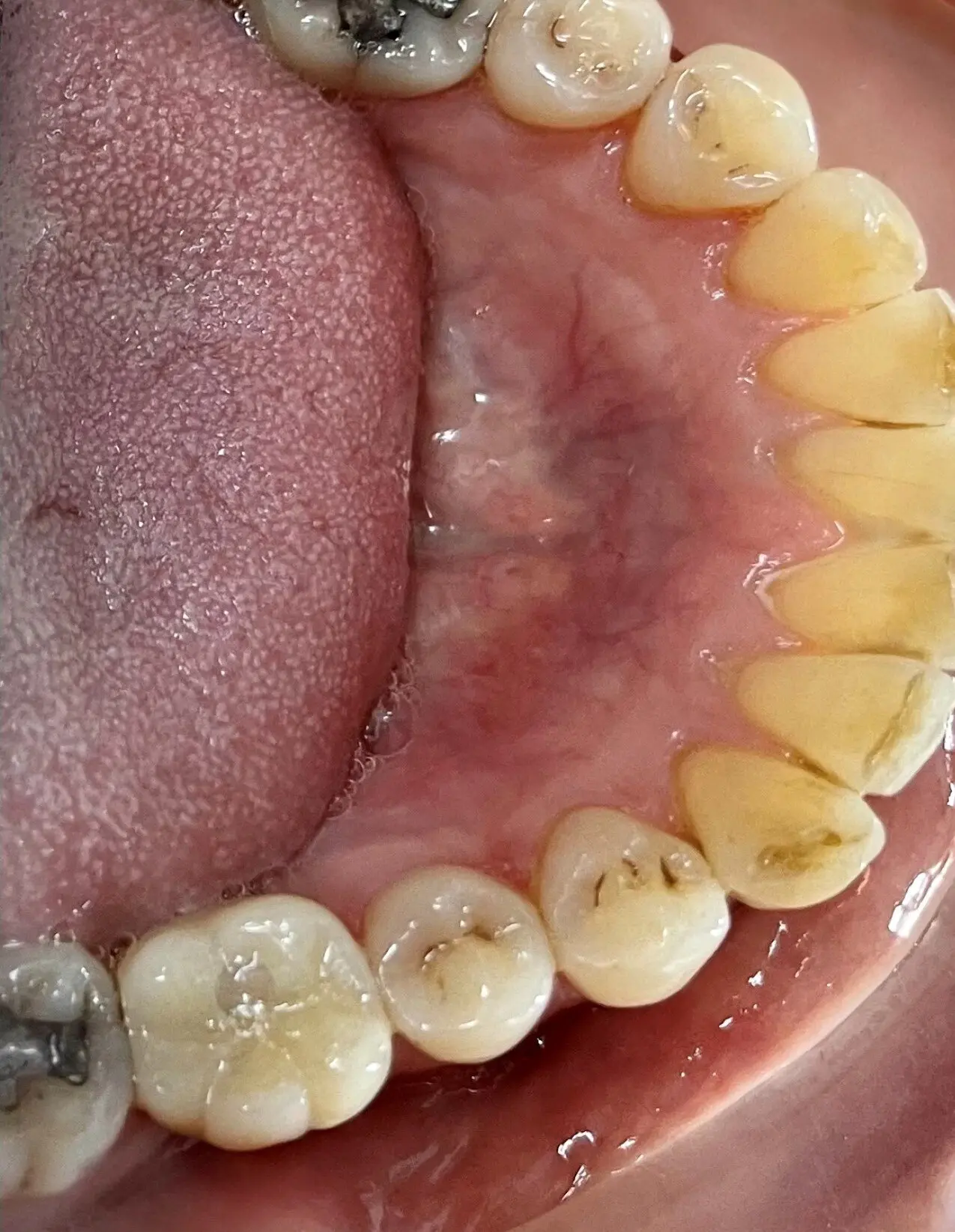
The first photograph already shows an implant healing component in place. The second shows the completed tooth restoration. With dental implants, placement and fitting the final crown are distinct parts of treatment.
Individual results and treatment times vary. These photographs do not show the entire treatment sequence or predict another patient’s result.
Plan the whole treatment
Dental implants cost, timing and maintenance
A useful estimate covers the complete restoration and the care around it. The right comparison is the full proposed treatment, including anything that may be additional.
Your quote for dental implants
- Assessment, imaging and digital planning.
- The surgical guide and implant placement.
- The abutment and final crown, bridge or denture.
- Temporary teeth, extractions or grafting if needed.
- Reviews, specialist care and ongoing maintenance.
The team can confirm the assessment fee. An individual treatment estimate follows the information needed to plan your care; health-fund benefits should be checked with your insurer.
What determines the timeline
Planning, surgery, early recovery, bone healing and fitting the final teeth have different timeframes. The complete process for dental implants commonly extends over several months and may take longer if additional treatment is required.
Tell us about travel, work or an important event early. A shorter placement procedure does not mean the implant is ready for unrestricted use or that your final restoration is complete.
Caring for your dental implants
Dental implants are intended for long-term use, but they still need care. Daily cleaning and professional reviews help monitor the gum, bone, bite and restoration.
The crown, screws or other components may need repair or replacement over time. There is no lifetime guarantee, and using a guide alone does not establish a longer lifespan.
A practical first step
Your dental implant consultation
Start with a conversation about your teeth, priorities and concerns. You do not need to commit to surgery to find out what deserves further assessment.
What the first visit can clarify
- Which replacement options may be relevant.
- What examination or imaging is needed to assess suitability.
- Whether other dental care or specialist input may be required.
- How a proposed sequence and itemised estimate can be developed.
- How to manage appearance and comfort while treatment is underway.
Tell us before you arrive
Mention the tooth or area involved, an existing denture, previous implant advice and any recent X-rays or scans. Bring a medication list and details of relevant medical conditions.
If you are nervous, please say so when booking. We can make time to discuss your concerns and explain the next step. The team will confirm the appointment type, fee and any records needed; diagnostic imaging or additional appointments may be separate.
Meet your dentist
Discuss your dental implants with Dr Joseph Paino
Dr Paino graduated with a Bachelor of Dental Science from the University of Melbourne in 1988 and established Enhance Dental in 1995. His planning approach considers the intended restoration alongside the surgical position.
When discussing dental implants, Dr Paino explains the role of your scans and bite records, discusses the options and limitations, and coordinates laboratory planning and referral when needed. Read more about Dr Paino and the Enhance Dental team.
Answers to help you decide
Dental implants: 20 helpful FAQs
Explore planning, suitability, comfort, costs and care. Select a question to read the answer.
What are dental implants?
Dental implants replace the support normally provided by a tooth root. An implant is placed in the jawbone and, after appropriate healing, can support a crown, bridge or denture. For a single missing tooth, the treatment usually includes the implant, a connecting component called an abutment and the visible crown. These are different parts of the complete restoration. The aim is to replace the missing tooth in a way that suits your bite, appearance and ability to clean the area. An assessment is needed to establish whether this is suitable for you.
What does a top-down approach to dental implants mean?
Top-down, or restoratively driven, planning starts with the replacement tooth. Dr Joseph Paino considers where the crown needs to sit, its shape, the available space and how it will meet the opposing teeth. He then plans the implant to support that restoration within the limits of your bone, gums and nearby anatomy. This connects the surgical and restorative parts of treatment from the outset, with attention to appearance, function and access for cleaning.
Why are CBCT, TRIOS scans and bite registration used together?
These records answer different questions. CBCT is a three-dimensional X-ray that helps assess the jawbone and the position of nearby structures, such as nerves, tooth roots and sinuses. TRIOS scans capture the surfaces of your upper and lower teeth and surrounding tissues. Detailed bite records show how the two arches meet. When the records are aligned and reviewed together, Dr Paino and the MoreDent planning team can consider the proposed crown and implant position in the same plan. Imaging is arranged according to your clinical needs; existing records may also be reviewed.
What is the MGUIDE surgical guide from MoreDent?
MGUIDE is a patient-specific surgical template that helps transfer a digitally planned implant position to the mouth. Dr Paino reviews the plan with support from MoreDent before the guide is made. The guide and compatible instruments help control the planned direction and depth during preparation and implant placement. Its open design also allows access and visibility during surgery. Record quality, guide fit, anatomy and surgical judgement remain essential: a guide cannot guarantee a perfect position or remove every surgical risk.
Are guided dental implants always flapless or keyhole?
Guided planning and flapless surgery are separate decisions. In suitable cases, an implant may be placed through a small opening in the gum without raising a larger flap, reducing the amount of tissue disturbed. Some patients need the gum lifted to assess or manage the site, add bone or soft tissue, or obtain appropriate access. An MGUIDE can also be used with a raised-flap procedure. Dr Paino will explain which approach is suitable for your anatomy and treatment needs.
How do I know whether I am suitable for dental implants?
The assessment considers your remaining teeth, gum health, available bone, bite, medical history, medicines and ability to maintain the restoration. Smoking, previous gum disease and some health conditions can affect risk and healing. Dental implants are generally considered after jaw growth has finished. Your preferences about surgery, treatment time and ongoing care also matter. The clinical examination and planning records help establish whether implants are appropriate, whether other treatment is needed first or whether an alternative would better suit you.
Does dental implant treatment hurt?
Implant placement is usually carried out with local anaesthetic to numb the treatment area. Tell Dr Paino about anxiety, concerns about injections or previous difficulties getting numb so these can be discussed in advance. You may notice pressure or vibration during treatment. Afterwards, soreness, swelling or bruising can occur. Suitable flapless treatment may reduce tissue disturbance, but comfort and recovery vary with the procedure and the individual. Your pain-management and aftercare instructions will be tailored to your health and the treatment performed.
What happens if I do not have enough bone?
A shortage of bone does not automatically rule out dental implants, but it can change the treatment plan. The position and size of the proposed restoration must be considered alongside the available bone. Some patients need a bone graft or, in the upper back jaw, a sinus-related procedure. These may require additional healing time and specialist assessment. Enhance Dental can arrange referral to an oral surgeon where appropriate. Dr Paino can explain whether further assessment, grafting, a different restorative approach or a non-implant option should be considered in your situation.
Can dental implants replace a front tooth naturally?
A front-tooth implant requires attention to the crown, gum contour, supporting bone, neighbouring teeth and the way you show your teeth when smiling. Crown-led planning helps these features be considered before surgery. Temporary teeth, gum or bone procedures may also form part of the discussion. Dr Paino will explain the proposed approach and any aesthetic limitations of your starting situation. The aim is an appropriate appearance that suits your mouth; the outcome remains individual to your anatomy and treatment.
How long does dental implant treatment take?
Treatment with dental implants usually takes place over several months, although the schedule depends on your situation. Planning records, any preliminary dental care, implant placement, healing and the final restoration are separate stages. If a tooth needs removal, a graft is required or healing needs more time, the process can be longer. Guided surgery helps organise the placement procedure but does not remove the biological time needed for bone healing. Ask for an individual sequence of appointments and discuss important travel or event dates before treatment begins, including arrangements for a temporary tooth.
Can I have an implant and a new tooth on the same day?
Sometimes, but several different procedures are described as same-day treatment. Immediate placement means putting an implant into a site at the time a tooth is removed. Immediate restoration means attaching a temporary tooth soon after placement. Neither is suitable in every case, and a temporary tooth is not necessarily the final crown or ready for unrestricted biting. Bone support, infection, implant stability and the bite all influence the decision. Dr Paino will discuss whether an immediate or staged approach is appropriate and how the space can be managed during healing.
How much do dental implants cost?
The cost of dental implants depends on the complete treatment, not just the implant placed in the bone. Relevant items may include assessment, imaging, digital planning, the surgical guide, surgery, an abutment, the crown or other restoration, and review appointments. Extractions, grafting, temporary teeth or specialist care can change the total. Ask for a written, itemised plan that states what is included, what may be additional and the likely maintenance needs. The team can confirm the consultation fee and explain when an individual treatment estimate can be provided. Any health-fund benefits should be checked with your insurer.
How long do dental implants last?
Dental implants are intended as a long-term tooth-replacement option, but neither the implant nor its crown is guaranteed to last for life. The surrounding tissues need ongoing care, and the crown, screws or other components may need maintenance, repair or replacement. Longevity is influenced by oral hygiene, gum health, smoking, the bite, general health and regular review. A surgical guide supports careful placement but does not itself establish a longer lifespan. Discuss likely maintenance and your individual risk factors before choosing treatment.
What are the risks of dental implant treatment?
Possible problems include infection, bleeding, swelling, injury to nearby structures, and failure of the implant to join with the bone. Depending on the site, nerve disturbance or sinus complications may be relevant. Later problems can include inflammation and bone loss around an implant, gum recession, crown damage or loose components. Digital planning and guided placement help address aspects of the procedure, but do not eliminate these risks. Dr Paino will discuss the risks relevant to you, alternatives and what may be needed if treatment does not progress as planned.
How do implants compare with a bridge or denture?
Dental implants support replacement teeth independently in the jaw. A conventional bridge is supported by neighbouring teeth, which may require preparation, while a removable denture is taken out for cleaning. Each option has different requirements for support, cleaning, treatment time, cost and future maintenance. Implants involve surgery and are not automatically the best choice for every gap. The condition of the neighbouring teeth, the bite and your preferences help guide the comparison. Sometimes monitoring a space is reasonable. The consultation can help you compare suitable options for your particular mouth.
Can dental implants help when several teeth are missing or a denture is loose?
They may be an option. Several implants can support a bridge or help stabilise a removable denture, depending on the missing teeth and available support. Full-arch treatment requires a detailed assessment of the jaws, bite, soft tissues and proposed replacement teeth. The number and position of implants, restoration design and access for cleaning must be planned together. Ask Dr Paino which options are suitable for discussion and whether specialist involvement would be useful; a particular implant number or design will not suit every patient.
What if I am nervous about implant treatment?
Let the team know when you contact the practice. The first appointment gives you time to discuss your concerns, previous experiences and what would help you understand the proposed care. Ask how the planning records relate to your treatment, how local anaesthetic is used and what to expect during recovery. You can take time to consider the information before agreeing to surgery. Any additional anxiety-management options, their availability, suitability and costs can be discussed as part of your individual plan.
Do smoking, diabetes or medicines affect dental implants?
They can affect the assessment, healing or longer-term risk, so please provide a complete medical and medication history. Tell Dr Paino about smoking or vaping, diabetes, previous head or neck radiotherapy and medicines used for osteoporosis or cancer, as well as any blood-thinning treatment. These details do not always mean implants are impossible, but they may change the advice, timing or need for consultation with another clinician. Do not stop prescribed medicines yourself. A coordinated plan should address your individual health circumstances before a decision about implant surgery is made.
How do I care for dental implants after treatment?
Follow the specific instructions provided after your procedure, including advice about cleaning, eating and follow-up appointments. Once the restoration is in use, daily cleaning around the implant and between teeth remains important, together with professional checks tailored to your needs. An implant cannot develop tooth decay, but its surrounding gum and bone can become inflamed or infected. Contact the practice if you notice persistent soreness, bleeding, swelling, a bad taste or movement of the implant or crown. Early review can help identify a problem before it becomes more difficult to manage.
How do I arrange a dental implant consultation at Enhance Dental?
Use the appointment link or call (03) 9533 8488 and tell the team you would like to discuss dental implants with Dr Joseph Paino. They can confirm the appropriate appointment type, fee and any records to bring. Mention missing or failing teeth, existing dentures, previous implant advice and any important treatment deadlines. Bring a medication list and details of recent dental imaging if available. You do not need to know which implant option to request before the first visit; the starting point is understanding your concerns and assessing the next step.
Visit Enhance Dental
Dental implants on St Kilda Road, Melbourne
Level 2, Suite 219566 St Kilda Road
Melbourne VIC 3004
Designated free patient parking is available at the rear via Queens Lane, accessed from Roy Street or Beatrice Street. See our contact and location information when planning your visit.
Understand your options. Plan your next step.
Let’s start with the tooth you want to replace
Explore dental implants with a clear explanation of suitability, the planned restoration, treatment stages and costs. Book a consultation with Dr Paino or speak with our team first.
Prefer an enquiry? Tell us what you would like help with. The team will confirm your appointment details and fee.
All surgical or invasive procedures carry risks. Before proceeding, you may wish to seek a second opinion from an appropriately qualified health practitioner. This information is general; suitability, treatment, recovery and outcomes require individual assessment.