Toothache or pain on biting
Call about persistent tooth pain, pain disturbing sleep or a tooth that hurts when you bite. We investigate the cause and explain the appropriate next step.

Enhance Dental · St Kilda Road · New patients welcome
Looking for an emergency dentist in Melbourne? Call about toothache, swelling or a broken tooth. We listen, explain and help you take the next step without judgment.
For an urgent concern, please call first. Emergency dental appointments are subject to availability. We are not a guaranteed 24-hour service.
Level 2, Suite 219 · 566 St Kilda Road, Melbourne
Free patient parking & directions ↓
Not sure whether to call?
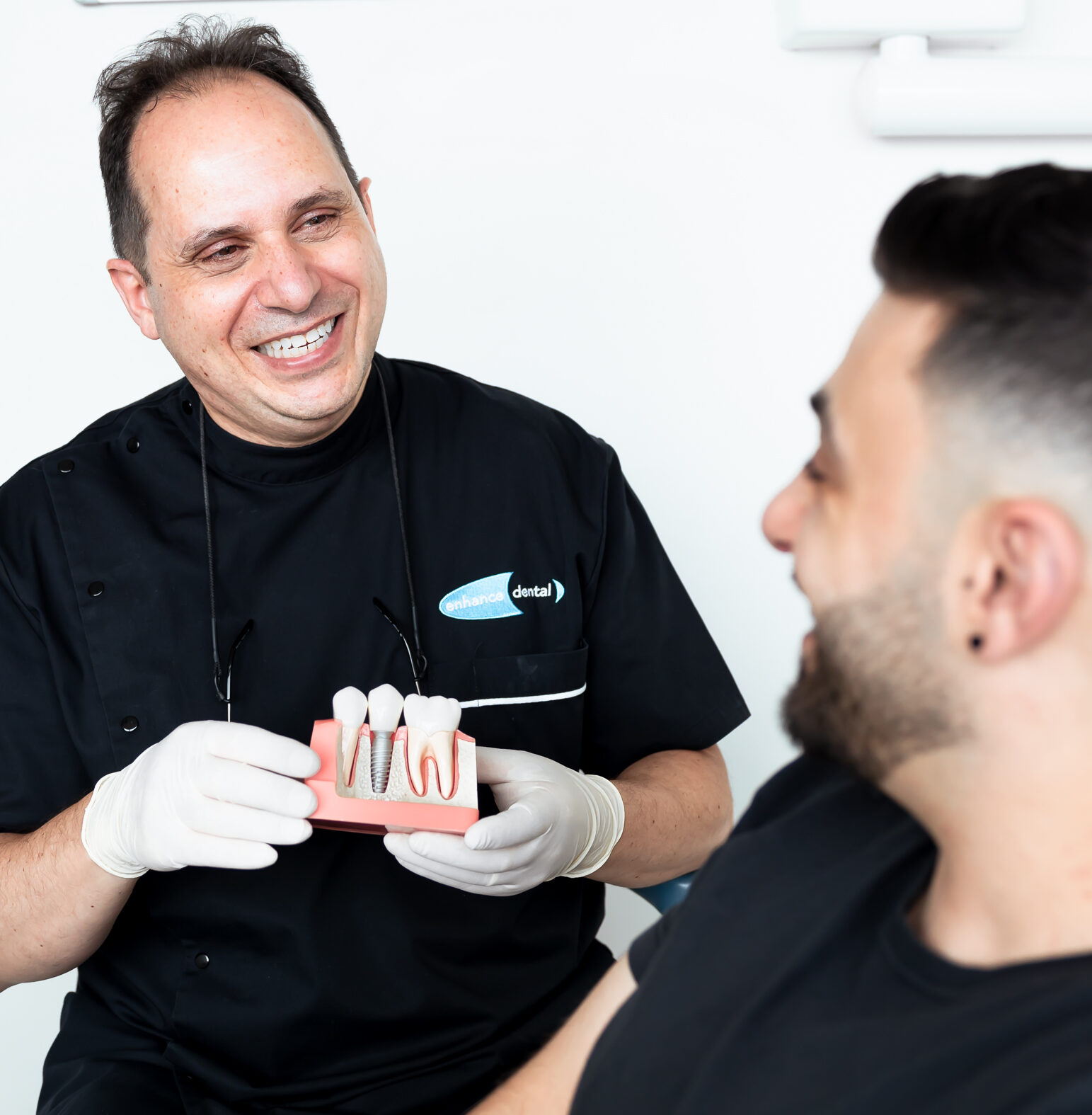
You do not need to work out the diagnosis before asking for help. Tell us what you feel, when it started and whether there has been an injury or swelling. Our team will discuss the next available appointment and any information the dentist needs before you arrive.
Call about persistent tooth pain, pain disturbing sleep or a tooth that hurts when you bite. We investigate the cause and explain the appropriate next step.
Tell us about gum or facial swelling, a bad taste, fever or feeling unwell. Swelling should be assessed even when it is not especially painful.
A tooth can break after an accident or while eating. Keep any fragment you find and ask for an assessment, even if the damage looks small.
Keep any loose restoration and avoid trying to glue it back yourself. We assess the tooth and discuss whether repair, replacement or another approach is appropriate.
Contact a dentist immediately after a tooth is knocked out or moves following an injury. Tell the team straight away; time matters for an adult tooth.
Call about painful ulcers, a sore wisdom tooth, bleeding or a problem after recent treatment. Explain any changes so we can discuss appropriate assessment.
You are welcome exactly as you are
Being in pain can make a dental visit feel overwhelming. You may be worried about an injection, embarrassed about your teeth or unsure what treatment will involve. You can tell us all of that. Our response is to listen and help you feel informed, rather than make you feel uncomfortable about the past.
Prompt attention and an unhurried manner belong together. We take your concern seriously, make room for questions and help you feel more in control.
Worried about the injection?
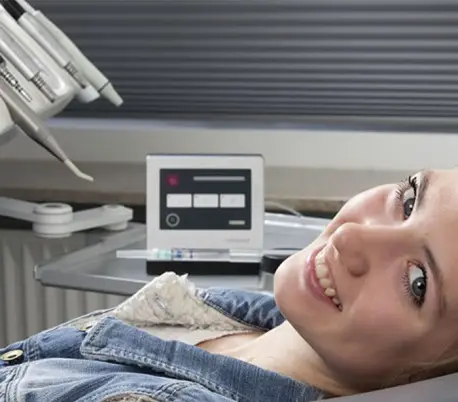
If local anaesthetic is needed, comfort starts before the injection. We use topical numbing cream where appropriate to help reduce the initial sensation, and CALAJECT™ computer-controlled delivery to administer anaesthetic gently at a controlled flow rate.
Our aim is an injection you barely notice, with as little discomfort as possible. Sensations vary between people and treatment sites, so we do not promise that every injection will be completely painless. We explain the process, give the anaesthetic time to work and check your comfort before starting treatment.
Please tell us if you have had trouble getting numb, felt faint with injections or had a previous reaction. That information helps us plan your emergency dental care more thoughtfully.
Tell us both. We can discuss the dental problem and what will help you feel more comfortable.
A clear plan from your first call
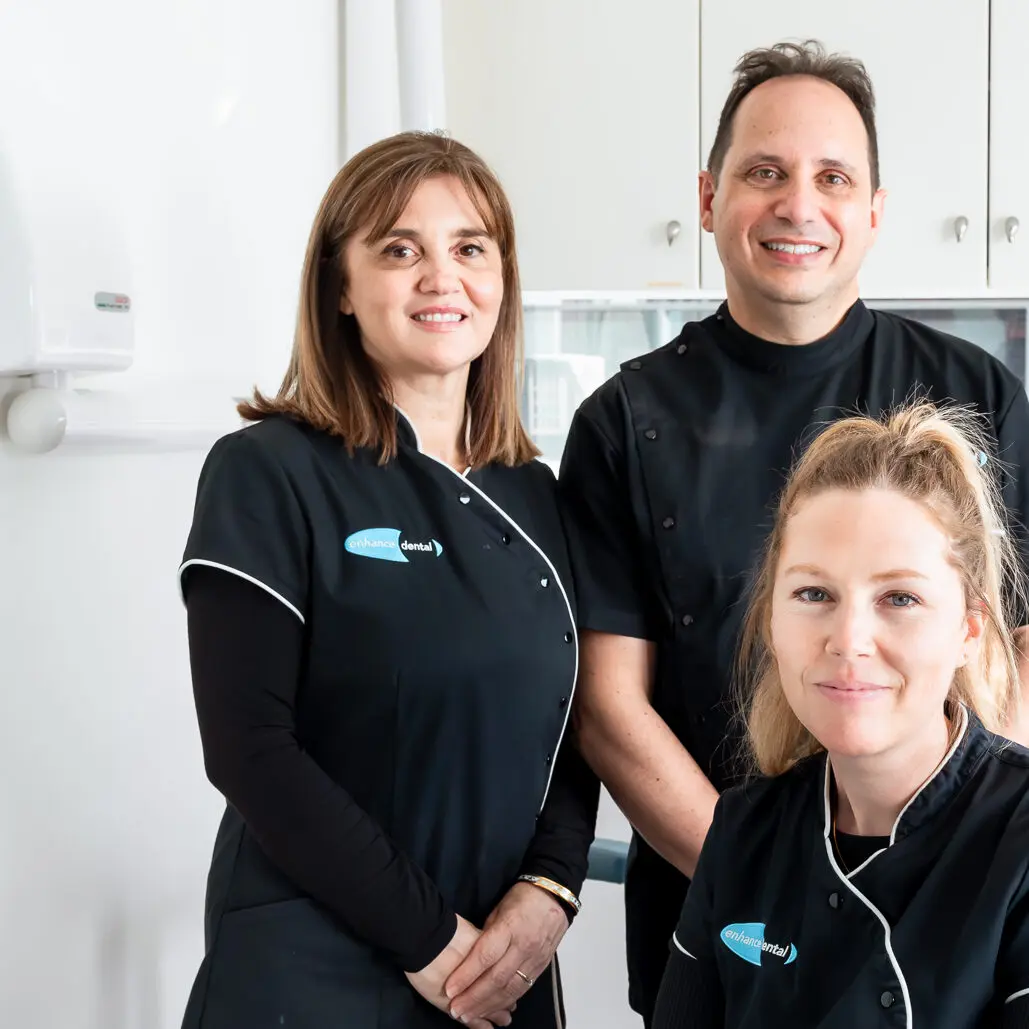
We want you to leave understanding the concern, the care provided and the next step. Dr Joseph Paino brings more than 38 years of clinical dental experience to a practice that values personal attention and clear communication.
We ask about pain, swelling, injury and any worries about treatment. We aim to arrange the earliest appropriate appointment and let you know what to bring. Please confirm your appointment before travelling.
Your dentist takes a history, examines the area and recommends relevant tests. Digital radiographs may help investigate the teeth and surrounding structures when clinically indicated. We select investigations to answer the clinical question, rather than taking every image routinely.
We show you the findings where helpful and explain the likely cause of the pain or damage in everyday language. We discuss any uncertainty, options, relevant risks and likely costs. You can ask us to slow down or explain something again.
Treatment depends on the diagnosis and your agreement. It may involve a repair, stabilising a tooth, initial root canal care, extraction or another appropriate approach. We discuss anaesthetic and comfort measures before beginning. A follow-up visit may be needed for definitive care.
We explain aftercare, what changes to watch for and when to return. If specialist care is indicated, we help arrange a prompt referral and communicate the urgency. The receiving specialist determines availability; we discuss interim care and what to do if symptoms change.
Understanding the cause matters
Dental pain can be difficult to locate or describe. We take your history seriously and combine it with an examination, digital radiographs when indicated and other relevant tests. You can point to the area or simply tell us how it feels; you do not need to use dental terminology.
We explain how the findings relate to your symptoms and why treatment is recommended. If the cause is uncertain, we discuss further investigation or referral.
Learn more about our dental technology, root canal treatment and tooth extraction information.

Antibiotics are prescribed when clinically appropriate after assessment. They are not needed for every toothache and usually do not replace treatment of the underlying dental problem. Where medicine is indicated, we explain its role alongside the dental care and follow-up you need.
Please bring your medicine and allergy details and tell us about any antibiotics already taken.

While you arrange care
Call for advice suited to your situation. Avoid chewing on a damaged tooth, keep a loose crown or tooth fragment and do not use household glue. Ask a pharmacist or dentist about pain relief that is suitable for you; follow the label and do not place aspirin directly against your gums.
Knocked-out adult tooth: handle it by the crown, not the root. If it cannot be safely replaced, keep it in milk and seek immediate dental care. Do not scrub the root or let the tooth dry out. Never reinsert a knocked-out baby tooth. If you are unsure which type it is, keep it in milk and obtain urgent advice.
This is general first-aid information. Serious symptoms listed at the top of this page need emergency medical care.
Know the next step and the likely cost
Your emergency dental fee depends on the assessment, any radiographs and the care needed. Please ask about the current emergency consultation fee when booking. We explain proposed treatment costs before you agree to proceed and discuss whether immediate stabilisation, further treatment or a specialist appointment is needed.
HICAPS is available for instant eligible health fund claims, so you pay the gap on the day. Your benefit depends on your policy and available limits. You can also read our payment options and ask the team about what applies to the proposed care. We do not promise a single fee will cover every emergency dental problem.
St Kilda Road · Melbourne 3004
Level 2, Suite 219
566 St Kilda Road, Melbourne VIC 3004
For emergency dental care near South Yarra, Prahran, St Kilda, Albert Park or South Melbourne, call to discuss the earliest available appointment. New patients and visitors to Melbourne are welcome.
| Monday | 8.00 am–7.00 pm |
|---|---|
| Tuesday–Thursday | 7.30 am–4.00 pm |
| Friday | 7.30 am–12.30 pm |
Clinical hours may vary. Please call to confirm an appointment.
If you cannot reach the practice, you can try Dr Paino’s mobile: 0425 710 628. A response is not guaranteed. This is not a 24-hour emergency service.

Enter Queens Lane via Beatrice Street or Roy Street and look for spaces marked for Enhance Dental patients. Keep the suite and level with your appointment details so you can find us inside the building.

Brigitte · Practice Manager
A welcoming team to help with your questions and booking.
Call first for urgent help. You can complete the Medical History Form on a computer, print it, or fill it in at the practice. For paperwork on arrival, allow at least 10 minutes before your confirmed appointment and extra time if you need assistance.
Answers before you book
Call (03) 9533 8488 and describe your symptoms. We set aside time for emergency dental appointments and aim to offer the earliest appropriate appointment, including the same day where availability allows. Please confirm a time before travelling; an online enquiry is not a confirmed booking.
Yes. Tell us about your anxiety when you call. Your emergency dental team will discuss what would help you feel more comfortable, explain treatment before you decide and agree on a pause signal. You can ask questions and request breaks. Our approach is calm, friendly and considerate.
Yes, and you do not need to apologise. Anxiety, health, finances and everyday life can make dental visits difficult. Our emergency dental care focuses on listening, understanding the current problem and discussing practical options. We can address the immediate concern first and discuss longer-term care when you feel ready.
Where an injection is needed, numbing cream helps reduce the initial sensation and CALAJECT delivers local anaesthetic at a controlled flow rate. We take time and check that the area is adequately numb before emergency dental treatment. Please tell us about previous difficulties with injections.
CALAJECT is designed to help reduce injection discomfort, but it still uses a dental needle. No method can promise a completely painless injection for everyone. For emergency dental care, we combine it with numbing cream, gentle technique and communication, and discuss your concerns before beginning.
Not every assessment or treatment requires an injection. Your dentist will explain whether local anaesthetic is recommended and why. Tell us about allergies, medicines, health conditions and previous reactions so these can be considered when planning your emergency dental care.
Tell us straight away using your agreed pause signal. We check comfort before emergency dental treatment and can reassess if the area does not feel adequately numb. Describe what you feel in your own words; you do not need to decide whether a sensation is normal.
Ask about explanations at your preferred pace, breaks, a stop signal, calming music or watching a screen. Tell us what worries you most. Other anxiety-management or sedation options require individual assessment and advance arrangements; they are not automatically available at every emergency dental visit.
Your emergency dental assessment starts with your symptoms and an examination of the area. Digital radiographs and relevant tests may be recommended to investigate the concern. We explain the findings, any uncertainty and your options. Further investigation or specialist assessment may be needed rather than assuming which tooth is responsible.
No. Images for emergency dental assessment are recommended according to the clinical question and your needs. Tell us about recent radiographs taken elsewhere and relevant health information. If a new image is appropriate, we explain why it will help. Technology supports the examination and clinical judgement.
Antibiotics are prescribed when clinically indicated, rather than for every toothache. They usually do not remove the underlying dental cause. We explain whether they are needed and what emergency dental treatment or follow-up is recommended. Mention allergies, medicines and any antibiotics already taken.
Yes. We explain the findings, what emergency dental treatment can be provided at the visit and what might need a later appointment. We discuss appropriate options, relevant risks and likely costs before you agree to treatment. Please ask us to explain anything that is unclear.
No. At your emergency dental visit, we assess the tooth and discuss appropriate options, which may include repair, root canal treatment, extraction or specialist referral. Some teeth cannot be predictably retained. Your dentist will explain the reasons for a recommendation and the alternatives relevant to your circumstances.
Sometimes. Your first emergency dental visit may focus on assessment, comfort and stabilisation, with further care needed to complete treatment. We explain what has been done and when to return. A temporary repair or reduced pain does not necessarily mean the problem has been fully resolved.
Yes. When your emergency dental assessment indicates specialist expertise is appropriate, we explain why and help arrange a referral with relevant information and radiographs. We communicate the clinical urgency, but the receiving specialist determines availability. We also discuss interim care and what to do if symptoms change.
Emergency dental costs depend on assessment, radiographs and treatment. Ask about the current emergency consultation fee when booking. We discuss proposed treatment costs before proceeding, including follow-up or specialist care. HICAPS is available for eligible instant health fund claims; benefits depend on your policy.
Yes. New and returning patients are welcome; a previous Enhance Dental check-up is not required. Call with your symptoms so we can discuss availability. Tell us about recent treatment elsewhere, medicines and any relevant radiographs or referral information.
When requesting emergency dental care, describe where the problem is, when it started, and any swelling, bleeding, injury or difficulty eating. Mention a knocked-out tooth immediately. Have your callback number, relevant health information, medicines and allergies ready if possible. You do not need to diagnose yourself.
If you cannot reach the practice, you can try Dr Joseph Paino on 0425 710 628, but a response is not guaranteed. We do not provide guaranteed 24-hour emergency dental care. Seek another available dental service if you cannot obtain timely help; call 000 for serious medical symptoms.
Call first for a time-sensitive concern, because messages may not be read immediately. Online booking shows available appointments, but call if the times do not suit your situation. Use the contact form for routine questions. Do not wait for email if symptoms are worsening.
Bring medicine and allergy details, health fund information if relevant, and details of recent dental care. Bring a lost crown or tooth fragment if you have it. The Medical History Form can be filled in on a computer, printed or completed at the practice.
We are at Level 2, Suite 219, 566 St Kilda Road, Melbourne VIC 3004. Designated free parking is behind the building on Queens Lane, entered via Roy Street or Beatrice Street. Look for Enhance Dental signs and confirm your appointment before travelling.
We explain aftercare, when to return and what changes should prompt another call. Ask if anything is unclear. Further treatment or specialist care may be needed after initial stabilisation. If you usually attend another dentist, we can discuss the information needed for continuing care.
Prompt assessment · Gentle approach · No judgment
Call Enhance Dental about your dental pain, swelling or damaged tooth. We will discuss the earliest available appointment and how we can help you feel more at ease.
For urgent concerns, call first. Send a routine enquiry if your question can wait; messages are not monitored continuously.
Clinical care led by Dr Joseph Paino, Principal Dentist. Learn about our team. Information updated 24 October 2026.
General information only; diagnosis and treatment require an individual assessment. Treatment, comfort and outcomes vary. Further reading: Healthdirect: toothache and gum swelling, Australian Dental Association: dental trauma and CALAJECT information.