
Fresh breath · Halitosis assessment · Melbourne
Bad breath treatment in Melbourne.
Start with the cause.
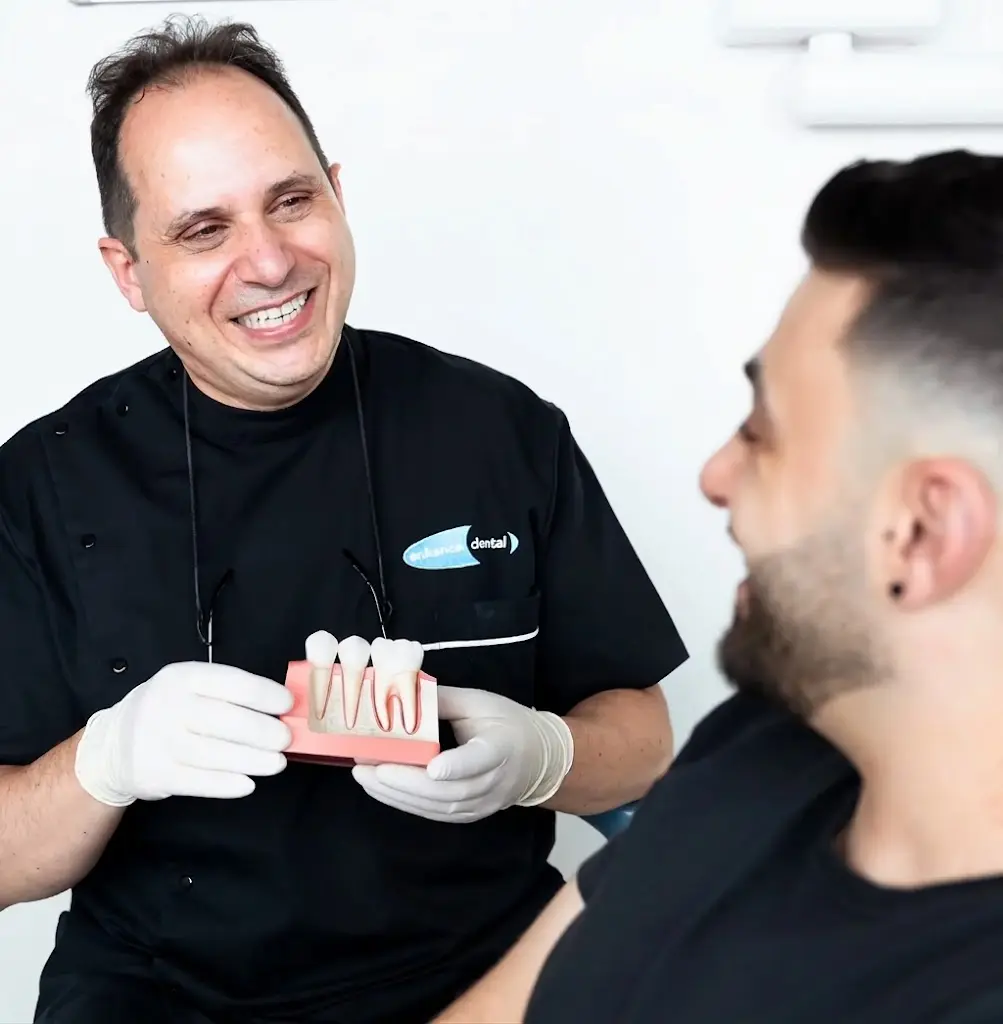
Persistent bad breath can make everyday conversations uncomfortable. Discuss it openly with Dr Joseph Paino and explore a practical plan based on the causes found.
We assess the teeth, gums, tongue and other relevant factors before explaining suitable care. A mint or rinse may mask an odour without addressing the underlying problem.
Enhance Dental Melbourne · Level 2, Suite 219, 566 St Kilda Road, Melbourne VIC 3004
A common concern with several explanations
What causes bad breath?
Halitosis is the clinical term for bad breath. Odour often arises in the mouth, where bacteria break down material around teeth, gums and the tongue. Gum disease, decay, reduced saliva and deposits on dental appliances can contribute. More than one factor may be present.1
Gums and cleaning access
Plaque, calculus, inflammation and food trapping can make cleaning harder. We check gum health and whether a restoration, contact or appliance is contributing.
Tongue and saliva
A coated tongue or a persistently dry mouth may be relevant. We discuss tongue care, hydration, medicines and any symptoms suggesting reduced saliva.
Teeth and dental work
Decay, infection, an unsuitable restoration or poorly cleaned dentures need targeted assessment. A breath product cannot repair a damaged tooth or treat an abscess.
Strong foods, smoking, fasting or a dry mouth overnight can temporarily affect breath. Persistent odour, bleeding gums, tooth pain or a change that does not settle deserves examination rather than repeated attempts to conceal it.2
We also ask about reflux, sinus or throat symptoms and general health. These can matter, but the stomach should not automatically be assumed to be the source before the mouth has been checked.
A respectful conversation, then an examination
Your bad breath assessment at Enhance Dental
Tell us when you notice the problem, whether it is constant or intermittent, what has helped and whether someone else has noticed it. Bring a current medicines list and mention dry mouth, smoking, dietary changes, reflux, nasal symptoms or previous dental care.
We examine the teeth and existing restorations, assess the gums, look at the tongue and other tissues, and review dentures or removable appliances where relevant. We discuss your usual cleaning routine without assuming that persistent odour means you have not tried hard enough.
Radiographs and further records are selected for clinical questions such as decay or infection; they are not automatically needed simply because you ask about breath. No specialised breath-measuring device or laboratory test is promised on this page.
Our aim is to give you a clear explanation of the findings and priorities. If the concern is not evident during that visit, we still take it seriously and discuss useful observations, review or referral rather than recommend unnecessary treatment.

Treat the finding, then review the response
Bad breath treatment tailored to your mouth
| Finding | Possible next step | Why it matters |
|---|---|---|
| Plaque, calculus or gum inflammation | Appropriate professional cleaning, gum assessment and help with daily cleaning. | Cleaning needs to reach the areas contributing to inflammation and odour. More advanced gum disease may need additional care. |
| A coated tongue | Advice about gentle tongue cleaning and a suitable technique. | Forceful scraping can irritate tissues; tongue care is part of a wider plan rather than a universal cure. |
| Decay, infection or food trapping | Investigate the particular tooth or restoration and discuss suitable repair or other treatment. | A rinse cannot remove decay, repair a contact or resolve the source of a dental infection. |
| Dry mouth | Review contributing factors, discuss saliva support and strengthen decay prevention as indicated. | Persistent dryness affects comfort and protection of teeth, as well as breath. |
| Denture or appliance deposits | Review cleaning, fit and the appliance’s condition. | Different materials need suitable products and care. A damaged or ill-fitting appliance may require attention. |
| A possible non-dental contributor | Discuss GP or other appropriate assessment. | Persistent symptoms may require care beyond the dental practice. |
Explore our gum treatment, check-up and cleaning and tooth repair information for the relevant findings. The treatment plan and fees depend on what is diagnosed, rather than a fixed fresh-breath package.
Will a mouthwash solve it?
A selected mouthwash may have a supporting role for some patients. The product, reason for use and duration should be explained. Repeated use of strong antiseptics without assessment can bring unwanted effects and delay attention to an underlying problem.
A Cochrane review found that evidence comparing halitosis treatments was limited and generally uncertain. That does not mean all care is ineffective; it means there is no sound basis for promising one product is the best or a permanent cure for everyone.3 A more recent clinical consensus also supports assessment and treatment directed at the identified cause.6
What about oral probiotics?
A 2025 review reported promising findings in a small group of trials, but the products, methods and follow-up varied. It studied selected otherwise healthy adults and does not establish that a supplement will resolve every patient’s halitosis. Probiotics should not replace assessment and treatment of gum disease, decay or persistent dryness.7
Dry mouth and persistent bad breath
Saliva helps keep the mouth comfortable and protects teeth. Persistent dryness can be associated with medicines, medical conditions or other factors. It deserves assessment, particularly if you also have difficulty eating, a burning feeling or repeated decay.4
We discuss practical saliva support, suitable products and prevention according to the cause and your health needs. Do not stop prescribed medication yourself. A medication review may need your prescribing doctor.
Read our Dry Mouth guide for more detail. Sugar-free gum may be useful for some people, but it is not appropriate for every jaw, appliance or health situation; ask what suits you.
Useful daily steps
What can you do at home?
- Brush twice daily with fluoride toothpaste and clean between teeth each day, using a technique and interdental aid that suit your mouth.
- Clean the tongue gently if advised. Stop forceful brushing or scraping that causes soreness or bleeding.
- Keep dentures, retainers and other appliances clean according to their specific instructions.
- Drink water regularly, while following any medical fluid restriction.
- Avoid tobacco and discuss support to stop smoking. Notice whether particular foods, alcohol or long periods without eating affect your symptoms.
- Follow the review plan, so persistent odour or gum symptoms can be reassessed.
These measures support oral health; they do not replace treatment for established gum disease, decay or infection. Avoid using sugary sweets repeatedly to cover odour. Mouth sprays and mints may make breath feel fresher briefly without resolving its cause.2
A simple record can make the appointment more useful
Note when the odour is noticed, any dry mouth or bad taste, foods or medicines associated with it, and what you have already tried. You do not need to buy a breath tester or undertake an elaborate diet before seeking advice.
When might your GP or another clinician be needed?
If the dental examination does not explain the concern, or symptoms suggest a sinus, tonsil, reflux or other medical problem, we discuss appropriate medical review. Dental and medical causes can coexist. Repeated dental cleaning alone is not a substitute for investigating persistent symptoms that appear to have another source.1
We avoid unnecessary antibiotics or procedures solely to treat an odour without a diagnosis. If concern about breath continues to disrupt your life despite reassuring examinations, tell us. Support can include a coordinated review of symptoms and the distress they cause, without dismissing your experience.
Contact us promptly for tooth pain, a draining area or swelling. A persistent ulcer or red or white patch needs its own mouth-tissue assessment rather than being treated as a breath problem.

Fees, appointments and follow-up
Start with an assessment. We explain the proposed examination and any additional records or treatment fees before proceeding. A professional clean, periodontal care, restoration or saliva-management review may be separate elements of the plan.
Improvement depends on the causes and whether the treatment and daily routine address them. We agree an appropriate review rather than promise permanent fresh breath after one visit. If you have private health cover, benefits depend on your policy and the actual item numbers used.
Call (03) 9533 8488 if you would prefer to explain the concern to our team before booking. You can also ask about care for nervous patients and what would help you feel comfortable at the appointment.

Bad breath treatment: 10 practical questions
Is morning breath the same as persistent halitosis?
Morning breath is common and often settles with drinking, eating and usual cleaning. Odour that continues, returns frequently or occurs with gum symptoms, dryness or pain deserves assessment. Tell us about the pattern rather than trying to diagnose it from timing alone.
Can I have bad breath even when I brush regularly?
Yes. Cleaning between teeth, tongue coating, gum disease, dry mouth and dental or medical problems may still be relevant. The examination helps identify what your current routine may not address. More forceful brushing is not necessarily helpful.
Does bad breath always come from the stomach?
No. Oral causes are common. Reflux and other medical conditions can contribute in some cases, but they should not be assumed to be the cause without assessment. We discuss GP review when the history or findings suggest it.
Will a scale and clean fix bad breath?
It may help when deposits and inflammation are contributing. Other causes need their own care, and established periodontal disease may require more than a routine clean. We explain what a cleaning appointment can reasonably achieve for your findings.
Should I use a tongue scraper?
Gentle tongue cleaning can be useful for some people, especially with coating. Ask for a suitable technique and avoid scraping to the point of bleeding or pain. A persistent tongue lesion needs examination rather than more vigorous cleaning.
Which mouthwash is best for bad breath?
There is no universal best product. A rinse should be selected for a purpose and used as advised, alongside any necessary treatment and daily cleaning. Stronger antiseptic use is not automatically more effective and can have unwanted effects.
Could my medication be causing dry mouth?
Some medicines can reduce saliva and may contribute to oral symptoms. Bring your medicines list. Do not stop or alter a prescription yourself; your dentist and prescribing clinician may need to coordinate a review.
Can dentures or retainers affect breath?
Deposits, trapped food, poor fit or inadequate cleaning may contribute. Bring your appliance so we can review it. Follow product-specific cleaning advice, because hot water or unsuitable chemicals can damage some materials.
What if no odour is evident during the appointment?
We still take the concern seriously. An intermittent problem may not be apparent at one visit. We discuss the history, oral findings and a useful review or referral plan rather than assume treatment is needed without evidence.
Can bad breath treatment guarantee a permanent result?
No. The response depends on the cause, oral health, daily care and any ongoing medical factors. We explain the likely aims of treatment and reassess persistent symptoms rather than promise a one-visit or permanent cure.
References and further reading
Sources checked 9 November 2026. General information supports a discussion with your dentist; your examination determines your care.
- Healthdirect Australia. Halitosis: symptoms, assessment and treatment.
- NHS. Bad breath: home care and when to see a dentist.
- Kumbargere Nagraj S et al. (2019). Interventions for managing halitosis. Cochrane Database of Systematic Reviews. doi:10.1002/14651858.CD012213.pub2.
- National Institute of Dental and Craniofacial Research. Dry mouth.
- Better Health Channel, Victoria. Halitosis or bad breath.
- Clinical Practice Guidelines on the Diagnosis and Treatment of Halitosis (2026). Consensus statement; not an Australian practice-specific protocol.
- Passadakis G et al. (2025). Effectiveness of Probiotics in Managing Oral Halitosis: A Systematic Review of Randomized Controlled Trials. J Int Soc Prev Community Dent 15:301–312. doi:10.4103/jispcd.jispcd_19_25.
Let’s work out what is contributing.
Bring your questions and tell us what you have already tried. We will assess the mouth and explain a practical next step based on the findings.