
Jaw pain · TMJ & TMD · Teeth grinding · Melbourne
Feel heard.
Understand your jaw pain.
Find a plan that fits.
A sore jaw, clicking joint or tired chewing muscles can make ordinary things—eating, talking or yawning—uncomfortable. We take your symptoms seriously and start with a careful assessment.
At Enhance Dental, Dr Joseph Paino helps investigate jaw pain and teeth grinding, explains the findings and discusses conservative care. A custom nylon splint, physiotherapy or specialist referral may be appropriate, depending on your needs.
St Kilda Road, Melbourne · Nervous patients welcome · Individual care rather than a standard appliance for everyone
Start with the right explanation
Jaw pain, TMJ and TMD: what do they mean?
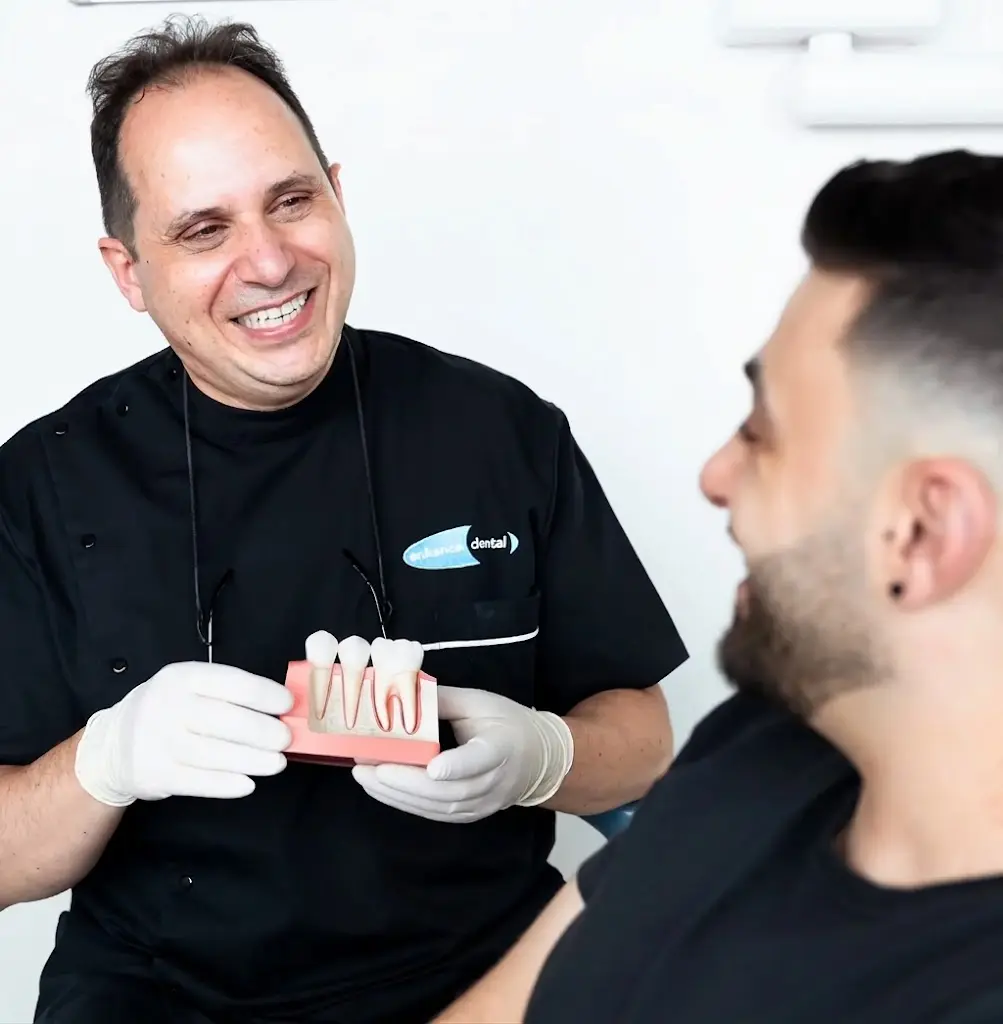
TMJ stands for temporomandibular joint. You have one in front of each ear, where the lower jaw meets the skull. The joints work with a small disc, ligaments and chewing muscles to let you open, close and move your jaw.
TMD means temporomandibular disorders: conditions affecting the joints, chewing muscles and related structures. “TMJ disorder” and “TMJ pain” are common everyday expressions, but the joint itself is not the diagnosis.[1]
Muscle-related jaw pain
Myalgia means muscle pain. The masseter at the side of the jaw and temporalis around the temple can become tender, tired or painful. Symptoms may be influenced by chewing, clenching and other factors.
Joint-related jaw pain
Arthralgia means joint pain. Disc movement, inflammation, arthritis or injury can affect the joint. A particular diagnosis needs examination and, in selected cases, imaging.
More than one contributor
Muscle and joint symptoms can coexist. Sleep, stress, previous injury and other pain conditions may influence how symptoms start or persist. A tooth problem or another medical condition can also resemble TMD.
Jaw pain symptoms worth discussing
- Jaw pain or facial tenderness, especially with chewing, talking or yawning.
- Stiffness, restricted opening or intermittent locking.
- Painful clicking, popping or grating in the joints.
- Temple headache, tired jaw muscles or pain extending towards the neck.
- Earache or fullness, sometimes despite a normal ear examination.
- A new bite change, tooth sensitivity, worn teeth or chipped restorations.
These symptoms do not all have the same cause. For example, migraine, dental infection, nerve pain and ear disease need their own assessment rather than automatically being labelled TMD.[3]

What if the jaw clicks but does not hurt?
Painless clicking or popping, with normal movement and no locking, is common and often needs no active treatment. A click does not by itself prove damage that requires correction. Arrange review if it becomes painful, changes suddenly or is accompanied by restricted movement.[1]
Look beyond the ear alone
Ear pain without an infection: could the jaw be involved?
Jaw joint and chewing-muscle pain can be felt near or inside the ear. This is called referred pain. When the ear examination is normal, dental disease and TMD are among the possible causes—but they are not the only ones.[19]
Tell us whether the ear pain changes with chewing, opening or clenching, and whether a GP has examined the ear. Persistent symptoms may need a GP or ENT review. Ear discharge, new hearing changes, marked dizziness or ongoing one-sided symptoms should not simply be attributed to the bite.
Sudden hearing loss needs urgent medical assessment. A splint is not a treatment for an ear infection, and improvement of tinnitus or dizziness cannot be promised.
Separate the habit from its effects
Bruxism: teeth grinding and jaw clenching
Bruxism describes jaw-muscle activity such as grinding, clenching or bracing. It can occur while awake or asleep, and it is not automatically a disease requiring treatment in every person. We consider the activity, symptoms and any damage together.[5]
Awake bruxism
You may hold the teeth together or brace the jaw during concentration, driving, screen work or stress. Some jaw bracing happens without tooth contact. Awareness, practical reminders and a comfortable resting position can help address the daytime pattern.
Sleep bruxism
Jaw-muscle activity occurs during sleep and may be noticed by a partner or suggested by morning symptoms. You cannot simply decide to stop an unconscious sleep activity. We assess consequences, possible sleep factors and whether protection or further investigation is useful.
Worn teeth are a clue, not a complete diagnosis
Wear may reflect old grinding, acid erosion, diet and combinations of causes. A photograph or scan shows the condition of the teeth, not the exact amount of current night-time muscle activity. Comparing records over time can help distinguish a stable appearance from continuing change.[5]
Potential effects include worn or fractured teeth, sensitivity and damage to fillings, crowns or veneers. Some people have bruxism without jaw pain; others have TMD pain without obvious grinding. We avoid assuming that one finding explains every symptom.[6]
Snoring, tiredness or breathing pauses?
Tell us about loud snoring, choking or gasping during sleep, witnessed pauses and daytime sleepiness. Bruxism can coexist with sleep-disordered breathing, but grinding alone does not diagnose sleep apnoea. Medical or sleep assessment may be needed.[21]
Explore our snoring and sleep apnoea information. A protective bite splint and a mandibular advancement appliance have different purposes.
If lost tooth length or repeated chips are your main concern, explore Restoring Worn Teeth. That guide explains the assessment and choices for replacing lost tooth tissue, alongside prevention and protection.
Listen, examine, record and review
A thorough jaw pain assessment
We ask where your jaw pain occurs, how long it has been present, what brings it on and whether it changes with movement. We also discuss locking, trauma, headaches, ear symptoms, sleep, medicines, dental treatment and the effect on daily life.
The examination can include your teeth and restorations, jaw opening and movement, joint sounds and tenderness in the joints and chewing muscles. We look for a familiar pain response rather than assume every tender area is the cause. Established diagnostic frameworks help distinguish common muscle and joint presentations.[4]
Check dental causes
Decay, cracks, infection, gum disease or a genuinely high recent restoration can need specific dental care. A sore tooth should not automatically be blamed on grinding, and unexplained facial pain should not automatically lead to tooth treatment.
Understand the wider picture
We consider neck symptoms, other pain conditions and your medical history. Stress or disrupted sleep may be relevant without being the only explanation. Your jaw pain is real, and we discuss these factors without dismissing it.
Set useful goals
Goals might include eating more comfortably, easier opening, fewer morning symptoms or protecting vulnerable teeth. We agree what to monitor and when to review, rather than promise a single permanent cure.
Digital records and 3Shape TRIOS scans
Clinical photographs and intraoral-camera images can record tooth wear, cracks and restoration condition. Measurements, symptom notes and bite records provide a baseline for later comparison.
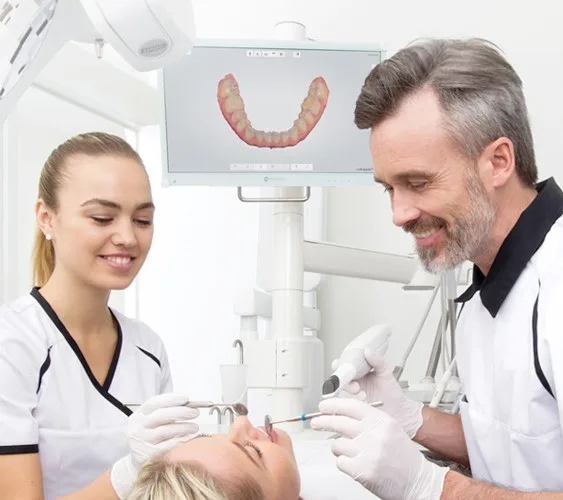
Our 3Shape TRIOS scanner records visible tooth surfaces and the bite as a digital model. These records help us explain findings and communicate a splint prescription to the laboratory. Digital impressions avoid conventional impression material in many cases.[14]
A scan does not measure grinding during sleep, reveal the joint disc or diagnose every cause of jaw pain. We check the completed appliance in your mouth and may need further records or adjustments. Relevant records are stored in your clinical file and shared with the laboratory or a specialist as appropriate, with consent.
Choose imaging to answer a question
OPG and TMJ imaging for jaw pain
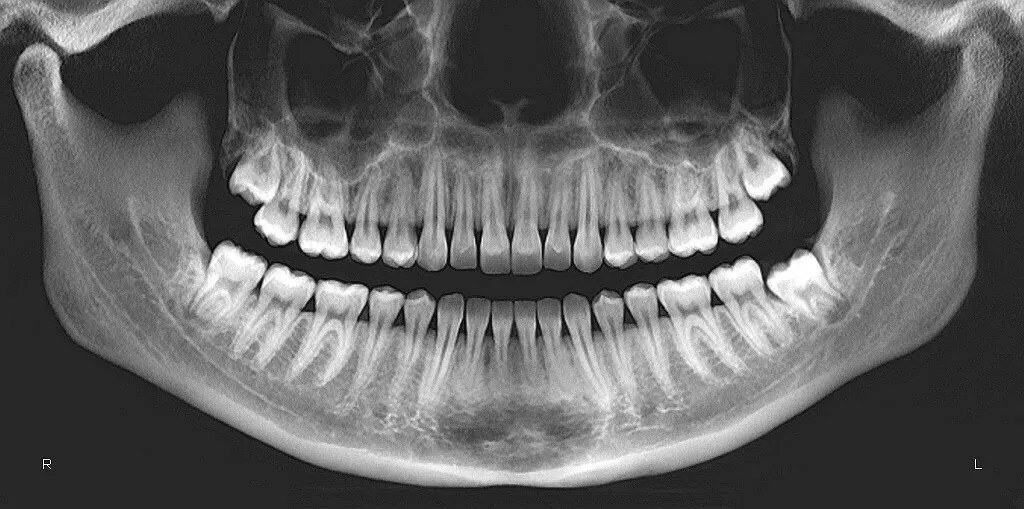
Not every episode of jaw pain needs imaging. We review suitable existing radiographs and consider new images only when they are likely to help diagnosis or change care. With your consent, previous images can be obtained or shared.
| Record or scan | What it can help assess | Important limitation |
|---|---|---|
| Dental X-rays | Selected detail of teeth, roots and surrounding bone when a dental source is suspected. | They do not diagnose muscle pain or show the joint disc. |
| Digital OPG | A broad panoramic overview of the teeth, jaws and parts of the jaw joints. | Two-dimensional overlap and distortion limit subtle joint assessment; it is not a complete TMJ examination. |
| CBCT or selected CT | Three-dimensional bony detail for a question about arthritis, fracture or other structural change. | Uses ionising radiation and does not reliably show the soft-tissue disc. It is not routine screening for every patient. |
| MRI of the TMJs | Disc position, joint fluid and other soft-tissue detail when clinically relevant. | Usually arranged through an appropriate referral. It is not automatically needed for a painless click. |
| TRIOS surface scan | Visible teeth, bite records and a model for appliance design. | Not a radiograph; it does not show internal joint structures or bone. |
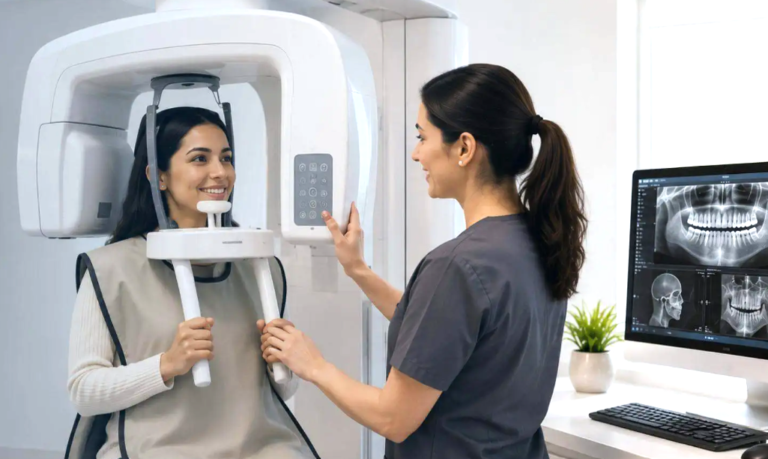
Joint imaging guidance emphasises matching the test to the suspected condition. Symptoms and imaging changes do not always correlate: a scan finding alone does not establish the cause of jaw pain.[7]
Begin with suitable conservative care
Jaw pain treatment: movement, habits and support
Many presentations improve with time and appropriate conservative care. We discuss options around your diagnosis and preferences, using reversible approaches where possible. Persistent jaw pain may need coordinated care rather than one isolated treatment.
Reduce excessive load
During a flare, choose easier-to-chew foods, take smaller bites and reduce gum chewing, nail biting and prolonged wide opening. Keep nutrition varied and return towards normal comfortable eating as symptoms settle; a permanently restricted soft diet is not the goal.[2]
Physiotherapy and movement
A physiotherapist with jaw expertise can assess movement, neck involvement and muscle function. Individually selected exercises, mobilisation or manual treatment may help. Avoid forceful stretching or repeatedly provoking a click.
Awareness and relaxation
Notice daytime clenching or jaw bracing. Gentle reminders, breaks, relaxed breathing and a comfortable resting position can be useful. At rest, the teeth generally do not need to be held together.
Jaw exercises should fit your examination
Evidence supports supervised exercise and physical approaches for selected TMD presentations.[10] The programme may include controlled opening, movement or posture work, but a generic exercise video cannot tell whether your jaw is locked, injured or inflamed. We can coordinate a referral and review your response.
For persistent jaw pain, education, movement and supported coping strategies are central. Cognitive behavioural therapy can help manage pain-related distress and habits without implying the pain is imaginary. A large research review found the clearest evidence for approaches promoting coping and movement.[9]
What the chronic-pain guideline says
The 2023 BMJ guideline favours education, usual care, supervised exercises and selected physical or psychological therapies for TMD pain lasting at least three months. It conditionally recommends against routinely using reversible splints or botulinum toxin for chronic TMD-related jaw pain. That recommendation concerns pain treatment; it does not decide every separate tooth-protection need.[8]
Easing jaw pain: heat, cold and medication
Comfortable warmth or a wrapped cold pack may help some people during a flare. Protect the skin and stop if it feels worse. Ask us or your pharmacist about suitable pain relief, particularly if you have medical conditions or take other medicines.
Anti-inflammatory medicines or a short course of a muscle relaxant may sometimes be considered by an appropriate prescriber for a selected problem. Evidence varies between muscle and joint conditions, and medicines are not a routine long-term solution.[15] Muscle relaxants can cause drowsiness and interact with alcohol or other medicines; driving and work safety must be considered. Do not start, stop or combine prescription medicines based on this page.
Comfort during your dental visit
Tell us about restricted opening, painful positioning or a previous difficult appointment. We can adapt explanations, allow breaks and use a bite block where appropriate rather than ask you to hold the jaw open continuously.
We agree a pause signal and discuss your concerns. If treatment of a separate dental problem is needed, local anaesthetic and other suitable comfort options are explained for that procedure.
Protect the teeth when appropriate
Custom nylon bite splints from 3D Sleep
We prescribe a custom nylon splint from 3D Sleep when indicated, case by case. The reason may be to protect vulnerable teeth or restorations from loading, as part of a broader plan. A splint is not automatically prescribed to everyone with jaw pain.
For appliance design, TRIOS records, vapour polishing, fitting, fees and aftercare, read our custom occlusal splints and teeth-grinding protection guide. The guide focuses on protecting teeth; this page covers the wider assessment of jaw pain.
A current digital appliance option
3D Sleep lists 3DS Protect as its bruxism splint. The laboratory describes laser-sintered, 3D-printed nylon with a vapour-polished finish and flat-plane or Michigan-style designs. We select the prescribed design for your clinical needs.[12]
Our TRIOS records support laboratory fabrication. At fitting, we check retention, coverage, comfort and biting contacts, make appropriate adjustments and explain wearing instructions. Digital manufacture does not remove the need for clinical fitting.
Tooth protection and jaw pain relief are different goals. A splint creates a protective contact surface, but grinding may continue. It cannot be promised to eliminate muscle activity, reposition the joint permanently or cure TMD.


Splints for jaw pain: evidence and review
A 2026 overview of systematic reviews found mostly small beneficial or neutral effects of splints for TMD, with variable evidence quality.[11] This supports a clear purpose, an individual decision and review, rather than treating an appliance as a universal answer.
We monitor your comfort, symptoms, teeth, restorations and bite. Let us know about new pain, pressure spots, looseness or a bite change. If an appliance worsens symptoms, stop using it and contact us for advice. Wear, breakage or future dental work can require adjustment or replacement.
| Appliance | Usual purpose | What it does not establish |
|---|---|---|
| Custom protective bite splint | A prescribed contact surface to help protect teeth and restorations, with clinical fitting and review. | It does not guarantee cessation of bruxism or lasting relief of chronic jaw pain. |
| Mandibular advancement appliance | A selected treatment for snoring or obstructive sleep apnoea following appropriate assessment. | It is not interchangeable with a simple protective splint or a general TMD treatment. |
| Sports mouthguard | Protection against impacts during sport. | It is not designed to diagnose or treat jaw pain, sleep apnoea or bruxism. |
Looking after your nylon splint
- Clean your teeth before wearing it, and clean the splint after removal.
- Follow the supplied product instructions for cleaning agents, water temperature and storage.
- Inspect for wear or cracks and keep it safely away from pets.
- Bring it to dental visits, especially before new restorations, and attend the agreed reviews.
- Do not trim, heat or reshape it yourself if the fit changes.
We provide advice for your exact appliance. Read 3D Sleep’s 3DS Protect instructions alongside our individual guidance.[13]
Escalate thoughtfully when needed
Specialist referral and botulinum toxin
Conservative options before injection discussions
Botulinum toxin injections are sometimes considered for persistent muscle-related symptoms. We can refer for an assessment if this option is being considered, while first exploring suitable education, physiotherapy, exercises, habit management, medication review and any indicated splint.
A 2024 umbrella review found possible benefit over placebo for muscle-related TMD pain, but no clear superiority over standard treatments and concerns about adverse effects.[16] Risks can include chewing weakness, muscle changes and unwanted effects on facial function. Research into jaw-bone changes is inconsistent and the clinical significance remains uncertain.[17]
The treating practitioner discusses the specific indication, alternatives, likely duration, repeat-treatment considerations, risks and whether the proposed use is off-label. Injections are not a routine first step or a substitute for diagnosing the source of jaw pain.
The referral depends on the findings
Oral medicine or orofacial pain
Helpful for persistent or diagnostically uncertain facial pain, complex TMD, burning symptoms or suspected nerve pain. These services can coordinate care beyond the teeth.[18]
Oral pathology or surgery
An oral pathologist may be involved when a tissue or disease diagnosis is needed. An oral and maxillofacial surgeon may assess structural disease, significant trauma, repeated dislocation or selected joint problems requiring surgical advice.
Medical and allied-health care
A GP, physiotherapist, ENT clinician, psychologist, rheumatologist or sleep specialist may be appropriate. For example, persistent ear symptoms, inflammatory arthritis or suspected sleep apnoea need their own pathway.
Referral does not automatically mean surgery or injections. With consent, we share relevant symptoms, treatment history and records so the next clinician can build on what has already been assessed.
Avoid unnecessary permanent changes
Does changing the bite treat jaw pain?
We assess teeth and restorations carefully, including a genuine high spot after recent dental work. However, evidence does not support treating an “unbalanced bite” as the usual explanation for TMD. Orthodontics, extensive new restorations or grinding healthy teeth are not routine cures.[1]
Dental disease or damaged restorations may need treatment for their own reasons. If you are considering Invisalign or restorative work, we discuss its separate goals and limitations. A permanent change should have a clear diagnosis and justification.
When jaw pain needs urgent help
Call 000 for new jaw pain with chest discomfort, breathlessness, sweating or collapse, or if swelling affects breathing or swallowing.[20]
Seek urgent dental or medical assessment for a jaw stuck open, significant injury, inability to eat or drink, rapidly increasing swelling or fever. New severe temple headache, scalp tenderness or visual symptoms also needs urgent medical assessment. Do not force or manipulate a locked jaw yourself.[2][3]
Persistent one-sided pain, an unexplained lump or a non-healing mouth lesion should be checked promptly. Sudden hearing loss requires urgent medical care.
Measure progress, not just joint sounds
What happens after your jaw pain assessment?
- Explain the working diagnosisDiscuss whether the findings suggest muscle pain, a joint problem, a dental issue or another cause, and what remains uncertain about your jaw pain.
- Agree a practical first planSelect appropriate conservative care, records or imaging, any splint purpose and referrals. Explain likely costs before you decide.
- Review symptoms and functionMonitor eating, opening, sleep-related symptoms and daily impact. Change or stop a treatment if it is not helping or causes problems.
- Coordinate further care if neededArrange specialist or medical input for persistent, complex or changing symptoms rather than simply repeating the same treatment.
| Evidence | Main message | How we use it |
|---|---|---|
| BMJ review & guideline, 2023[8][9] | For chronic TMD pain, the strongest support is for selected coping, movement and physical approaches. | Start with suitable conservative options; the chronic-pain recommendations do not apply to every acute episode. |
| Splint overview, 2026[11] | Reviews report small beneficial or neutral effects on TMD symptoms, with varied methodological quality. | Separate tooth protection from pain treatment and review any prescribed appliance. |
| TMJ imaging statement, 2023[7] | Bone and disc/soft-tissue questions require different imaging methods. | Order a test to answer a relevant clinical question, not as routine scanning for everyone. |
| Botulinum toxin review, 2024[16] | Possible pain benefit over placebo, with uncertainty relative to standard care and adverse-effect concerns. | Consider referral selectively after appropriate conservative options and informed discussion. |
Jaw pain care: clear costs and a plan you understand
Fees depend on assessment time, records, justified imaging, any custom appliance and follow-up. External physiotherapy, medical, sleep or specialist services may be separate. We explain the proposed care and estimate, and can provide item numbers for you to check with your health fund.
Explore our payment options or contact our team to arrange a jaw pain assessment. Call for urgent symptoms rather than wait for an enquiry reply.
Clear answers to common questions
20 helpful FAQs about jaw pain, TMJ and bruxism
What is the difference between TMJ and TMD?
TMJ means temporomandibular joint: the jaw joint in front of each ear. TMD means temporomandibular disorders, a group of conditions affecting these joints, the chewing muscles and related structures. People often say TMJ pain when they mean symptoms of a TMD.
What can cause jaw pain?
Possible causes include muscle overload, a joint or disc problem, arthritis, trauma, dental disease and referred pain from elsewhere. Sleep, stress and other pain conditions can influence symptoms. An unbalanced bite is not a sufficient explanation on its own, and the diagnosis should guide treatment.
Does a clicking or popping jaw always need treatment?
No. Painless clicking without locking or loss of function is common and often needs no active treatment. Painful clicking, a new change, recurrent locking or reduced opening should be assessed. Do not repeatedly force the jaw to click or try to manipulate it back yourself.
Can TMD cause ear pain when there is no ear infection?
Jaw joint or muscle pain can be felt near or inside the ear, including when the ear examination is normal. However, a normal ear examination does not prove TMD. Persistent ear pain, discharge, hearing changes, dizziness or other symptoms may require a GP or ENT assessment. Sudden hearing loss needs urgent medical care.
Can teeth grinding happen while I am awake?
Yes. Awake bruxism includes sustained or repeated tooth contact or jaw bracing, sometimes without the teeth touching. Sleep bruxism is jaw-muscle activity during sleep. The pattern and consequences vary, so advice for daytime habits may differ from protection during sleep.
Do worn teeth prove that I currently grind at night?
No. Wear can reflect past grinding, acid erosion, diet and other factors. Cracks, tenderness or worn restorations are clues rather than a precise measurement of current sleep bruxism. History, examination and comparison with digital records help us assess the problem.
Do I need an OPG or other X-rays for jaw pain?
Not automatically. We examine you and consider whether imaging will answer a relevant question. Dental X-rays can assess teeth and bone; an OPG provides a broad overview but has limitations around the jaw joints. Selective TMJ imaging or referral may be appropriate when the findings could change care.
What is the difference between TMJ CBCT and MRI?
CBCT uses X-rays to show bony detail and may help assess suspected arthritis, fracture or other bone changes. MRI is generally the appropriate method for a specific question about the joint disc, fluid or soft tissues. Neither is routine for every episode of jaw pain, and imaging findings do not always match symptoms.
How are TRIOS digital scans used for a bite splint?
TRIOS records visible tooth surfaces and the bite as a three-dimensional digital model. We use these records to communicate a prescription to the laboratory, then check and adjust the completed appliance clinically. A scan is not an X-ray and cannot show the TMJ disc or establish the cause of pain by itself.
Do you use a nylon splint from 3D Sleep?
Yes. When appropriate, we prescribe a custom nylon bite splint made by 3D Sleep, selected case by case. The laboratory offers a bruxism appliance called 3DS Protect. The design, coverage and wearing schedule are chosen for your teeth, restorations, symptoms and clinical needs.
Will a splint stop bruxism or cure my jaw pain?
It cannot be promised to do either. A splint can provide a protective surface between teeth, but grinding activity may continue. Evidence for lasting relief of chronic TMD pain is uncertain. We agree the purpose, combine appropriate self-management or physiotherapy, and review comfort, bite and symptoms.
How should I care for a nylon bite splint?
Clean your teeth before wearing it and follow the written instructions for your exact appliance. Clean the splint after use, use only recommended cleaning products and temperatures, and keep it safely away from pets. Bring it to reviews. Contact us for cracks, poor fit, new pain or a bite change; do not alter it yourself.
What jaw exercises should I do?
Exercises should be chosen after assessing your movement, pain and any locking. Gentle controlled movement and supervised exercises can help selected TMDs, but forceful stretching or repeatedly provoking pain can be unhelpful. We can refer to a physiotherapist with jaw expertise and review your response.
Is stress the reason for my jaw pain?
Stress can influence clenching, sleep, muscle tension and the experience of pain, but it is not the only possible cause. Your symptoms are real. Relaxation and habit awareness may help; some people also benefit from supported pain-management approaches such as cognitive behavioural therapy alongside physical care.
Are muscle relaxants or other medicines used for TMD?
Sometimes, for selected circumstances and an appropriate duration after checking your medical history and other medicines. Evidence varies by the type of TMD. Muscle relaxants may cause drowsiness and interact with other medicines or alcohol. They are not a routine long-term solution, and a suitable prescriber should guide their use.
Are botulinum toxin injections used for jaw pain?
They are sometimes considered for selected persistent muscle-related symptoms after appropriate assessment. We can arrange referral if this option is being considered and generally explore conservative care first. Benefits are uncertain compared with standard treatments, and injections can affect chewing strength and muscle function. The treating practitioner explains suitability, alternatives, duration, risks and any off-label use.
Will adjusting my bite or having Invisalign cure TMD?
Orthodontics, new restorations or grinding healthy teeth are not routine cures for TMD. If a recent filling is genuinely high or a tooth is damaged, that specific dental issue can be assessed. Any permanent change needs its own diagnosis and justification, rather than being recommended solely to treat unexplained jaw pain.
What if grinding is accompanied by snoring or tiredness?
Tell us about loud snoring, witnessed breathing pauses, choking during sleep or daytime sleepiness. Sleep bruxism can coexist with sleep-disordered breathing, but grinding alone does not diagnose sleep apnoea. A protective bite splint is different from a mandibular advancement appliance; medical or sleep assessment may be needed.
When would you refer me to a dental specialist?
Referral may help when the diagnosis is uncertain, pain persists despite appropriate care, the jaw repeatedly locks, or a structural, nerve or tissue problem is suspected. Depending on the findings, this can involve an oral medicine or orofacial pain service, an oral pathologist, an oral and maxillofacial surgeon, or medical and allied-health clinicians.
How much does a jaw pain assessment or splint cost?
The estimate depends on the examination, records, any justified imaging, appliance design and review needs. Physiotherapy, specialist consultations, sleep studies or other care may be charged separately. We explain the proposed plan and costs before you decide and can provide item numbers for you to check with your health fund.
References & further reading
Evidence reviewed 2 November 2026. Guidance, peer-reviewed research and manufacturer information are identified separately. General information does not replace an individual examination or your treating clinician’s advice.
- NIDCR. Temporomandibular disorders: symptoms, diagnosis and conservative care.
- NHS. Temporomandibular disorder: symptoms, self-care and when to seek help.
- RACGP (2018). Temporomandibular dysfunction: clinical assessment, differential diagnosis and referral.
- Schiffman E et al. (2014). Diagnostic Criteria for Temporomandibular Disorders (DC/TMD). Journal of Oral & Facial Pain and Headache 28:6–27.
- Verhoeff MC et al. (2025). Updating the Bruxism Definitions: Report of an International Consensus Meeting. Journal of Oral Rehabilitation 52:1335–1342.
- NIDCR. Bruxism: signs, assessment and treatment options.
- Mallya SM et al. (2023). Recommendations for imaging the temporomandibular joint: AAOMR/AAOP position statement.
- BMJ (2023). Management of chronic pain associated with TMD: a clinical practice guideline. Applies to pain lasting at least three months.
- BMJ (2023). Management of chronic pain secondary to TMD: systematic review and network meta-analysis of randomised trials.
- Exercise therapy improves pain and mouth opening in TMD (2022). Systematic review and meta-analysis.
- Del Sorbo D et al. (2026). Occlusal splint therapy in TMD: evidence from systematic reviews. Journal of Oral Rehabilitation 53:1562–1579.
- 3D Sleep. Oral appliances: 3DS Protect nylon bruxism splint. Laboratory/manufacturer information.
- 3D Sleep (2025). 3DS Protect user instructions: adaptation, care and review. Manufacturer document.
- 3Shape. TRIOS intraoral scanners and digital laboratory workflows. Manufacturer information.
- Christidis N et al. (2024). Pharmacological treatments of TMD: systematic review including a network meta-analysis. Drugs 84:59–81.
- Botulinum Toxin-A for Myogenous TMD (2024). Umbrella review of systematic reviews. Drugs 84:779–809.
- Botulinum toxin injections and mandibular bone density/resorption (2024). Systematic review.
- Royal Dental Hospital of Melbourne. Oral Medicine: facial pain, TMD and mucosal services. Referral information; eligibility criteria apply.
- Evaluation and Management of Otalgia (2021). Review of ear pain and referred causes.
- Healthdirect Australia. Heart attack: symptoms and emergency action.
- Healthdirect Australia. Teeth grinding: assessment, protection and sleep-apnoea review where appropriate.

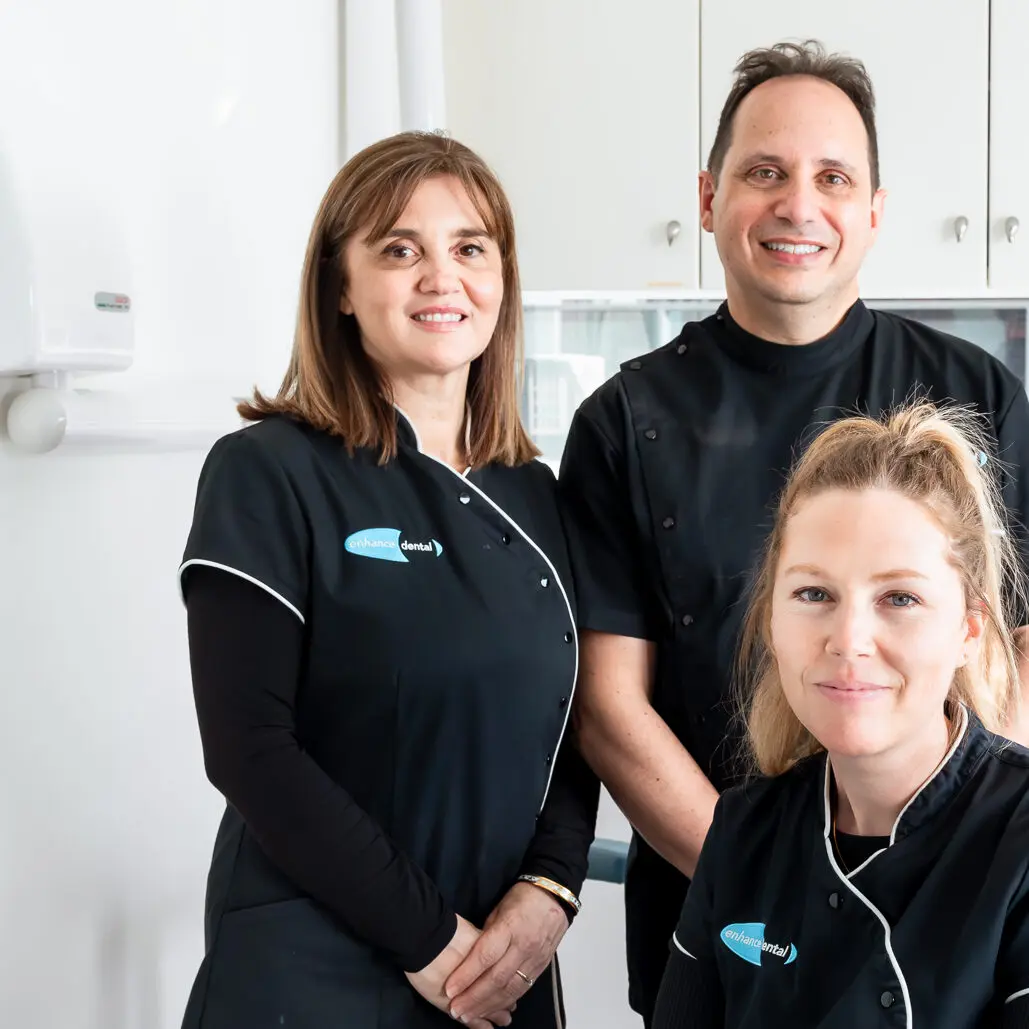
B.D.Sc. (Melbourne) · Principal dentist, Enhance Dental
Meet Dr Paino and the team

Take the next step at your pace
Let’s understand your jaw pain together
Whether you have a sore jaw, painful clicking or concerns about grinding and wear, we can begin with a careful assessment and a clear conversation about your options.
Enhance Dental · Level 2, Suite 219, 566 St Kilda Road, Melbourne VIC 3004
Directions, contact details and enquiry form
Any surgical or invasive procedure carries risks. Before proceeding, you should seek a second opinion from an appropriately qualified health practitioner.