
Dental bridges • Modern zirconia • Melbourne
Replace a missing tooth. Bring balance back to your smile.
Dental bridges can fill a gap with teeth that stay fixed in place. At Enhance Dental, modern zirconia bridges are our usual choice for suitable tooth-supported bridgework—combining a strong ceramic structure with carefully planned colour, shape and proportions.
We look at the whole picture: the missing tooth, the teeth beside it, your bite and what matters to you. You will understand the benefits, alternatives and limitations before deciding.
Level 2, Suite 219, 566 St Kilda Road, Melbourne. An assessment comes before a treatment recommendation.

Treatment by Dr Joseph Paino
Invisalign followed by two zirconia bridges
This Enhance Dental case brought together tooth positioning and restorative care. The patient was missing both upper lateral incisors (teeth 12 and 22), with spacing and visibly worn neighbouring front teeth. Dr Paino used Invisalign first, then two three-unit zirconia bridges.
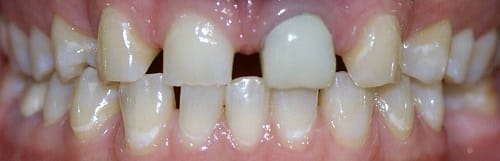
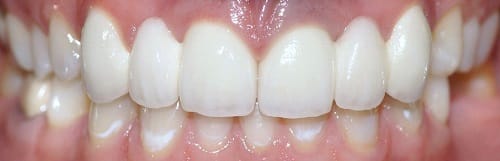
First, create the right spaces. Invisalign closed the diastema—the gap between the upper central incisors—and redistributed space between each central incisor and canine to accommodate a replacement lateral incisor (pontic).
Then, restore the missing and worn teeth together. Each three-unit bridge linked a central-incisor crown and a canine crown to a lateral-incisor pontic. The two bridges replaced teeth 12 and 22 while changing the colour, contours and visible length of the supporting upper centrals and canines. The zirconia restorations were designed to rebuild the worn outlines with a strong ceramic structure and a more balanced appearance.
Photographs show appearance, not a measurement of strength or long-term performance. This individual result involved both Invisalign and bridgework; it is not a prediction or guarantee of your outcome. Lighting, angle and tooth position can affect comparisons. Select an image to enlarge it.
How does a dental bridge work?
A bridge joins one or more replacement teeth to supports beside the gap. In a conventional three-unit bridge, two crowns fit over prepared neighbouring teeth and hold the replacement tooth between them. The bridge is fixed in place; you do not remove it to clean it. [1][2]
The supporting teeth
Called abutments, these teeth carry the bridge. Their remaining structure, roots, gum support and previous treatment affect the plan.
The replacement tooth
Called a pontic, it fills the space above the gum. Its underside is shaped so that you can clean beneath it.
The connections
Connectors join the bridge units. They need enough room and appropriate dimensions to cope with biting forces.
A tooth-supported bridge is different from an Explore Dental Implants, where implants provide the support. The most suitable option depends on your mouth, rather than the material alone.
Strength, with attention to the details
Why we usually choose zirconia bridges
Zirconia is now Dr Paino’s usual material for almost all suitable tooth-supported bridges. It is a strong dental ceramic that can be digitally designed and milled to a planned shape. Modern shaded and translucent options allow a more lifelike appearance than the earliest opaque zirconia frameworks, with careful selection for front or back teeth. [8]
A strong ceramic structure
Zirconia offers useful strength for appropriately designed bridgework. The grade, thickness, span and connectors must still suit your bite.
More aesthetic choices
Shade gradients, surface detail and controlled translucency help us plan a natural blend. A dark supporting tooth or limited space can affect what is achievable.
No metal framework
An all-zirconia bridge avoids a metal coping and its potential dark edge. It does not guarantee that gum recession, dark tooth structure or margins will never become visible.
More translucent is not automatically better. Zirconias differ. Higher translucency can come with lower strength or toughness, so a material suited to an anterior short bridge may not suit a longer span or heavy bite. Laboratory strength tests help guide selection but do not predict your bridge’s lifespan. [8][9]
Monolithic zirconia versus porcelain-layered zirconia
Monolithic means that the main tooth shape is made from zirconia itself. Surface colour and finishing can refine the result. A layered restoration has porcelain applied over a zirconia framework, sometimes to achieve particular aesthetic effects.
A separate porcelain layer introduces a potential chipping interface. Monolithic designs avoid that particular layer and research generally finds fewer chipping problems. They can still fracture, lose retention or develop problems in the supporting teeth. A small porcelain addition or partial layering also differs from a completely unveneered bridge. [3][4]
We discuss the proposed construction with you. The goal is an appropriate balance of appearance, material strength and maintainability—not a blanket promise that one design is always superior.
Compare ways to replace a missing tooth
A conventional bridge may be particularly useful when neighbouring teeth already need substantial restorations or crowns. If they are untouched and healthy, preserving them may favour another option. We explain the trade-offs and your choice to defer treatment where appropriate. [1][2]
| Option | What may make it useful | Limitations to consider |
|---|---|---|
| Conventional zirconia bridge | A fixed replacement without implant surgery; can restore adjacent damaged or worn teeth at the same time. | Usually requires irreversible preparation of support teeth. Cleaning beneath the pontic and ongoing support-tooth health are essential. |
| Resin-bonded / Maryland bridge | A wing bonded behind a neighbouring tooth; often conserves substantially more tooth structure for a suitable single front-tooth gap. | Bonding surface, bite and design are critical. Debonding can occur; single- and two-retainer designs have different evidence. |
| Dental implant | Replaces the missing tooth without crowning its neighbours; can support a crown or bridge. | Requires assessment for surgery, bone and soft tissue, healing time and long-term implant maintenance. It is not suitable for everyone. |
| Removable partial denture | Can replace several teeth, and may be suitable where fixed supports are limited. | Removed for cleaning; appearance, bulk, movement and adjustment needs vary. |
| Orthodontic space closure | Moves natural teeth to close an appropriate gap, sometimes avoiding a replacement tooth. | Depends on the bite, tooth shapes and smile goals; requires time and retention and may involve reshaping. |
| Monitor or leave the gap | An option in selected situations after discussing function, appearance and risks. | A gap can affect chewing, tooth position or appearance; review is needed and changes are not predictable for everyone. |
Explore Dental Implants, explore dentures, or read about orthodontic treatment.

When implants are not your preferred option
Some people are not suitable for implant surgery; others prefer a fixed tooth-supported bridge after considering surgery, healing, costs and their personal priorities. A bridge may also suit someone who does not want a removable denture or orthodontic space closure.
At Enhance Dental, very long tooth-supported spans are uncommon. We assess their extra demands carefully and may discuss implants, a different bridge design, specialist advice or a removable option. A bridge still needs sound supports; choosing to avoid surgery does not make an unsuitable tooth suitable.
Tell us what you would like to achieve and what concerns you. We will help you compare realistic options.
Evidence, explained in context
How long do dental bridges last?
Survival and success are different. A bridge may remain in use after a repair or rebonding and still count as surviving. Success or complication-free survival usually sets a stricter standard. Results from different studies cannot be treated as a head-to-head ranking of treatments.
| Evidence | What was reported | What it means for your choice |
|---|---|---|
| Conventional bridges: 2026 systematic review [4] | Estimated 5-year survival: monolithic zirconia 87.9%; veneered zirconia 92.9%; metal-ceramic 91.3%. Across all materials, 71.0% were complication-free. | Differences between these three materials were not statistically significant. Monolithic zirconia had the least ceramic chipping; biological problems and retention still mattered. |
| Five-year randomized trial [5] | 90 patients, with 30 assigned to each of three posterior bridge materials. Monolithic zirconia was considered a viable treatment option. | Most complications were biological. Strong material alone does not protect the supporting teeth, and small trials do not establish a universal lifespan. |
| Resin-bonded bridges: 2017 systematic review [6] | Across 2,300 bridges, estimated survival was 91.4% at 5 years and 82.9% at 10 years. Debonding occurred in about 15% over 5 years. | The corresponding loss of survival is about 8.6% and 17.1%; these are not the same as debonding rates. Some loosened bridges can be rebonded. |
| Modern single-retainer anterior zirconia bridges [7] | One cohort of 108 cantilever resin-bonded bridges reported 98.2% survival and 92.0% success at 10 years. | Selected patients and a particular design—not all Maryland bridges. It demonstrates why modern single-retainer designs deserve individual consideration. |
These are study estimates, not Enhance Dental success rates or guarantees. Materials, designs, patient selection, follow-up and definitions vary. Several modern translucent zirconias have less long-term bridge-specific evidence than older materials. The 2023 review of monolithic versus layered zirconia also combined different full-coverage restoration types, so its findings should not be read as a precise prognosis for one bridge. [3]
Maryland bridges: useful, but design matters
A resin-bonded bridge uses one or more wings bonded to teeth beside the gap. “Maryland bridge” is often used broadly for these restorations. Dr Paino sometimes uses them, with careful attention to your bite and the available enamel.
Debonding is a recognised complication. With a two-wing design, one wing may loosen while the other stays attached; a failed seal can allow plaque and decay to develop unnoticed beneath the loose side. Regular reviews and prompt assessment of changes are important.
However, the evidence does not support describing every resin-bonded bridge as short-lived. The 2017 review found better survival and less debonding with one retainer than with two or more. A well-selected single-retainer zirconia bridge can be a conservative option, especially when adjacent teeth are otherwise healthy. [6][7]
Digital precision · Melbourne craftsmanship
Your zirconia bridge, crafted with Noble Dental Ceramics
Dr Joseph Paino works with Noble Dental Ceramics for laboratory-made crowns and bridges. Based in Glen Iris, Melbourne, Noble combines experienced ceramic technicians with digital design and manufacturing. Its directors, Robert Kunz and Shane Mullaney, each bring more than 30 years of crown and bridge experience.[13]
Advanced technology
Noble offers CAD/CAM workflows, zirconia restorations and other ceramics. We plan the design with the laboratory around the supporting teeth, available space and bite.
Australian made
Noble states that its restorations are 100% Australian made. Working with a Melbourne laboratory supports communication about your individual case.
Material selection
Noble describes its materials as “TGA approved”. The ceramic and bridge design still need to be suitable for your clinical situation.
Workmanship guarantee
Noble advertises guaranteed workmanship. Ask us about the applicable terms; a laboratory guarantee does not promise a lifetime clinical result.
Noble also offers custom shade matching, diagnostic wax-ups, provisional restorations, and monolithic and layered zirconia options. We explain which construction is recommended for you.[14]


Restoring a tooth rather than replacing a gap? Explore our Explore Porcelain Crowns, planned with the same attention to shade, shape and bite.
A more comfortable way to take records
TRIOS digital scanning: leave the gooey impressions behind
We use our 3Shape TRIOS intraoral scanner to record a detailed, three-dimensional digital model of your teeth and how they meet. For suitable crown and bridge cases, this replaces a tray of impression material and its setting time.
The scan can be reviewed on screen, with areas checked and rescanned where needed. Digital records support communication with the laboratory during design. We still check the finished bridge’s margins, contacts, appearance and bite carefully in your mouth.[15]
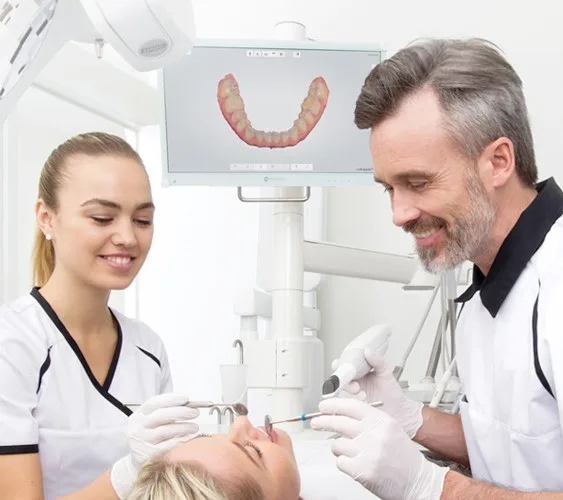
What does the research say? A randomised clinical trial of 70 single back-tooth crowns found favourable fit and efficiency with TRIOS scanning compared with conventional impressions followed by laboratory scanning. This supports that particular workflow; it does not establish the same result for every bridge length or clinical situation.[16]
Digital scanning has limits. Clear access to the preparation margins, moisture control and a good scan remain essential. Deep margins, bleeding, movement and longer spans can make records more demanding. Additional records or a conventional impression may sometimes be needed. Scanning cannot guarantee a perfect fit or eliminate adjustment.
Explore our advanced dental technology or learn about TRIOS from 3Shape. Ask about digital scanning at your bridge consultation.
Your dental bridges consultation and appointments
A conventional bridge commonly involves preparation and fitting visits, with planning and review appointments as needed. A timeframe of around three weeks may be possible for straightforward cases. Your actual schedule depends on laboratory work, the condition of your teeth and any treatment needed first.
- 1Assess & compareExamine teeth, gums and bite. Review relevant images and take radiographs where clinically indicated.
- 2Plan the smileAgree the material, support teeth, shape and shade. Discuss whitening or orthodontics if appropriate.
- 3Prepare & protectUsually with local anaesthetic, shape the supports and record the teeth and bite, usually with our TRIOS digital scanner. Fit a temporary bridge if needed.
- 4Craft & fitNoble Dental Ceramics creates the bridge. Check fit, margins, contacts, appearance and bite before final placement.
- 5Review & maintainCheck comfort and cleaning, monitor the supporting teeth and arrange reviews suited to your risks.
Our Melbourne laboratory, Noble Dental Ceramics, works with us on the bridge’s contours and shade. You can ask questions throughout. If you are nervous about dental treatment, please tell us so we can plan your comfort.
Thinking about a brighter shade? Ceramic does not whiten like natural enamel. If whitening is suitable and part of your goal, plan it before final shade selection, allowing the natural colour to settle. Read our whitening guide.
Dental bridges: limitations and risks
Support teeth are changed
Conventional bridge preparation usually removes tooth structure permanently. A future problem with one support can affect the whole bridge.
Teeth and gums remain vulnerable
Decay at margins, gum disease, cracks and pulp problems can occur. The ceramic itself cannot decay, but the teeth beneath it can.
Strong does not mean unbreakable
Fracture, chipping, cement failure or loss of retention can require repair or replacement. Heavy grinding and unsuitable spans increase demands.
Cleaning needs access
Joined units cannot be flossed in the same way as separate teeth. You need a practical way to clean under the pontic and around the supports.
Appearance can change over time
Gum recession, tooth movement and changes in natural tooth colour may reveal margins or alter the blend. A fixed bridge is not an implant and does not replace a tooth root.
The bite and finish matter
Opposing teeth can wear against ceramic. Careful adjustment, polishing and reviews matter; grinding protection may be recommended but cannot eliminate all risk. [12]
We assess gum health, decay, wear and grinding or bite concerns before treatment. Sometimes additional care or another design is the better choice. [1][4]
What if a supporting tooth needs a root canal later?
A crowned or bridge-supporting tooth can develop pulp inflammation or infection, just as an uncrowned tooth can. Causes may include earlier deep decay, large restorations, cracks, trauma or new decay. Preparing a living tooth for a crown or bridge can also contribute to pulp injury; it would be inaccurate to say that later root canal treatment is always unrelated to preparation. [10]
The bridge may be able to stay in place. If it is sound and fits well, an access opening can often be made through the crown part to treat the support tooth. Afterwards the opening may be sealed with a bonded tooth-coloured resin filling. A carefully placed repair can be discreet, but we cannot promise it will be invisible or appropriate in every case.
Access can damage ceramic or affect its strength. Significant decay, cracks, a poor fit or difficult access may require removing or replacing the bridge. Laboratory evidence supports careful case selection; it does not guarantee the long-term performance of an accessed bridge. [11]
Learn about root canal treatment or Explore Porcelain Crowns.
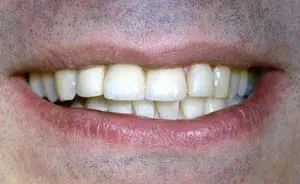
Replacing a single front tooth
This separate Enhance Dental case shows a porcelain bridge replacing one missing upper right front tooth. A single gap and several missing teeth can call for different designs; we tailor the plan to the teeth and supports available.
This is an individual treatment result, not a guarantee of what another patient can achieve.
Caring for dental bridges day to day
Brush twice daily with fluoride toothpaste and clean underneath the pontic and around both supports every day. We can demonstrate bridge floss, a threader or an interdental brush suited to your spaces. Attend check-ups at intervals based on your oral health and risk. [2]
Avoid using the bridge to bite packaging or hard objects. If you clench or grind, ask whether a protective splint is appropriate. Contact us for looseness, persistent sensitivity, a high bite, a crack, new food trapping or bleeding gums. Do not try to glue or adjust a bridge yourself.
Dental bridge costs in Melbourne
The number of units, support teeth, material and laboratory design all affect the fee. Gum treatment, replacement of old fillings, orthodontics or other preparatory care may be separate. A three-unit bridge is not simply the cost of one replacement tooth.
We provide an individual written estimate, discuss what is included and explain alternatives and likely maintenance before you commit. Ask reception about current fees, appointment planning and payment options and their terms.
Your questions, answered
16 essential dental bridge FAQs
How do three-unit dental bridges work?
It usually replaces one missing tooth using three joined parts: a crown on each neighbouring support tooth and a replacement tooth between them. The replacement is called a pontic and the support teeth are called abutments. Other bridge designs use different numbers or types of supports.
Are zirconia bridges the same as porcelain bridges?
Zirconia is a ceramic, but it is different from traditional veneering porcelain. A monolithic bridge is made mainly from full-contour zirconia. A layered bridge has a supporting framework covered with porcelain. People often use “porcelain bridge” as a general term; we explain the actual material and construction proposed for you.
Can zirconia bridges look natural on front teeth?
Modern shaded and more translucent zirconias offer more aesthetic options than early opaque zirconia frameworks. Tooth shape, surface texture, colour transitions, gum contours and the neighbouring teeth all matter. Masking a dark support tooth can require a different balance of opacity and translucency. No material guarantees an invisible restoration.
How long do dental bridges last?
There is no fixed lifespan. Some function for many years, while others need earlier repair or replacement. The health of the support teeth, bridge design, bite forces, material, cleaning and reviews all influence longevity. Research survival means a bridge remains in service; it does not necessarily mean it has needed no maintenance.
Are zirconia bridges unbreakable?
No. Zirconia is a strong dental ceramic, but the bridge, its connectors, cement or supporting teeth can still fail. Longer spans, limited space and heavy grinding change the risk. The appropriate zirconia grade and dimensions must suit the design rather than simply choosing the most translucent material.
Is a bridge better than an implant?
Neither is best for everyone. An implant may preserve untouched neighbouring teeth but involves surgery, healing and sufficient suitable bone and soft tissue. A tooth-supported bridge avoids implant placement and may make sense when adjacent teeth already need crowns. It does require suitable supports and usually irreversible preparation. We compare both approaches for your situation.
Are Maryland or resin-bonded bridges a good option?
They can be, especially for selected single missing front teeth with good enamel for bonding. A wing attaches behind a support tooth, often with much less preparation than a conventional bridge. Debonding is an important risk. Modern single-retainer designs can perform well and should not be judged solely by older two-wing designs.
What if one wing of a Maryland bridge loosens?
With a two-wing design, one side can loosen while the other still holds the bridge. Plaque and decay may develop around the failed seal, sometimes without obvious movement of the whole bridge. Seek review for looseness, a changed feel or food trapping. Do not try to reglue a bridge yourself.
Do I need Invisalign before a bridge?
Not always. Orthodontics may help distribute the space, improve the bite or position the support teeth before a bridge is made. In the case shown on this page, Invisalign closed the gap between the upper central incisors and created suitable spaces for the two replacement lateral incisors. Other patients may need no orthodontic treatment.
Can dental bridges replace several missing teeth?
Sometimes, but the length of the gap, connector dimensions and strength of the support teeth limit what is sensible. Longer spans place greater demands on the restoration and supports. Implant-supported options, a denture or another design may be more appropriate. A short-span result cannot be assumed to apply to a very long bridge.
Is getting dental bridges painful?
Local anaesthetic is usually used when support teeth are prepared. We explain the stages, check that you are comfortable and discuss your concerns before starting. Temporary sensitivity or gum tenderness can occur. Tell us about persistent pain, a high bite or a temporary bridge that feels loose.
Can teeth supporting dental bridges need root canal treatment?
Yes. Pulp problems can arise from previous deep decay, large fillings, cracks, trauma, new decay or the effects of preparing a living tooth. Needing treatment later does not by itself identify the cause. We assess symptoms and the tooth rather than assume the bridge is automatically responsible or unrelated.
Can root canal treatment be done through dental bridges?
Often it is possible to make a small access opening through the crown part of a sound, well-fitting bridge, treat the support tooth and seal the opening with a bonded tooth-coloured restoration. The repair can be discreet, but access can damage ceramic or reduce strength. Decay, cracks, poor fit or limited access may mean removal or replacement is needed.
Can I whiten a zirconia bridge?
Whitening does not change ceramic colour like natural tooth enamel. If you want surrounding teeth brighter, discuss whitening before the final bridge shade is selected. Existing restorations may look different beside newly whitened teeth. Urgent dental care comes first, and replacement solely for colour is an individual choice.
How do I clean underneath dental bridges?
Brush twice daily with fluoride toothpaste and clean beneath the pontic and around the supports each day. A floss threader, suitable bridge floss or correctly sized interdental brush may help. We demonstrate a method suited to your bridge. A water flosser can be an additional aid; ask us how it fits into your cleaning plan.
What do dental bridges cost in Melbourne?
The fee depends on the number of units, material, laboratory work, condition of the supporting teeth and any orthodontic, gum or other care required first. We provide a written individual estimate and explain alternatives and expected maintenance. Ask reception about current fees and payment options; photographs alone cannot establish an accurate quote.
References & further reading
The sources below include patient guidance, systematic reviews and clinical studies. A laboratory finding, a small trial and a pooled long-term estimate answer different questions; none guarantees an individual result.
- Australian Dental Association. Crowns, bridges and veneers.
- Healthdirect Australia. Dental bridge.
- Shihabi S & Chrcanovic BR (2023). Clinical outcomes of tooth-supported monolithic zirconia vs. porcelain-veneered zirconia fixed dental prosthesis: systematic review and meta-analysis.
- Romandini P and colleagues (2026). Survival, failure and complication rates of metal-ceramic, veneered and monolithic all-ceramic tooth-supported multiple-unit FDPs—Part 2.
- Pontevedra P and colleagues (2024; first published online 2023). Digital workflow for monolithic and veneered zirconia and metal-ceramic posterior fixed partial dentures: a five-year prospective randomized clinical trial.
- Thoma DS and colleagues (2017). Survival and complication rates of resin-bonded fixed dental prostheses after a mean observation period of at least 5 years: systematic review.
- Kern M, Passia N, Sasse M & Yazigi C (2017). Ten-year outcome of zirconia ceramic cantilever resin-bonded fixed dental prostheses.
- American Dental Association. Materials for indirect restorations.
- Bernauer SA and colleagues (2026; first published online 2025). Flexural strength of translucent zirconia for single crowns and fixed dental prostheses.
- Al-Manei KK and colleagues (2023). Incidence and influential factors in pulp necrosis and periapical pathosis following indirect restorations.
- Gorman CM, Ray NJ & Burke FM (2016). The effect of endodontic access on all-ceramic crowns: a systematic review of in vitro studies.
- Flores-Ferreyra BI and colleagues (2025; first published online 2024). Dental human enamel wear caused by ceramic antagonists.
- Noble Dental Ceramics. Laboratory services and quality commitments; laboratory and directors.
- Noble Dental Ceramics. Ceramic restoration options.
- 3Shape. TRIOS scanners and digital impression workflow. Manufacturer information; features vary by model.
- Liu X and colleagues (2024). Accuracy and Efficiency of Digitally Fabricated All-Ceramic Crowns from Conventional Impressions and Intraoral Scans: A Single-Blind Clinical Randomized Controlled Trial. Int J Prosthodont. 37(1):8–15. doi:10.11607/ijp.8143.

Let’s explore your options
A fixed replacement, planned around you
Whether you are missing one tooth or reviewing an older bridge, bring your questions. We will explain what is suitable, how treatment works and the next steps.
Enhance Dental · Level 2, Suite 219, 566 St Kilda Road, Melbourne VIC 3004 · Directions and contact details