
Compare your options · Melbourne
Your own smile.
A choice that makes sense.
Comparing Invisalign vs veneers? Start with what you would like to change: tooth position, shape, colour—or a little of each. Explore the differences and discover how a personal plan brings the options together.
Choose “FREE Invisalign or Cosmetic Consultation” in online booking. Free initial discussion; further examinations, records and treatment may involve fees.

One personal conversation Explore both options with Dr Joseph Paino
Real treatment examples Existing Enhance Dental patient cases
A considered next step Your teeth, priorities and long-term care
A helpful place to begin
What would you like to change?
You do not need to arrive with a treatment already chosen. Describe the details you notice when you smile or talk. These starting points help focus an Invisalign vs veneers conversation.
Position
Crowding, gaps or overlap →
Explore whether moving your own teeth would address the concern, alongside an assessment of your bite.
Shape & shade
Edges, proportions or colour →
Explore whitening, local bonding or veneers for suitable changes to selected tooth surfaces.
A combination
Position and finishing details →
Discuss a staged plan, with a review after alignment before deciding on any restorations.
The practical comparison
Invisalign vs veneers: 7 helpful differences
Invisalign repositions teeth. Veneers reshape selected visible surfaces. Either can have a role in a well-planned smile change, but they are designed to do different jobs.
| What matters | Invisalign clear aligners | Porcelain or composite veneers |
|---|---|---|
| 01What changes | Moves your own teeth into planned positions. May address suitable crowding, gaps and bite concerns. | Changes the visible shape, colour or proportions of selected tooth surfaces. Does not move tooth roots. |
| 02Colour and shape | Keeps the existing tooth colour and basic shape. Whitening or small additions can be discussed separately. | Can alter the shade and shape of the treated surfaces. The surrounding natural teeth still influence the plan. |
| 03Enamel and preparation | Does not cover the fronts with a new veneer. Some plans involve controlled enamel reduction between teeth, called IPR. | Preparation depends on the starting tooth and proposed result. Any enamel removed is permanent. |
| 04Your day-to-day routine | Removable aligners are worn as prescribed, commonly 20–22 hours daily, with regular reviews. | Bonded restorations stay in place. Daily cleaning and looking after the bite remain part of care. |
| 05Treatment stages | A series of aligners over time, followed by retainers. Additional aligners may be needed. | Porcelain generally involves planning, preparation and fitting visits. Direct composite placement can be quicker. |
| 06How costs are compared | Consider the whole orthodontic plan: records, treatment scope, reviews, additional aligners and retention. | Consider the number of teeth, material, preparation, laboratory work and future maintenance or replacement. |
| 07Looking after the result | Follow your prescribed retainer plan and attend reviews to help maintain the new positions. | Plan for ongoing reviews and possible polishing, repairs or replacement. The supporting teeth still need care. |
This compares typical approaches. Your assessment may change the recommendation or sequence. See the patient information and research behind this guide.
Real Enhance Dental example · Gallery case 01
Move the teeth.
Keep the smile recognisably yours.
Invisalign · tooth position
In this existing case, Invisalign was used to align crowded and overlapping teeth. The photographs help show the role of tooth movement in changing how the front teeth sit.
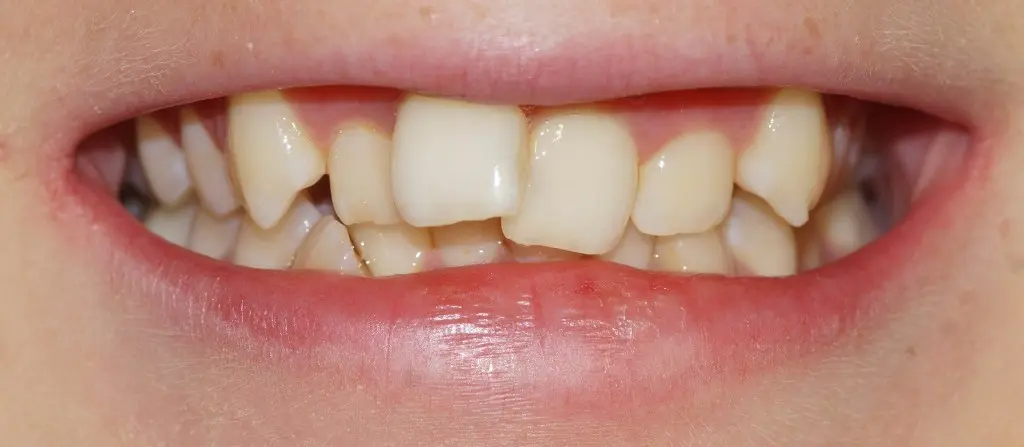
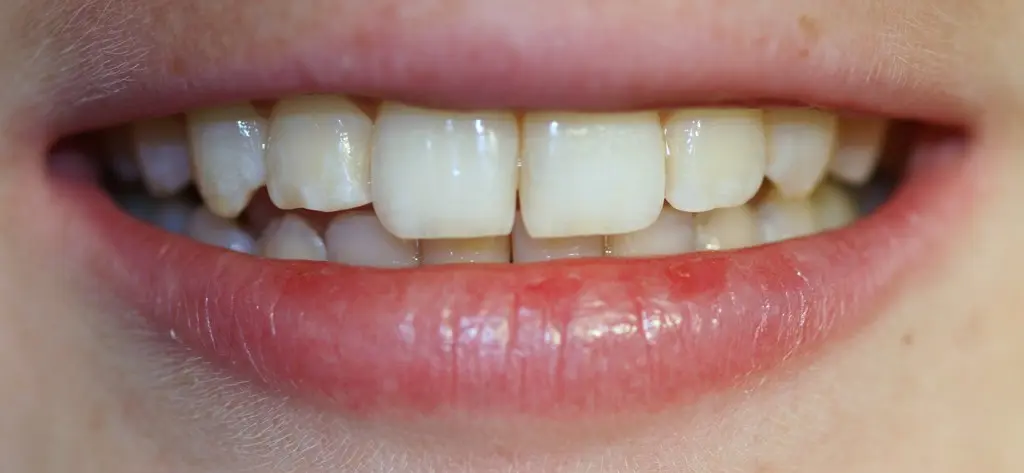
Recorded treatment: 13 months. This is the duration documented for this patient, rather than an estimate for someone else. Lighting and photographic angle can affect appearance; these images do not establish a whitening result.
Treatment by Dr Joseph Paino. Individual outcomes and treatment times vary. Explore all 20 Invisalign cases →
What alignment can bring to the plan
Start with the position underneath the appearance.
For someone who likes the size and colour of their teeth but notices crowding or spacing, an orthodontic assessment can be a useful starting point. We consider the roots, gum support and how the teeth meet, as well as the view from the front.
Clear aligners are one option. Braces or a specialist orthodontic opinion may be appropriate for some situations. An Invisalign vs veneers discussion should leave room for the approach that fits the findings.
Explore Invisalign treatment → · Compare Invisalign and braces →
A different concern, a different role
Whitening first.
Four selected porcelain veneers.
Porcelain + whitening
Veneers can be discussed when the concern includes the shape, shade or proportions of suitable visible tooth surfaces. The number of teeth and the material should follow the assessment.
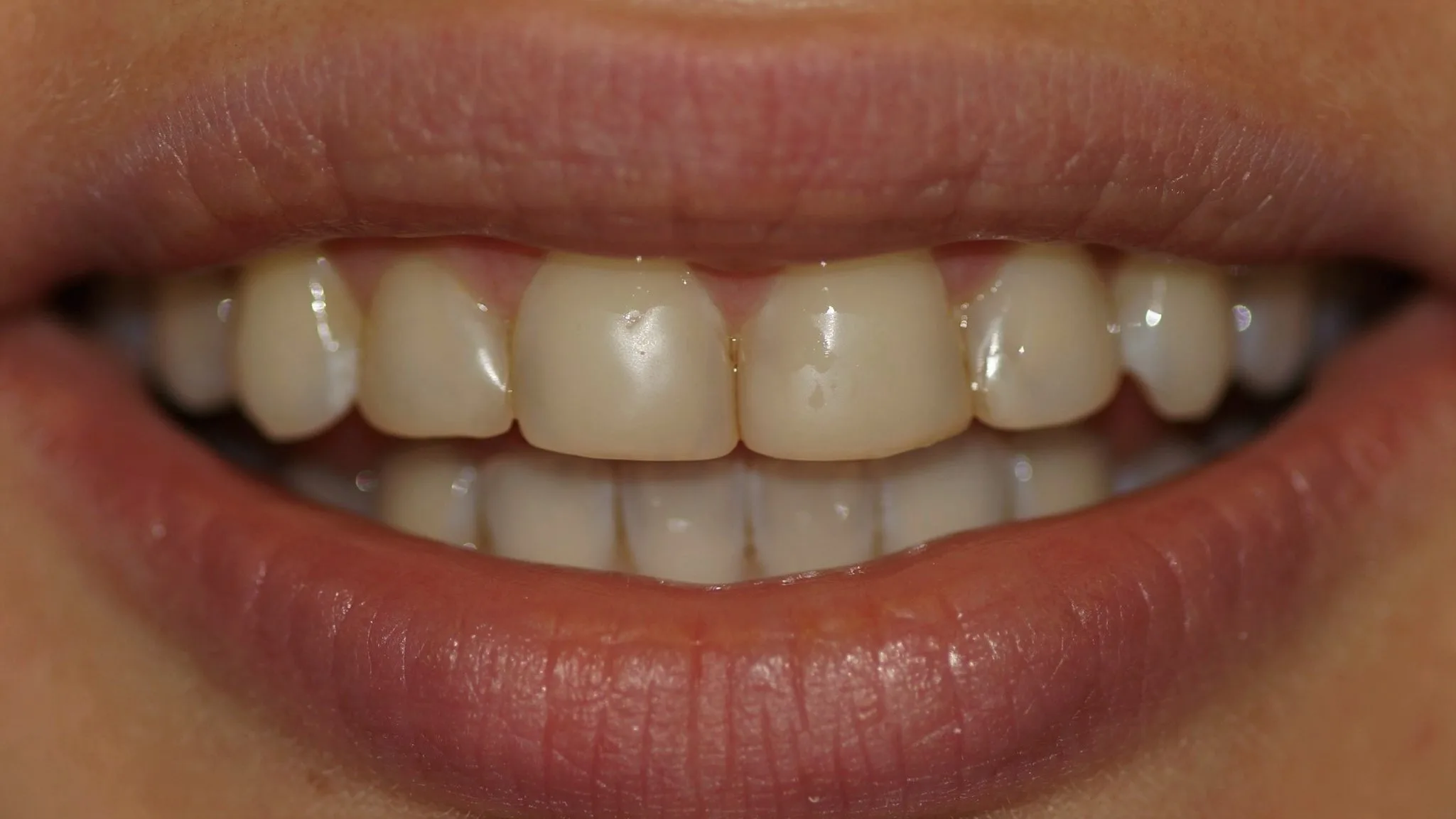
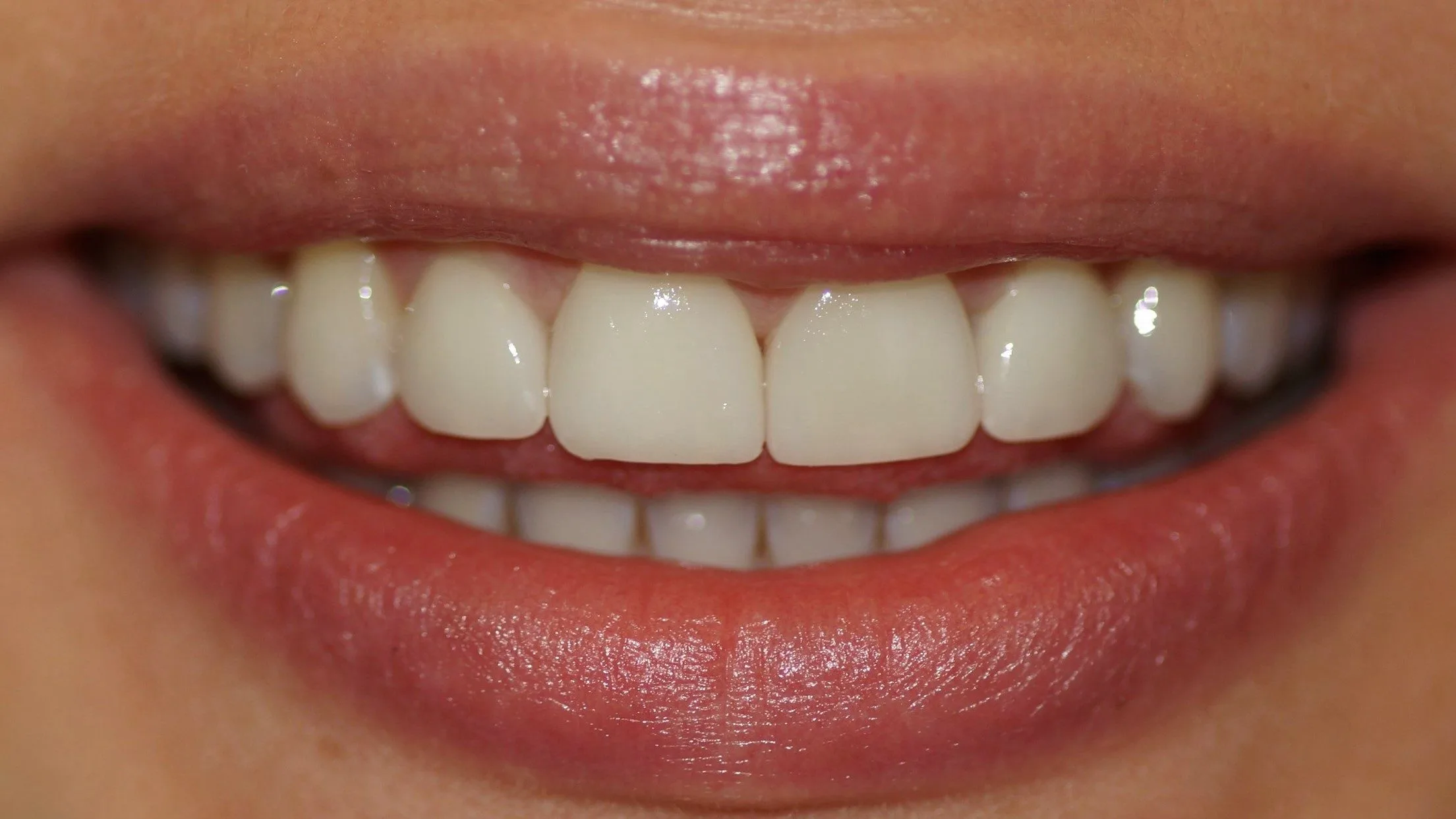
This patient had whitening followed by four upper-front porcelain veneers. Both treatments contributed to this individual result. This case does not demonstrate an outcome from veneers alone.
The veneer and Invisalign examples feature different patients and plans. They illustrate the purposes of treatment, rather than a controlled comparison. Learn About Porcelain Veneers
Understand the material choice
Veneers can mean porcelain or composite.
Porcelain is made outside the mouth and bonded to the tooth. Direct composite is shaped by the dentist onto the tooth. A small bonding repair is different from covering more of the front surface with a veneer.
A laboratory-made finish
Discuss the proposed shape and shade, the preparation needed, laboratory stages and long-term care.
A directly sculpted addition
Discuss the scope of the change, polish, possible repairs and whether local bonding could be enough.
For the material comparison in more detail, see our porcelain vs composite veneers guide.

Your natural teeth matter
Make enamel part of the conversation.
One of the most useful Invisalign vs veneers questions is: what would change on my own teeth? Ask to see where movement, added material or tooth preparation is proposed.
Veneer preparation depends on the starting tooth position, existing restorations, material and intended result. Some additive cases need little or no preparation; other teeth need reshaping. Any enamel removed is permanent.
Alignment can sometimes help create a more suitable starting position before restorative work. That possibility needs assessment—it is not a promise that everyone can avoid preparation.
One patient · A staged approach
Align first.
Then review the finishing details.
Invisalign + porcelain
Sometimes an Invisalign vs veneers decision becomes a discussion about sequence. Moving teeth and changing selected surfaces can have separate roles in the same plan.
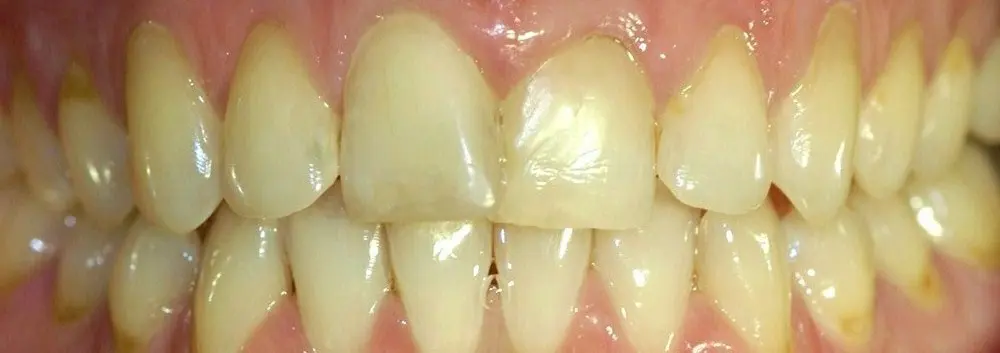
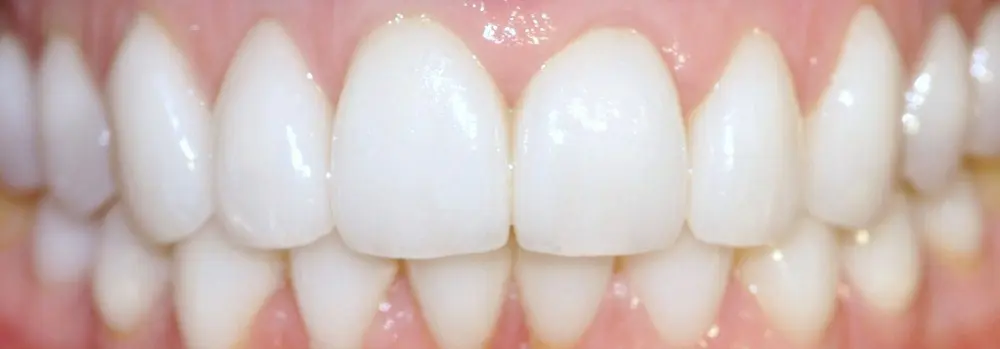
In this existing Enhance Dental case, Invisalign was followed by porcelain veneers. The photographs show the combined treatment course. They do not separate the contribution of each stage or predict another patient’s result.
Agree on the goals
Identify which concerns relate to position and which may need a surface change.
Reassess after alignment
Look again at tooth proportions, edges and colour before committing to further work.
Coordinate care
Plan any restorations, shade choices and retainers in the appropriate order.
A 2024 clinical report describes an orthodontic and restorative sequence in one patient. It illustrates a planning approach, rather than proving everyone benefits from both treatments. Read the clinical report ↗
Time, costs and clear expectations
Invisalign vs veneers: time and costs.
For Invisalign vs veneers, a headline price or appointment count tells only part of the story. Ask what is being treated, what is included and how the result will be maintained.
Understand the time involved
Invisalign uses a sequence of aligners, commonly changed every 1–2 weeks as prescribed. The whole treatment time depends on your starting alignment, tooth response, consistent wear and any further stages.
Porcelain generally needs separate preparation and fitting visits with laboratory time between. Direct composite placement can often be completed in one visit, while assessment, whitening and reviews may add appointments.
Tell us about an upcoming event early. Your treatment sequence and review needs should guide the timetable.
Ask for the inclusions in writing
- Assessment, scans, photographs and X-rays.
- The exact teeth or movements being treated.
- Preliminary dental care and any whitening.
- Additional aligners, attachments or laboratory work.
- Retainers, reviews, repairs and future replacements.
The initial discussion is free. Further examinations, records and treatment may involve fees, explained before you proceed.
The routine behind the result
Looking after Invisalign vs veneers results.
Clear aligners are removable, which makes eating and cleaning practical, while their prescribed wear schedule needs to fit your day. Plan how meals, work, travel and reviews would fit around treatment.
Veneers stay bonded to your teeth, but still need careful cleaning, reviews and consideration of any grinding or clenching. Neither choice removes the need to care for the natural teeth and gums.
Retainers help maintain alignment after orthodontic treatment. If restorations are placed afterward, their timing and shape need to be coordinated with the retention plan.
A useful consultation checklist
Your Invisalign vs veneers consultation checklist.
A thoughtful Invisalign vs veneers discussion starts with you. A few notes can help you leave with information you can use.
What do you like already?
Point out features you want to keep, as well as the colour, edge, overlap or gap you would like to discuss. A photograph can help describe your goals without setting an expectation of an identical result.
What would each step change?
Ask to distinguish movement, whitening, added material and preparation. Request an explanation of alternatives, the order of treatment and what would be reviewed before any later stage.
What will ongoing care involve?
Discuss wear time, retainers, cleaning, reviews and possible maintenance fees. Mention your budget, timing and previous dental experiences so those priorities can be considered in the plan.

Invisalign provider since 2002
Your next step at Enhance Dental
You can start with a conversation.
Explore Invisalign vs veneers with Dr Joseph Paino on St Kilda Road, Melbourne. Share the changes you have in mind and ask what further assessment would help clarify your options.
- Tell us what matters. Your smile goals, routine, timing and budget questions.
- Understand the next assessment. Discuss the examination and records needed for a personal recommendation.
- Review your choices. Consider the proposed stages, alternatives, fees and future care before deciding.
In online booking, select “FREE Invisalign or Cosmetic Consultation”.
Free introductory discussion. Complete examinations, scans, X-rays, records and treatment are separate steps and may involve fees. What does the consultation include?
Helpful answers before you decide
Invisalign vs veneers: your questions
Open a question to explore the details. Your personal assessment connects this general information to your own teeth.
Invisalign vs veneers: which should I consider for crowded teeth?
Start by asking whether the main concern is tooth position, tooth shape or both. Crowding often deserves an orthodontic assessment before deciding on restorations. A tooth that sits forward may need a different approach from one with a small chipped edge. Bring photographs that help explain what you notice, then ask which movements or surface changes would actually be needed. Your gums, roots, bite and available tooth structure guide the recommendation.
Can veneers make crooked teeth look straight?
Veneers can change the outline of selected teeth and disguise some minor irregularities. They do not reposition the roots or correct the underlying tooth relationship. Where a tooth is crowded or prominent, ask how much preparation or added thickness would be needed and whether alignment should be considered first. A photograph of a straighter-looking smile cannot establish whether veneers would be a suitable choice for your own teeth.
Does Invisalign avoid removing any enamel?
Invisalign does not require a veneer to be bonded across the front of each tooth. However, some orthodontic plans include interproximal reduction, or IPR: controlled removal of small amounts of enamel between selected teeth to help create space. Other plans may involve different space-management approaches. Ask whether IPR is proposed, where and why it is needed, and what alternatives apply to you. Enamel removal is permanent, including when it forms part of orthodontic care.
Is Invisalign vs veneers mainly a question of treatment speed?
Timing matters, but the change you need comes first. Moving teeth and changing tooth surfaces are different treatments. Invisalign usually involves a series of stages over months; a veneer plan involves assessment and one or more placement stages, with laboratory time for porcelain. An event date should be discussed early so expectations are realistic. Ask what can reasonably be completed, what reviews are needed and whether a staged approach would suit your priorities.
Which costs less: Invisalign or veneers?
There is no reliable universal winner on price. A small bonding repair, several porcelain veneers and an orthodontic plan involve different work. Compare written quotations for your own proposed treatment, including records, preliminary dental care, reviews and future maintenance. For Invisalign, ask about additional aligners and retainers. For veneers, ask about material, the number of teeth and repair or replacement. Our Invisalign cost page brings current Invisalign fees and inclusions together.
Will Invisalign whiten my teeth or change their shape?
The purpose of the aligners is to move teeth, rather than bleach enamel or replace a worn edge. Once alignment has been assessed, you can discuss whether whitening or a small addition would address another concern. Whitening may be useful for suitable natural teeth, while a shape concern may need a separate discussion. Existing fillings and veneers need to be considered when choosing shades and the order of any combined treatment.
Can I choose just one or two veneers after Invisalign?
A combined plan does not automatically mean a full set of veneers. After tooth movement, review the individual edges, proportions and shade concerns that remain. One tooth, a few teeth, local bonding, whitening or no further cosmetic treatment may be appropriate. Ask what each proposed restoration would add and what preparation it would involve. The number of restorations should follow the findings and your goals, rather than a standard smile package.
Can I have Invisalign if I already have veneers or crowns?
Existing restorations do not automatically rule out orthodontic treatment, but they need an individual assessment. Their condition, margins, position and the proposed movements matter. Attaching aligner accessories to a restored surface, or removing them later, may need special planning. Tell us which teeth have been restored and whether anything has felt loose or sensitive. Ask if any restoration may need adjustment or replacement and how that would affect the sequence and quotation.
Will I need attachments, IPR or extra aligners?
Some movements use small tooth-coloured attachments to help the aligners engage the teeth. Some plans use IPR or other space-management measures; additional aligners can be needed after progress is reviewed. These details should be explained as part of your personal plan. Ask which teeth are involved, how your progress will be checked and which stages are included in the quoted fee. Do not change your aligner schedule without your treating dentist’s advice.
What maintenance should I expect after Invisalign vs veneers?
The follow-up is different. After alignment, retainers help maintain tooth position and need care, reviews and eventual replacement. With veneers, reviews assess the restoration, its margins, your bite and the natural tooth underneath. Composite may need polishing or repair, while damaged porcelain may need replacement. Ask for a practical maintenance plan and the likely types of future fees before choosing treatment. Neither approach removes the need for ordinary dental examinations and cleaning.
What if I clench or grind my teeth?
Mention grinding, clenching, worn edges, jaw discomfort or a broken restoration at the first discussion. These findings can change which treatment is suitable and how the bite should be managed. A protective appliance may be recommended as part of an individual plan. A retainer and a grinding splint serve different purposes, so do not assume one automatically replaces the other. Ask how any proposed appliances would be coordinated after alignment or restorative treatment.
What about comfort during treatment?
Your previous experiences and concerns should be part of the plan. New aligners can feel tight and cause temporary soreness; contact the practice if discomfort persists or an aligner does not fit. Veneer appointments vary with the preparation and other dental work involved, and local anaesthetic may be appropriate. Explain any existing sensitivity or dental anxiety so the appointment can be planned with you. Ask what to expect at each stage, including recovery and reviews.
Can a digital smile preview show exactly how I will look?
Digital planning can help you understand proposed tooth movements or restorative changes. It is a useful discussion tool, rather than a promise of the final result. Tooth response, gum health, the bite, material choice and other clinical factors still need assessment. Ask what the preview represents and which details may change during treatment. Actual patient photographs elsewhere on this page show completed individual cases; they are separate from any simulation made for you.
Are veneers an alternative to orthodontics for teenagers?
A young person needs an age-appropriate assessment of tooth development, dental health, position and bite. Permanent cosmetic changes should be considered carefully alongside alternatives and future care. For a teenager with crowding or a bite concern, an orthodontic discussion is an appropriate starting point; a specialist opinion may be advised. A parent or guardian should be involved where appropriate. We can explain the next assessment step without assuming the same treatment suits every age.
Can Invisalign and veneers be planned together?
Yes, where both tooth position and selected surface changes need attention. The sequence should be explained before treatment begins, including when shade selection, any whitening, restoration and new retainers would occur. It is also useful to include a review after alignment so you can discuss whether the original restorative idea is still needed. Our combined-treatment example shows one existing Enhance Dental case; it does not mean everyone needs both treatments.
What happens at the free Invisalign or cosmetic consultation?
Start with an initial, no-obligation conversation about your smile, priorities and questions with Dr Joseph Paino. You do not have to choose Invisalign or veneers before you visit. A complete examination, X-rays, scans, diagnostic records and treatment are separate steps and may involve fees. Any applicable fees should be explained before you proceed. In online booking, select “FREE Invisalign or Cosmetic Consultation”. Bring details of previous treatment and any timing or budget questions you would like to discuss.
Your smile, thoughtfully planned
A clearer understanding.
A confident next step.
You do not have to settle the Invisalign vs veneers question on your own. Bring your ideas to Enhance Dental and explore what may suit your teeth, your goals and the way you live.
Choose “FREE Invisalign or Cosmetic Consultation” in online booking.
Free initial discussion; further examinations, records and treatment may involve fees.
Level 2, Suite 219, 566 St Kilda Road, Melbourne VIC 3004
Directions and parking →
This information supports a personal discussion and does not establish suitability. All treatment has risks and limitations; individual results and treatment times vary. Photographs show specific patients and do not predict another person’s outcome. Any surgical or invasive procedure carries risks; before proceeding, seek a second opinion from an appropriately qualified health practitioner. © Enhance Dental.