
Invisalign treatment planning · Melbourne
How Invisalign Treatment Is Planned at Enhance Dental
Invisalign treatment planning starts with your teeth, your bite and what you would like to change. At Enhance Dental, Dr Joseph Paino takes a one-on-one approach, explaining the options and proposed tooth movements before treatment begins.
Understand the assessment, explore your digital plan and ask the questions that matter to you.
Looking for patient photographs? View our Invisalign before and after gallery.
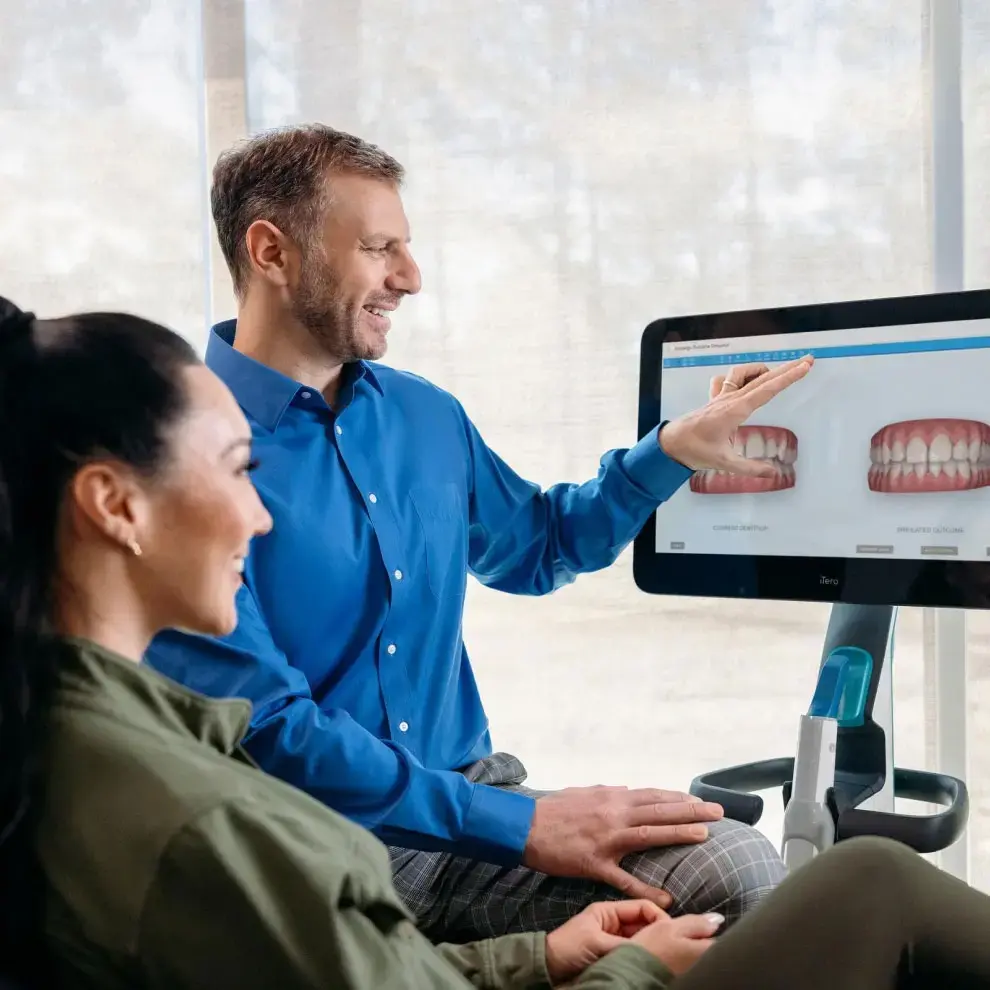
A plan you understand
Personalised Invisalign treatment planning
A digital preview is useful, but the decisions behind it matter just as much. Tooth alignment needs to be considered alongside your bite, gum health, existing dental work and the practical demands of wearing aligners.
Dr Paino discusses your priorities directly with you. Perhaps one tooth bothers you, your teeth have shifted after earlier orthodontic treatment, or you want to understand whether crowding can be addressed. The aim is a clinically appropriate plan you can understand and make an informed decision about.
One-on-one discussion
Time to explain what you would like to change and ask Dr Paino about your individual concerns.
Clear explanations
Understand the proposed approach, its limitations, alternatives and the responsibilities involved.
Planning beyond alignment
Consider your bite, oral health, follow-up care and retainers as part of the overall plan.
From assessment to aftercare
Invisalign treatment planning in 5 steps
Talk about your goals and assess suitability
Your consultation starts with what you would like to change, your dental history and any concerns about treatment. We discuss your expectations, lifestyle and whether removable aligners are likely to suit you.
A clinical assessment considers the position of your teeth, how they meet and the health of the supporting tissues. A full examination or further records may be needed before a treatment recommendation can be confirmed. Any decay, active gum disease or other issues may need care first.
Invisalign is one option. Depending on your needs, alternatives may include braces, a specialist orthodontic opinion, a different dental approach or choosing not to have treatment. Read more about Invisalign at Enhance Dental.
Collect the records needed for your plan
Records may include photographs, a digital scan or impressions, and radiographs when clinically indicated. These help assess the teeth and supporting structures and provide information for planning.
Please tell us about previous orthodontic treatment, retainers, crowns, implants, recent dental care and relevant medical history. If you have concerns about dental visits, let us know so we can discuss how to make your appointments more comfortable.
Not every patient needs the same records. We explain which assessments are recommended for you and any associated fees before proceeding.
Review your ClinCheck digital treatment plan
ClinCheck is Invisalign’s digital treatment-planning software. It helps visualise a proposed sequence of tooth movements and the intended tooth positions. Dr Paino reviews the plan and discusses how it relates to your goals and clinical needs.
Think of it as a plan for discussion: you can ask about tooth positions, space, your bite and the changes being proposed. Where clinically appropriate, the plan can be revised before approval.
A simulation is a planning tool, not a guaranteed result. Teeth and supporting tissues do not always respond exactly as a computer model predicts. Your biological response, aligner wear and clinical limitations can affect progress and the final outcome.
For background on the technology, see Invisalign’s official ClinCheck information.
Agree on the details before starting
A useful plan explains more than how many aligners you may need. Invisalign treatment planning also covers what treatment involves, foreseeable risks, alternatives, estimated timing and fees.
- Attachments: small tooth-coloured shapes bonded to selected teeth may help aligners apply the planned forces.
- Space and bite management: some cases may need small amounts of enamel reduction between teeth, elastics or other measures. Extractions are considered only when clinically appropriate; they are not required for every case.
- Daily wear: understand your prescribed wear time, when to change aligners and how treatment fits around meals, cleaning and work.
- Fees and inclusions: ask about records, reviews, additional aligners or refinements, retainers and any exclusions.
You have the opportunity to ask questions before consenting. A free initial consultation does not mean all diagnostic records or treatment are free; any recommended paid services are explained beforehand. Our Invisalign cost guide gives further information.
Monitor progress and plan for retainers
At your fitting appointment, we check the aligners and explain how to wear and care for them. Follow-up visits assess fit, tooth movement, your bite and oral health. The interval is tailored to your treatment, rather than assuming every patient needs the same schedule.
If your teeth are not following the proposed movements, reassessment, new records or additional aligners may be appropriate. Contact us if an aligner is lost, damaged, painful or no longer fits as expected, rather than changing the sequence yourself.
Retention is part of the plan from the beginning. Teeth can move after straightening, so retainers and ongoing checks help maintain their position. Your retainer type and wear schedule depend on your individual needs.
Make your consultation useful
Questions to ask about your treatment plan
- What changes are realistic for my teeth and bite?
- What are my alternatives, including a specialist opinion?
- Will I need attachments, enamel reduction or elastics?
- What is included in the fee, and what could cost extra?
- How will reviews, refinements and retainers be managed?
Bring photos or notes showing what concerns you. They can help explain your preferences, while your assessment determines which changes are appropriate.

Explore actual patient photographs
See how individual treatment can differ
These clinical photographs show one Enhance Dental patient’s teeth before and after Invisalign treatment. The recorded treatment time for this case was 13 months; your treatment time and outcome may differ.


Clinical photographs © Enhance Dental. Select either image to enlarge. These photographs show an individual outcome and do not predict or guarantee your result.
For more examples of crowding, spacing and bite concerns, explore our Invisalign before and after gallery with 20 patient cases. Your own assessment and plan are the basis for discussing what may be achievable for you.
Your questions, explained
Invisalign treatment planning FAQs
What is Invisalign treatment planning?
It is the assessment and decision-making process used to develop your individual aligner treatment. It considers your goals, teeth, bite and oral health, the proposed digital tooth movements, alternatives, risks, fees, reviews and retention.
Does a ClinCheck preview guarantee my final smile?
No. ClinCheck shows proposed tooth movements and intended tooth positions. It supports discussion and clinical planning, but your teeth may respond differently. Aligner wear, biological response and clinical limitations can affect the outcome, and additional treatment may be needed.
Can I ask for changes to the proposed plan?
Yes. Tell Dr Paino what you would like to change or understand better before approving treatment. Clinically appropriate revisions can be discussed. Some requests may not be achievable safely, and alternatives or a specialist opinion may be recommended.
How long does planning take before I get aligners?
The timing depends on the records needed, any dental care required first, the complexity of the proposed movements and plan revisions. Aligner manufacture and delivery are separate stages. We explain an estimated timeline for your case rather than promise a fixed starting date.
Is the first consultation free?
Enhance Dental offers a free initial Invisalign consultation. Further diagnostic records, a full examination or treatment may involve fees. We explain any recommended paid services before you decide to proceed.
Will I need retainers after Invisalign?
Retainers are generally needed after teeth straightening because teeth can move again. Dr Paino explains the retainer options, associated fees, wear schedule and ongoing care appropriate for your treatment.
Your next step
Start your Invisalign treatment planning
Book a free initial Invisalign consultation with Dr Joseph Paino at Enhance Dental. Discuss what you would like to change, explore your options and find out which further assessments may be needed.
Level 2, Suite 219, 566 St Kilda Road, Melbourne VIC 3004. Find directions or send us an enquiry.
Any recommended paid examination, records or treatment will be discussed before proceeding. Meet Dr Paino and the team.

Further reading: Invisalign’s treatment process, ClinCheck planning software and the Australian Dental Association’s guide to teeth straightening.
General information only; suitability and treatment recommendations require an individual clinical assessment. Any surgical or invasive procedure carries risks. Before proceeding, seek a second opinion from an appropriately qualified health practitioner.